After four days in Nome we flew back to Anchorage for a night, then flew up to Utqiagvik, Alaska. I have been doing a disservice to the city by referring to it as Barrow in previous posts because the name was officially changed in 2016. According to Wikipedia, “The location has been home to the Iñupiat, an indigenous Inuit ethnic group, for more than 1,500 years. The city’s Iñupiaq name refers to a place for gathering wild roots.” Utqiagvik has a population of almost 5,000 and the city is the base of the National Petroleum Reserve in Alaska. It is officially the northern-most city in the United States and is 300 miles north of the Arctic Circle. It is indeed the land of the Midnight Sun.
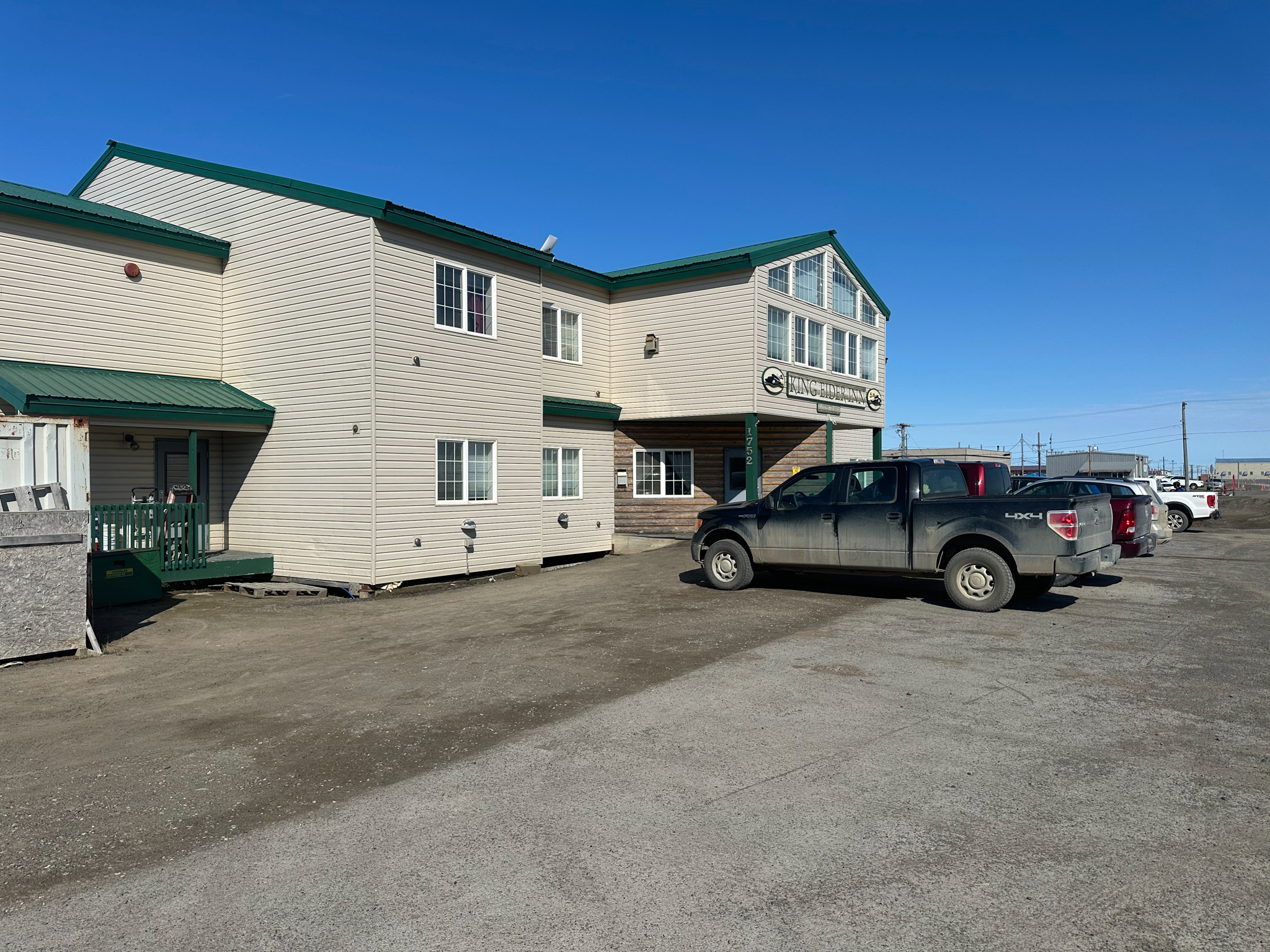
We arrived at Utqiagvik’s Wiley Post-Will Rogers Airport (Will Rogers was an American humorist and they both died in a plane crash nearing Utqiagvik). I was amused to note the Arrivals/Departures Board: Arrival – 4:30 PM from Anchorage, Departure – 10 AM to Anchorage – that’s it (private flights came and went at all hours). We picked up our luggage in the terminal, which was about the size of my living room, and walked across the street to the King Eider Hotel.
On the wall in the lobby was this poster:
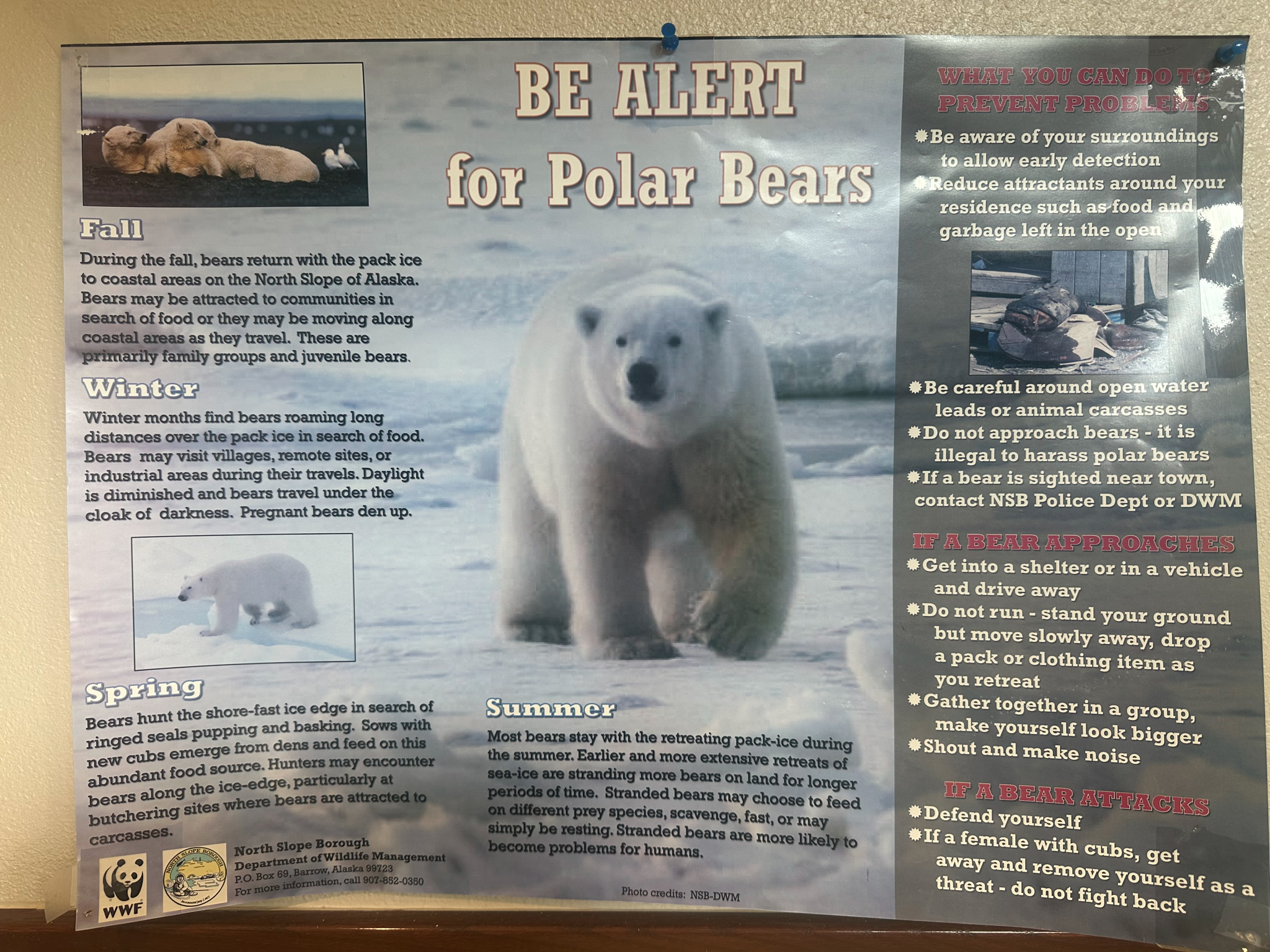
We didn’t see any polar bears during our stay there but other tourists we bumped in to reported seeing a couple.
Here’s a map of the area with Utqiagvik highlighted at the northernmost tip and it shows we had the Arctic Sea on three sides of us and the tundra, which was speckled with lakes, ponds, streams and standing water. We saw a lot of waterfowl there.

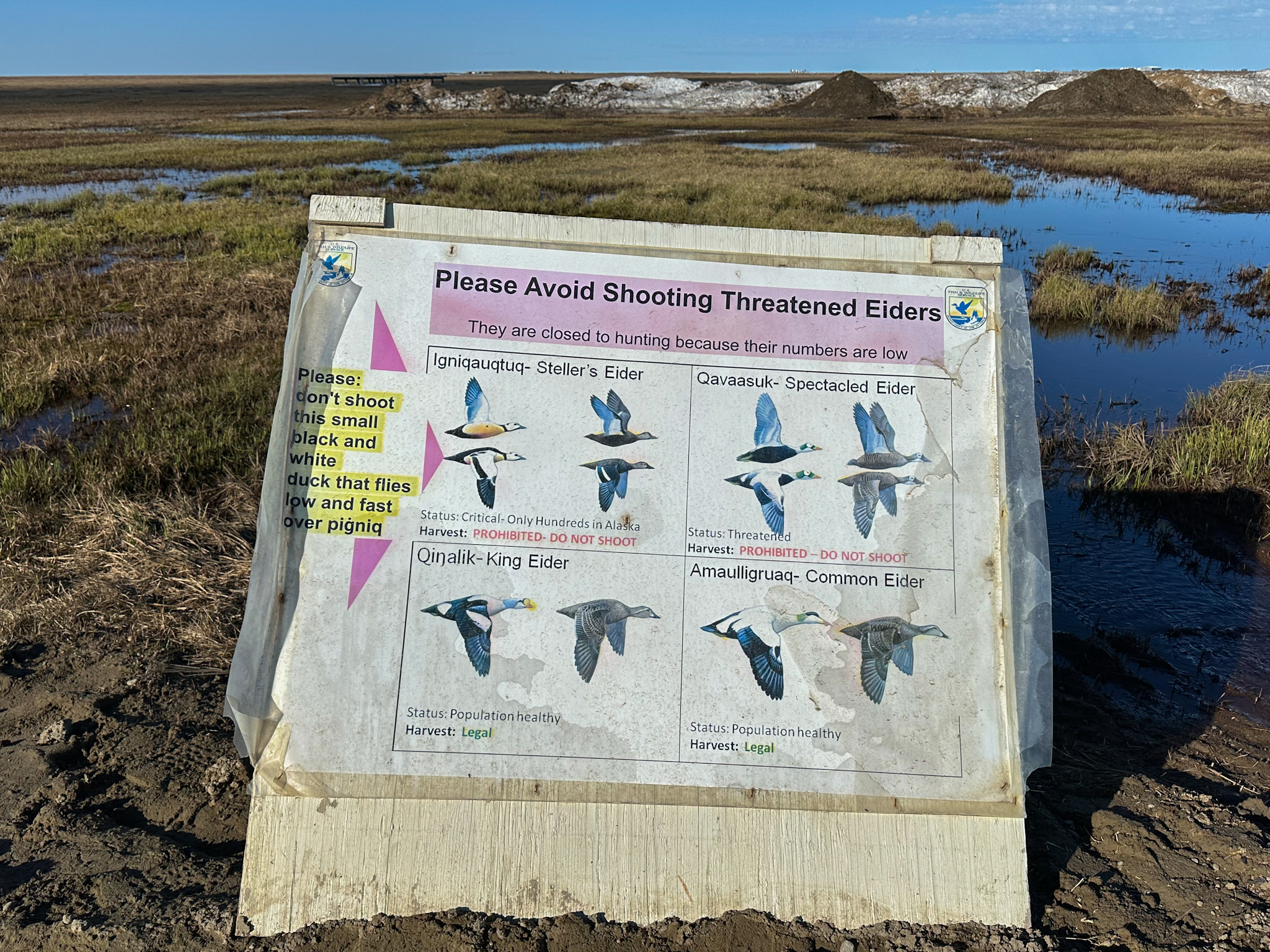
Eiders were common waterfowl; we had seen Common Eiders in Nome but here in Utqiagvik we also saw Spectacled, King, and Steller’s Eiders. This sign along one of the roads caught my eye. If you look closely it says that the Steller’s and Spectacled Eiders are prohibited from being hunted whereas the other two are not. It is worth noting that because all food has to be imported via plane or boat to Utqiagvik it is very expensive. As a result residents are permitted to hunt whale, seal, polar bear, walrus, waterfowl, caribou, and fish for their own consumption (as they have been doing for 1500 years).
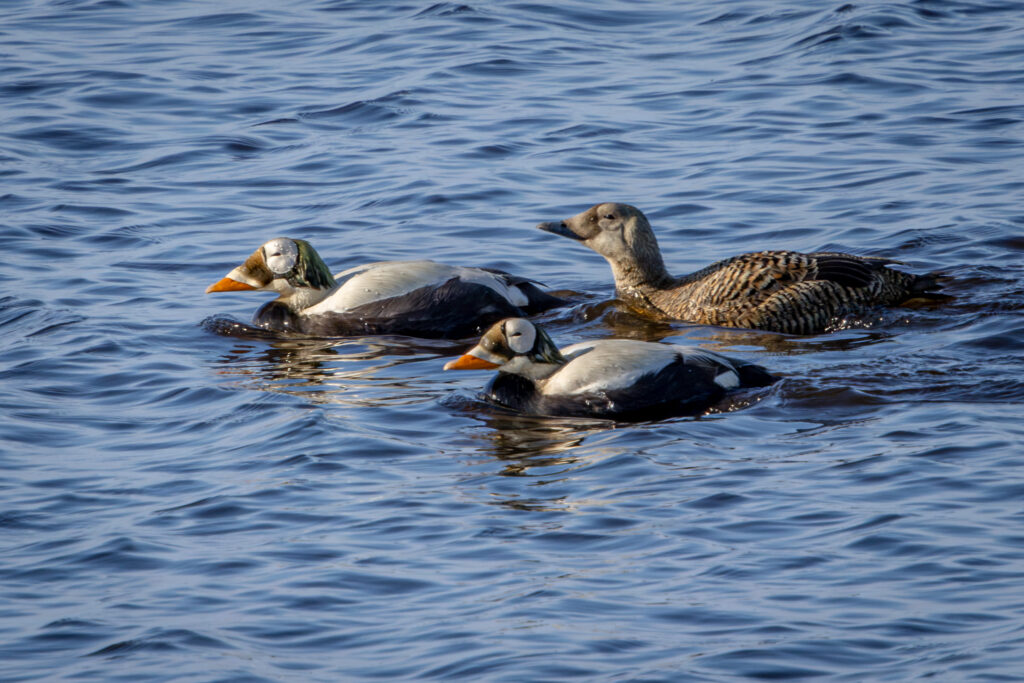
We had several opportunities to observe King Eider; males with their bulbous beaks and rather plain-looking brown females.


We also had several sightings of Spectacled Eider in the waters around Utqiagvik. Well-named for the large white circles around the eyes of the male.
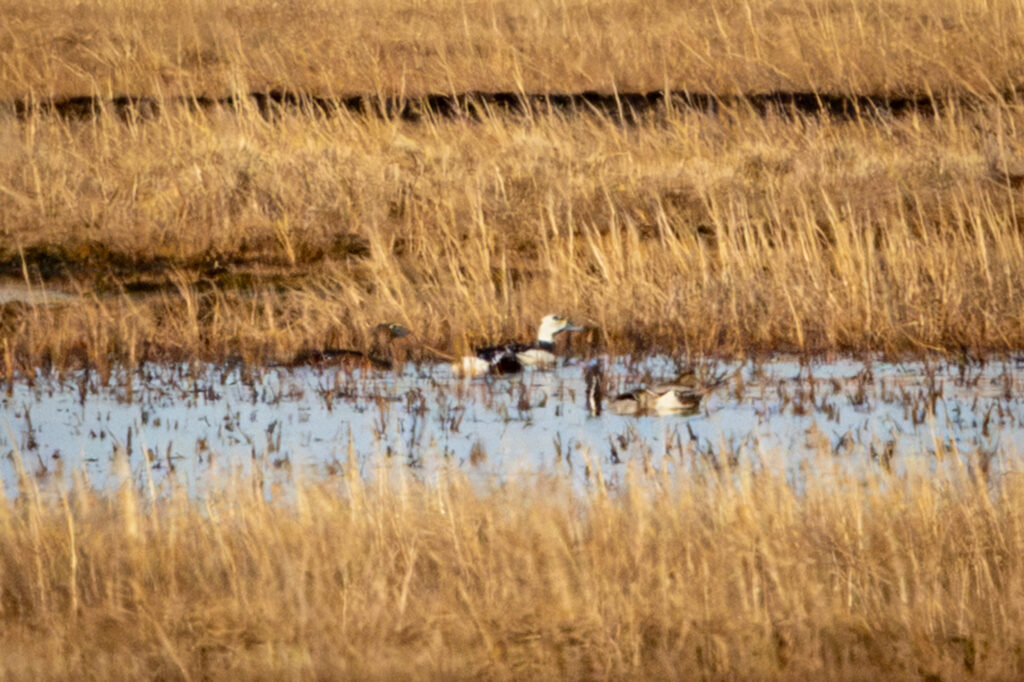
The Steller’s Eider were more elusive – I include this photograph just to prove I saw a couple. It was taken a great distance away from the birds.
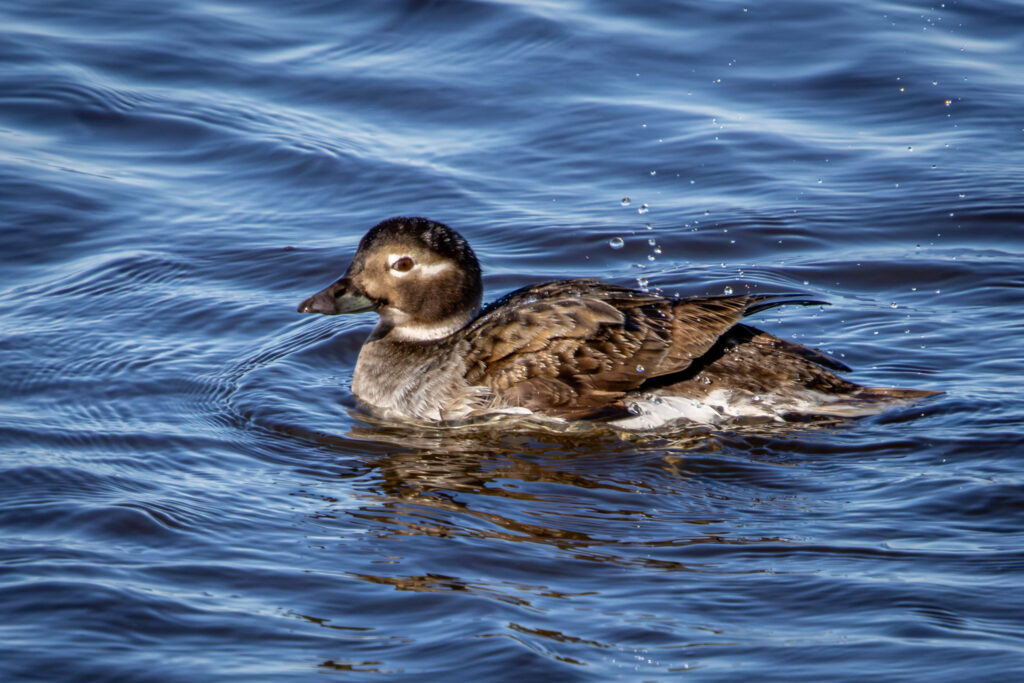
One of my absolute favorite waterfowl species is the Long-tailed Duck. Until the year 2000 the bird was named Oldsquaw – several participants on our tour used that term but I had never heard it before. They migrate down to the U.S. midwest and we see them by large bodies of water, like Lake Michigan. Here’s a female seen in Utqiagvik:
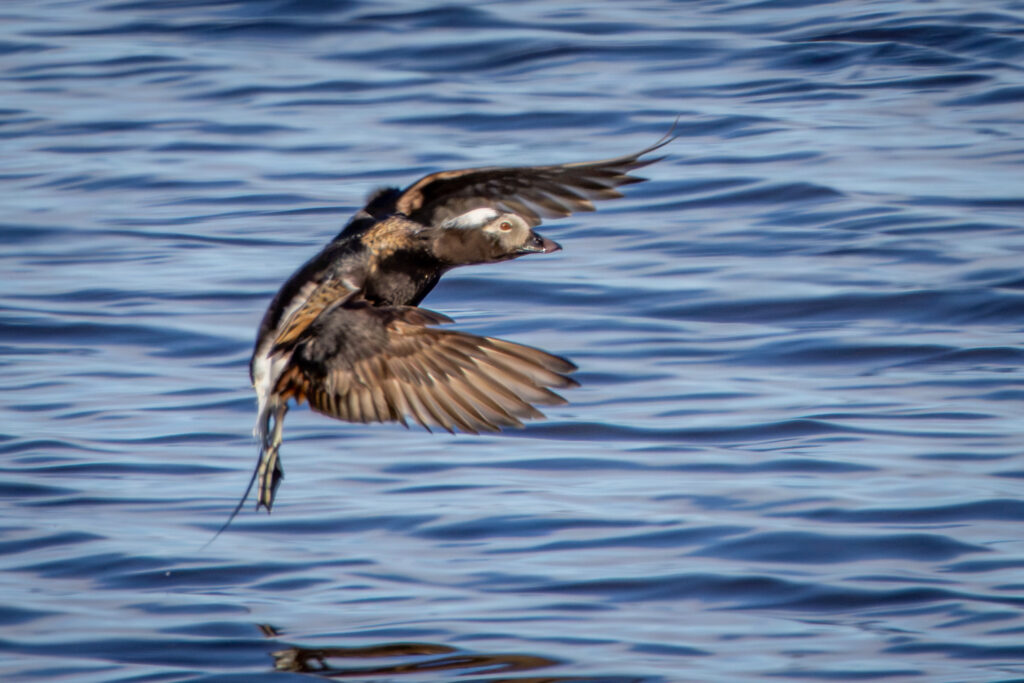
We saw many males flying and swimming in the waters around Utqiagvik. Note the long, thin tail in both pictures below.

Frankly I didn’t recognize the Long-tailed Ducks at first. When we see the males in the winter they have lost their brown breeding colors and are much lighter, with a cute pink dash on their bill. Here’s a picture of one I took in Holland, Michigan in January, 2019.

We saw some of the same birds observed in Nome, like this Red-throated Loon (well-named).

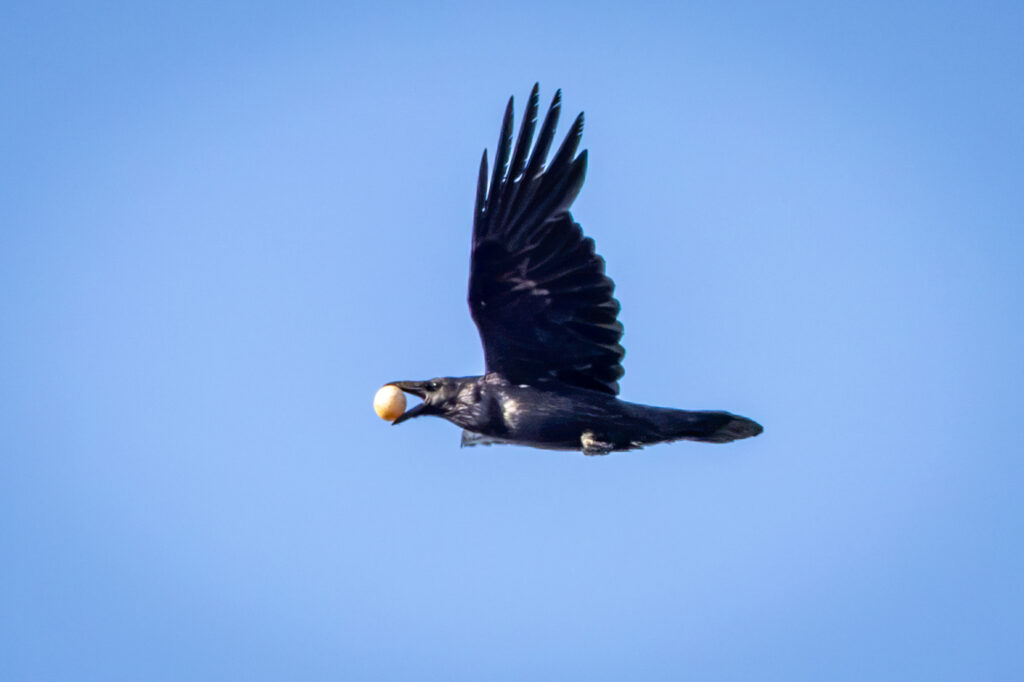
We also saw Ravens there, and this one flew by with another bird’s egg in its beak.
Lest we forget, the tundra was all around us but it contained much more water than the tundra around Nome. It was only right that we saw Tundra Swans there and watched as one took off and flew right by us.
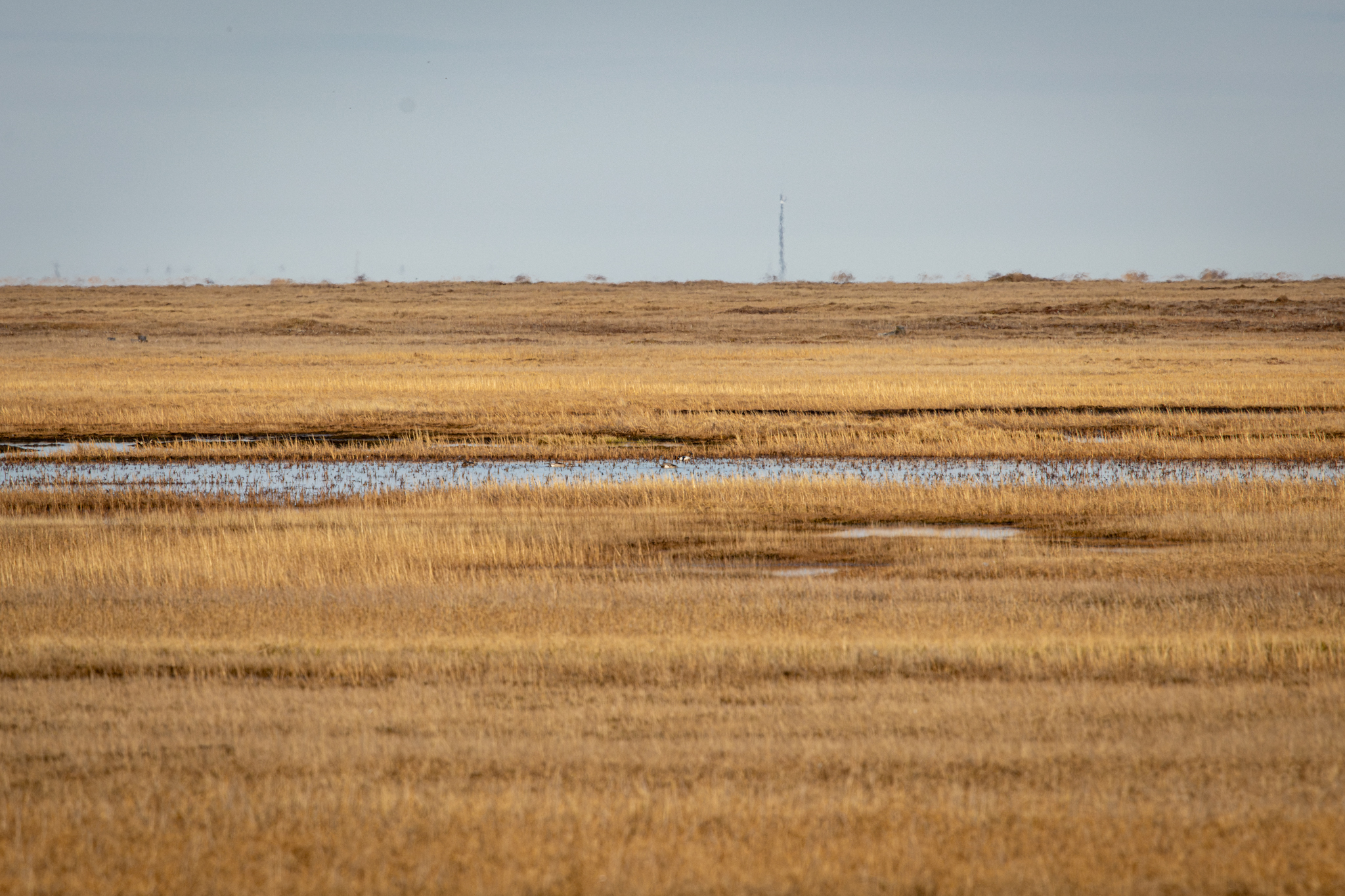
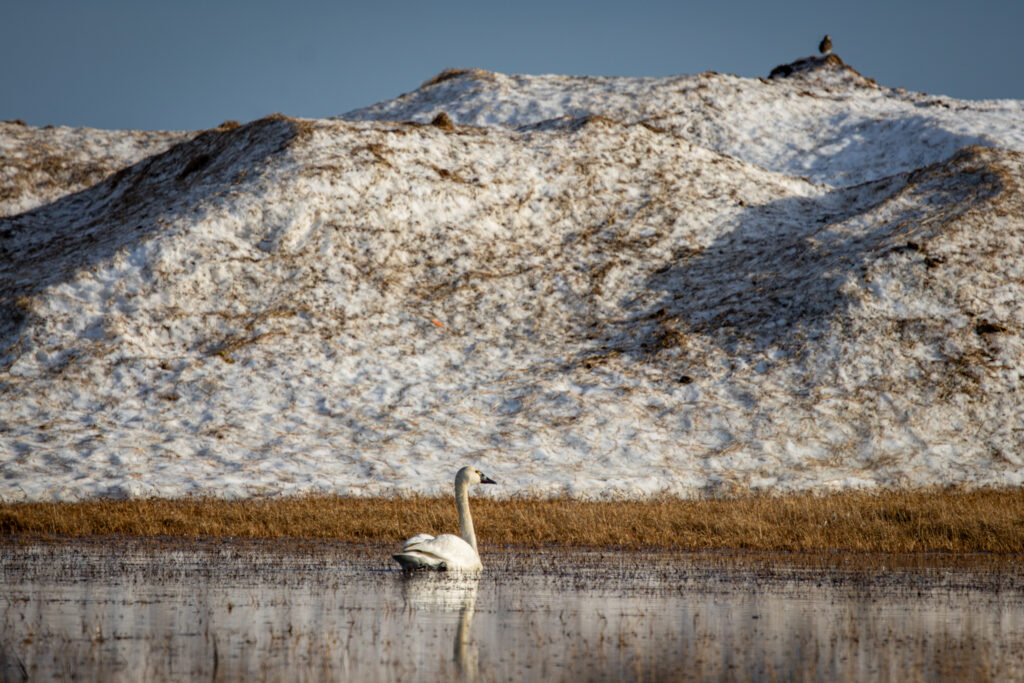

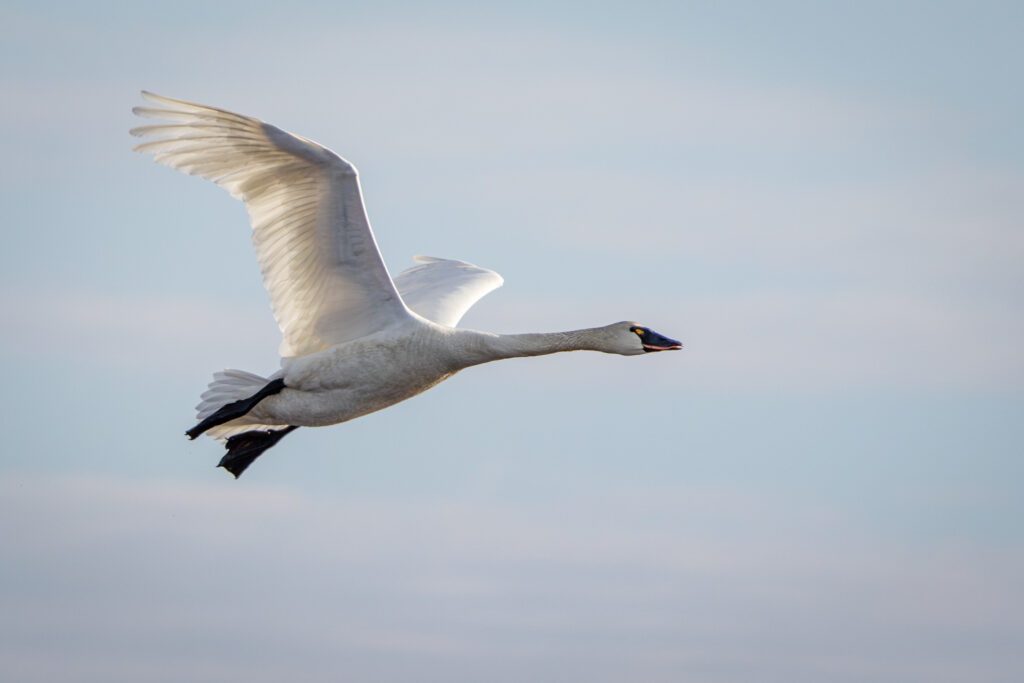
When Josh announced that we were heading back to the hotel on the first day my first thought was that we still had good light and could find and photograph more birds. Then I glanced at my watch and saw that it was 10:45 PM – there would be good light all the time there.

As we arrived back at the hotel Josh told us to sleep in – no need to get up at 5:30 AM because the light at 9 AM would be the same – the birds don’t use alarm clocks. More birds around Barrow – I mean Utqiagvik – next time.
This is the tenth post about my Alaskan bird tour. It started in Anchorage, then went to Seward, Nome, and Utqiagvik; additional posts are being shared each Monday. CLICK HERE to see all the posts about our Alaskan Bird Tour so far.
Karen and I have had the opportunity to travel to many interesting places in search of birds. If you would like read about some of our other Bird Tours CLICK HERE.
If you enjoy seeing beautiful pictures of birds from around the world and reading about them CLICK HERE to sign up for our mailing list. Members can post their own Great Bird Pics and learn more about bird photography techniques.