I’ve given reports recently about Nome’s environs, Nome’s Tundra, and Nome’s mammals so I guess it’s time to tell you about Nome’s birds. There are three (gravel) roads that radiate out of Nome: one goes east, one goes north, and one goes north-west. None of them take you more than 80 miles – you can’t drive to much of anywhere from Nome. We took each road out 20-30 miles each day in search of birds. Today I’ll share some of the Lifers we got along the way.
The Willow Ptarmigan was one of the most frequently seen birds in the area. They were often seen along the sides of the gravel roads. Note the dash of red on this male’s head.

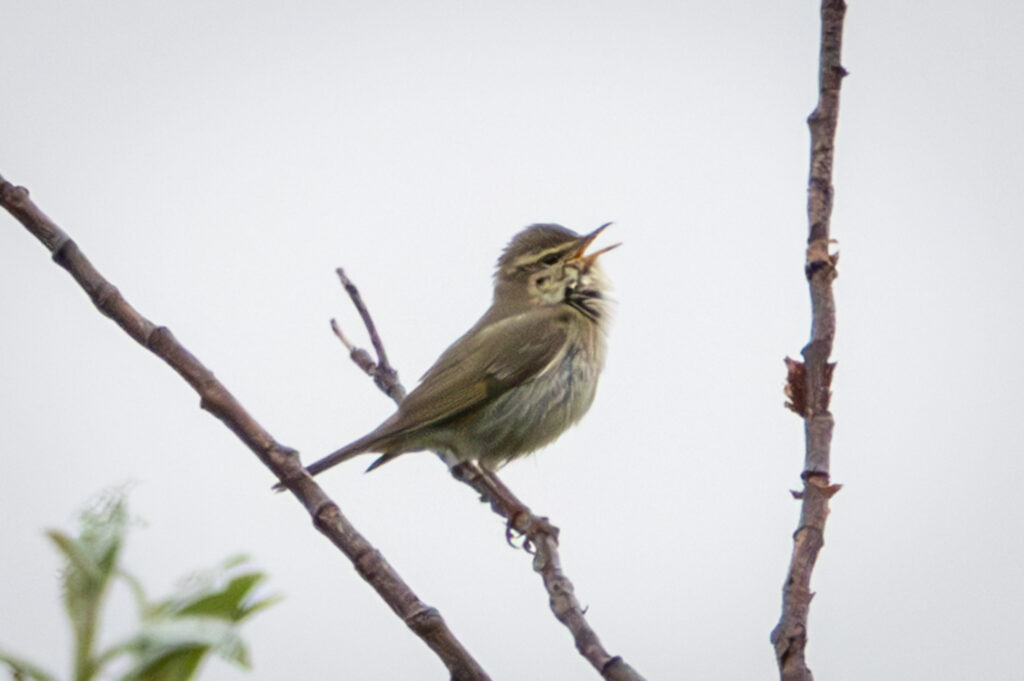
A new Warbler Lifer was the Arctic Warbler. This drab bird was only seen once during our visit so we were lucky to get it.
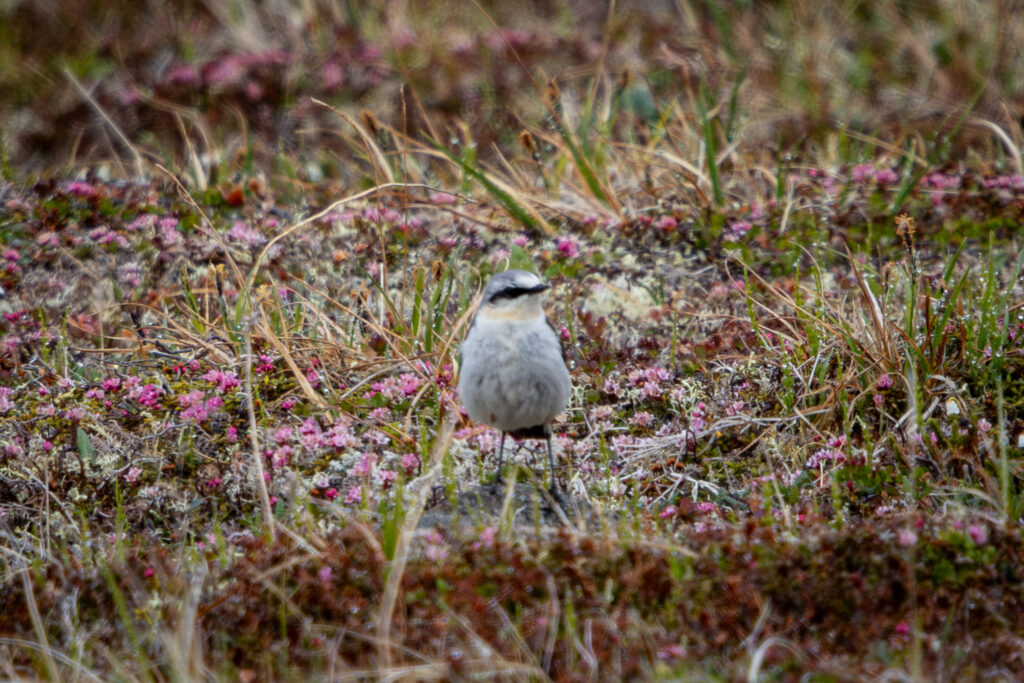
Another Lifer was the Northern Wheatear, as seen sitting on the tundra here. This pretty little bird can be found during the summer in Alaska, but is rarely seen in the lower 48 states. Many live in Europe (summer) and Africa (winter).
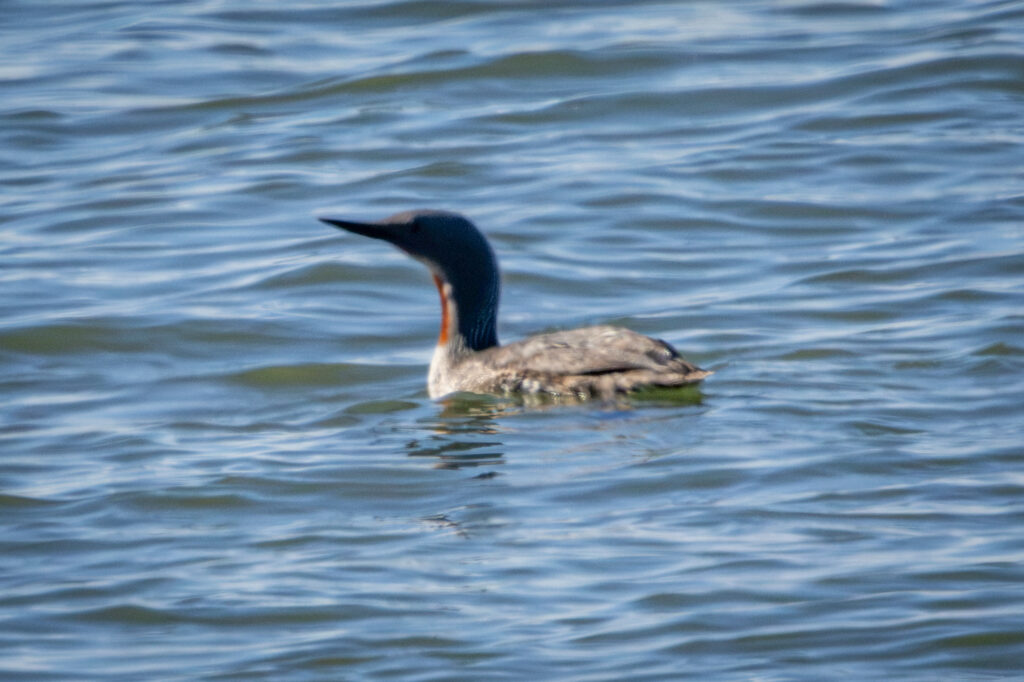
I showed some pics of Common Loon in Anchorage previously and while in Nome we saw two more species of loon – the Red-throated (seen here in a distant shot below) and the Pacific Loon (not able to photograph). We did see one more in Barrow, the Yellow-billed Loon, but again it was too difficult to photograph.
The first time we saw a Red-necked Phalarope it was in a sewage pond in Michigan eight years ago and it wasn’t in breeding plumage. While in Nome we saw them several times with their beautiful rusty-red throat. They circle around and pick at bugs in the water with their pointy beak.

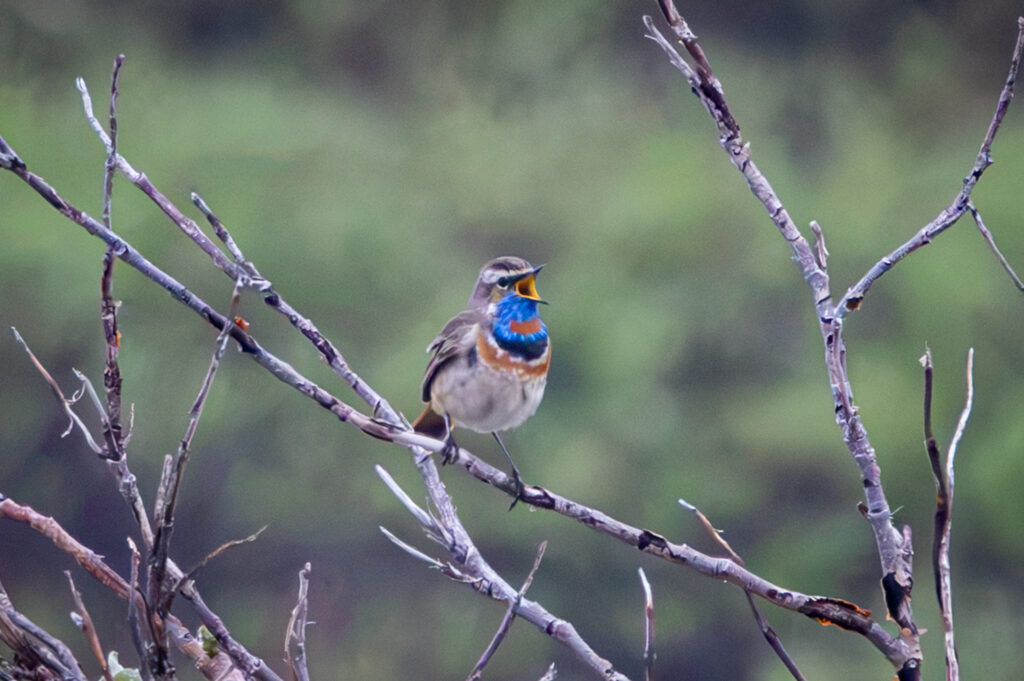
Perhaps the most beautiful bird we saw during the entire Alaskan trip was the Bluethroat. This simple name captures the bird’s defining feature: a blotch of bright blue with a dab of red on its throat mades this an unforgettable Lifer for us all.
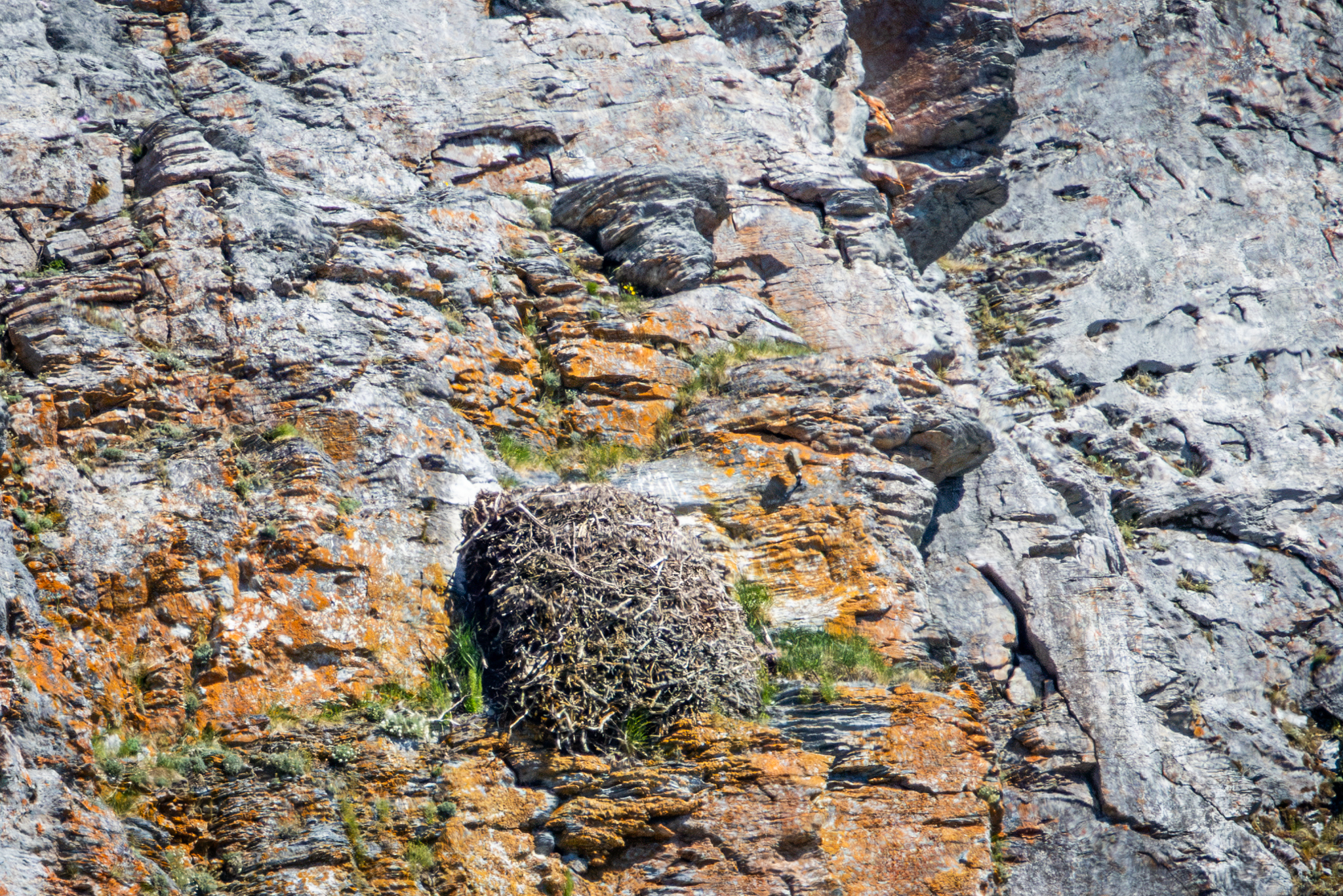
The Gyrfalcon is almost legendary in the the U.S. Lower 48 – they have been know to make a rare appearance as far south as the midwest but they are typically found in Alaska and along the northern coast of Canada. It is the largest falcon and preys of birds and small mammals. Below is a Golden Eagle nest that was abandoned and then reused by a Gyrfalcon. If you look carefully you can see a camera above-right of the nest.
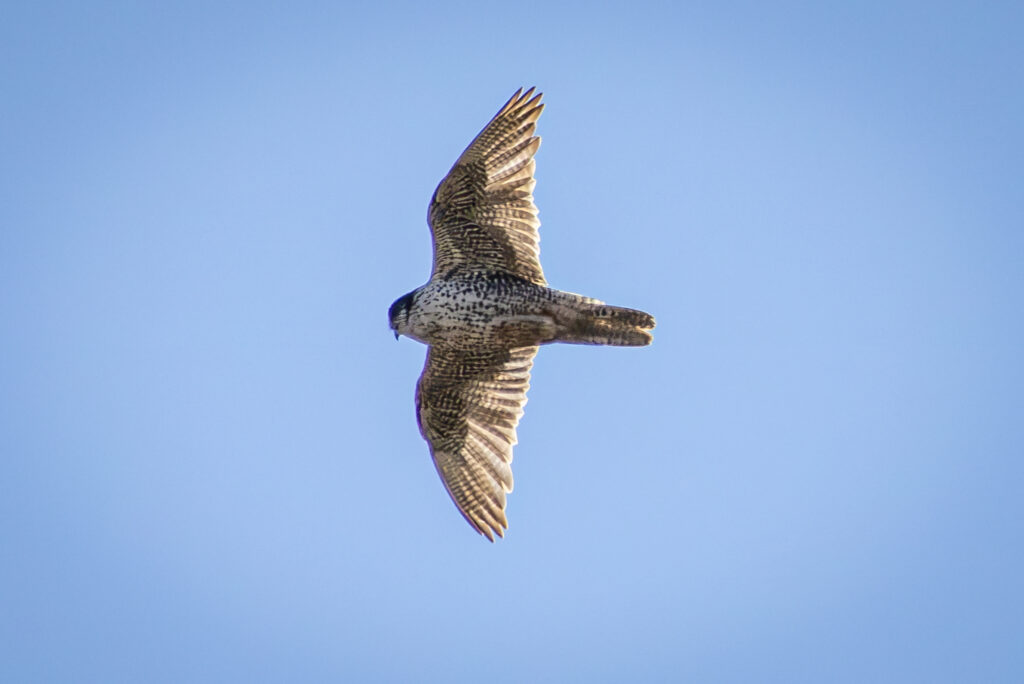
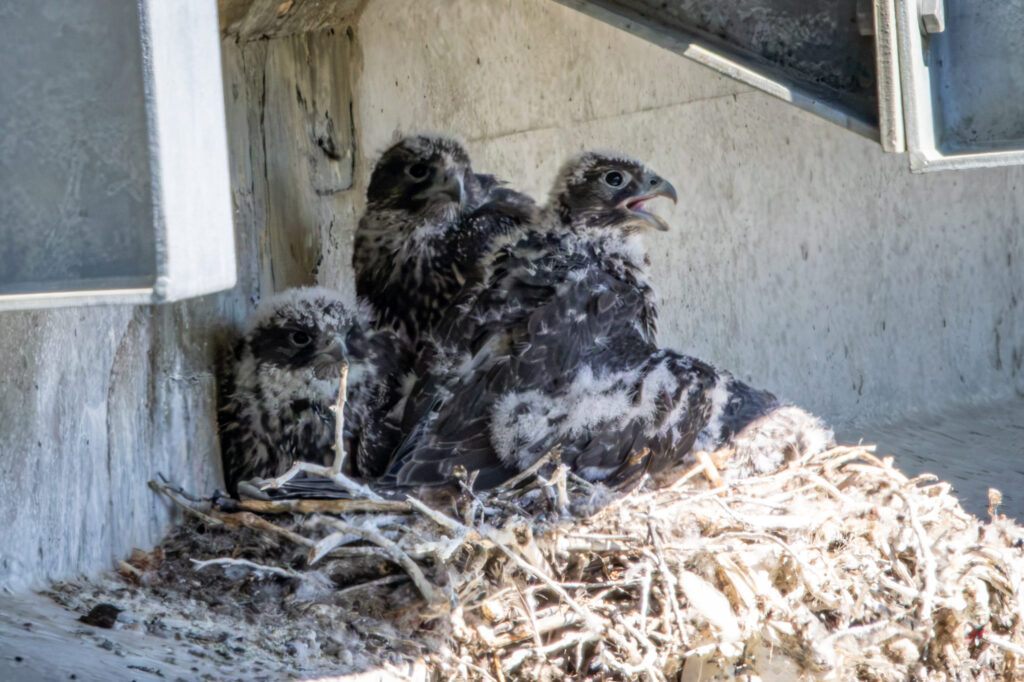
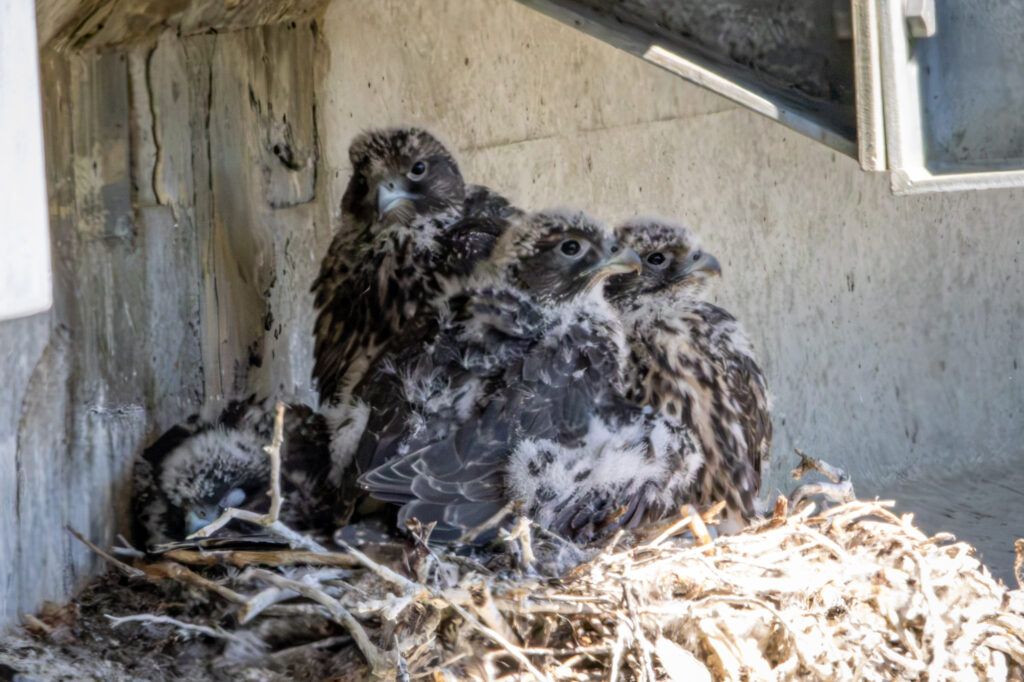
We didn’t see any Gyrfalcon around the nest above but just a few miles down the road was a nest with chicks on it! As we stopped to view the nest an adult flew high above our heads to make sure we didn’t get too close.
The nest itself was built on a bridge support for the road we were on. We had good looks at the chicks from the other side of the gully.
Next time some BIF shots of more Lifers seen around Nome.
This is the fifth post about my Alaskan bird tour. It started in Anchorage, then went to Seward, Nome, and Barrow; additional posts will be shared each Monday. CLICK HERE to see all the posts about our Alaskan Bird Tour.
Karen and I have had the opportunity to travel to many interesting places in search of birds. If you would like read about some of our other Bird Tours CLICK HERE.
If you enjoy seeing beautiful pictures of birds from around the world and reading something about them CLICK HERE to sign up for our mailing list. Members can post their own GreatBirdPics and learn more about bird photography techniques.