The birds I’ve shared thus far from the Nome area were either Lifers or rarely seen by us. Today I’m sharing birds we’ve seen before and perhaps you’ve seen them as well because they are regularly found on the U.S. Lower 48. I’ve previously mentioned that a great many birds pass through the United States as they migrate north in the spring (and again going south in the fall). We are very fortunate in Chicagoland that many of these migrating species pause here during their journey – that’s why some of these were not Lifers when we saw them in Nome (they were Lifers for some of the other experienced birders from other parts of the country). Today some of those migrants:
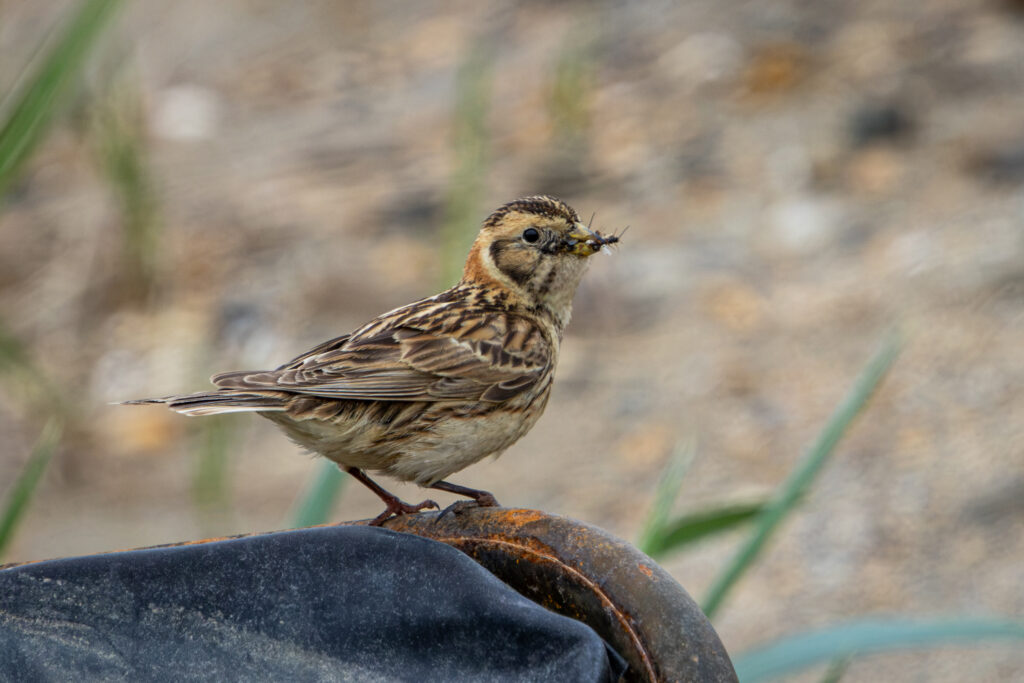
The Lapland Longspur is a migrant from the north often seen here in the winter. It escapes the frigid cold of the winter tundra by migrating south – but not very far south. Range maps show it has been observed during the winter as far south as the Gulf Coast but greater numbers of them are found in the midwest (Kansas, Iowa, Illinois, Michigan). Here are two photographs of a male and one of a female Lapland Longspur on their breeding grounds in Nome.


Since Nome is on the Bering Sea it was not a surprise to find shorebirds nesting there. I’ve observed each of these species here in Chicagoland and they are regularly observed throughout the Great Lakes Region, along the Atlantic and Pacific coasts, and around the Gulf of Mexico. Note in these photographs each is perched on the tundra.
Semipalmated Sandpiper
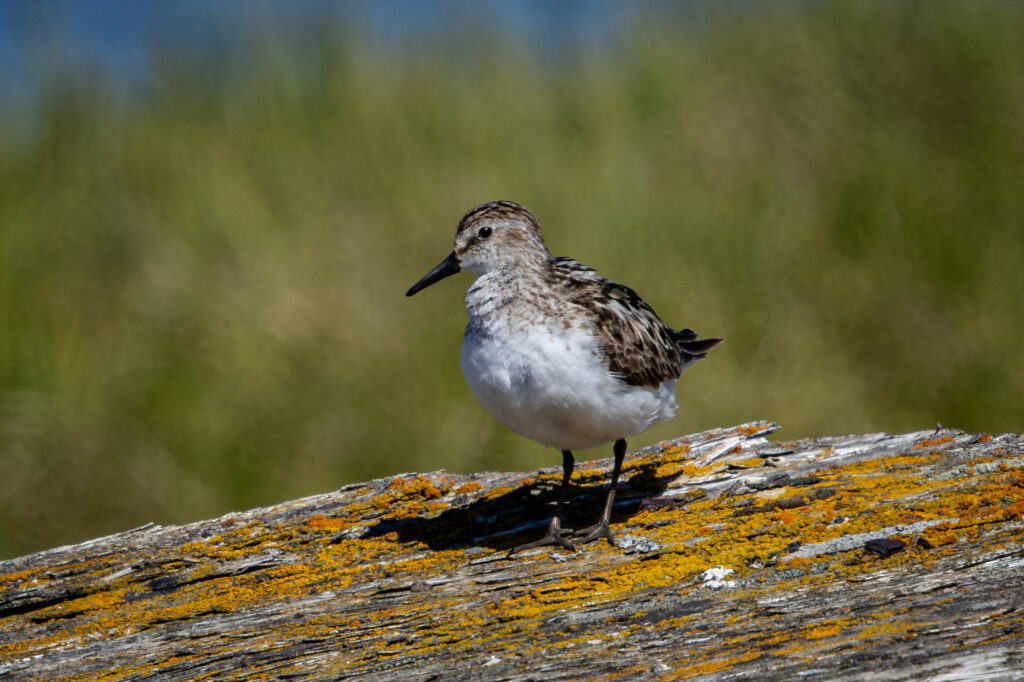
Western Sandpiper
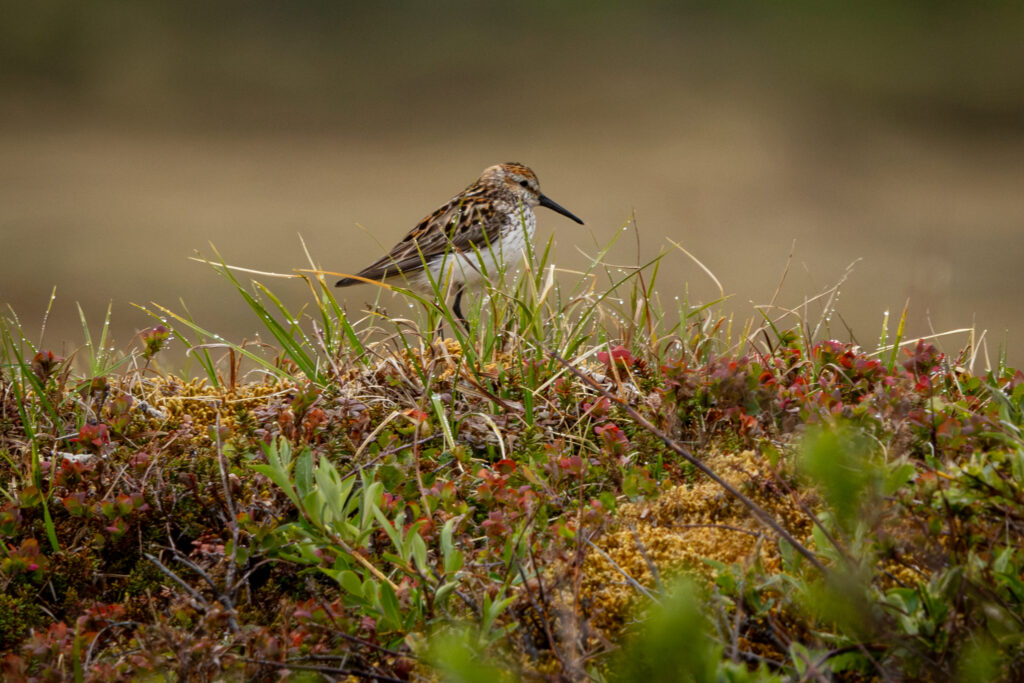
Here’s one our New Zealand Naturalist Rebecca Bowater knows well – a Bar-tailed Godwit. She’s shared photographs of them arriving in New Zealand after flying without stopping down from Alaska.

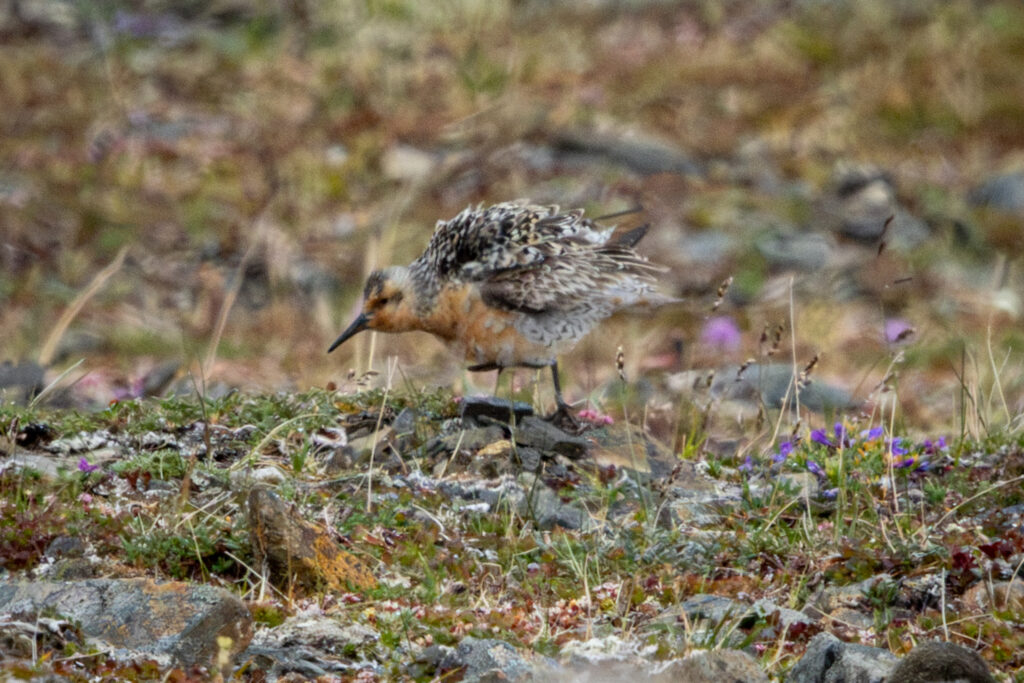
Rebecca will also recognize this Red Knot, as they also migrate to NZ. They mix in with the Godwits on sandy shorelines. Click Here to see one of her photographs with both Red Knot and Bar-tailed Godwits in breeding Plumage.
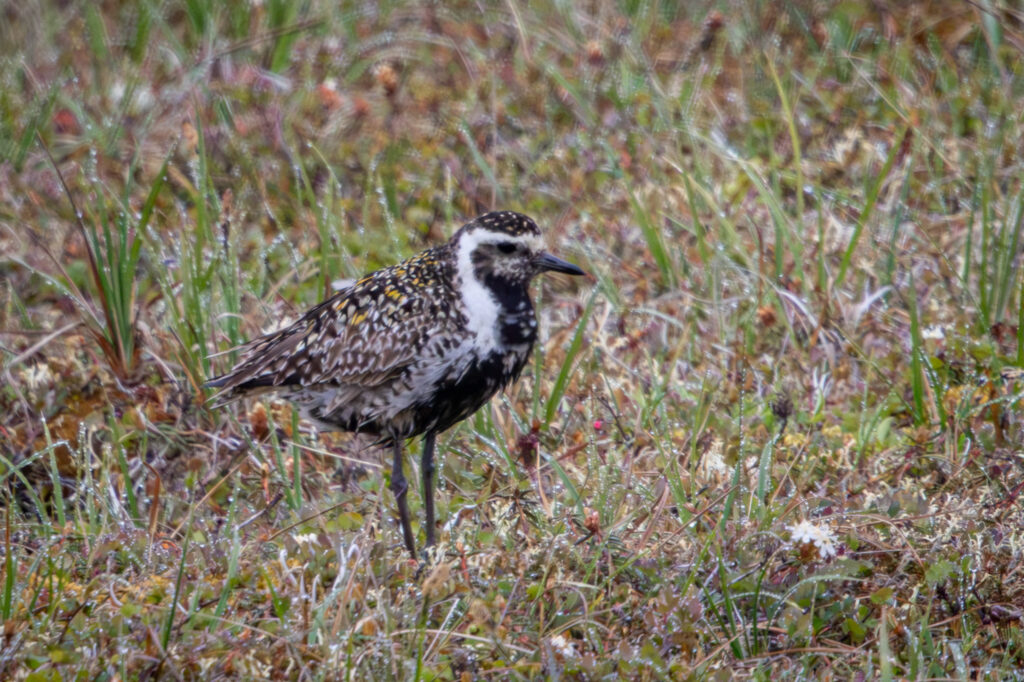
I’ve seen American Golden Plovers a couple of time in the midwest and both times I observed at sod farms. Here’s one on the tundra outside of Nome. I guess they prefer large flat areas to feed on.
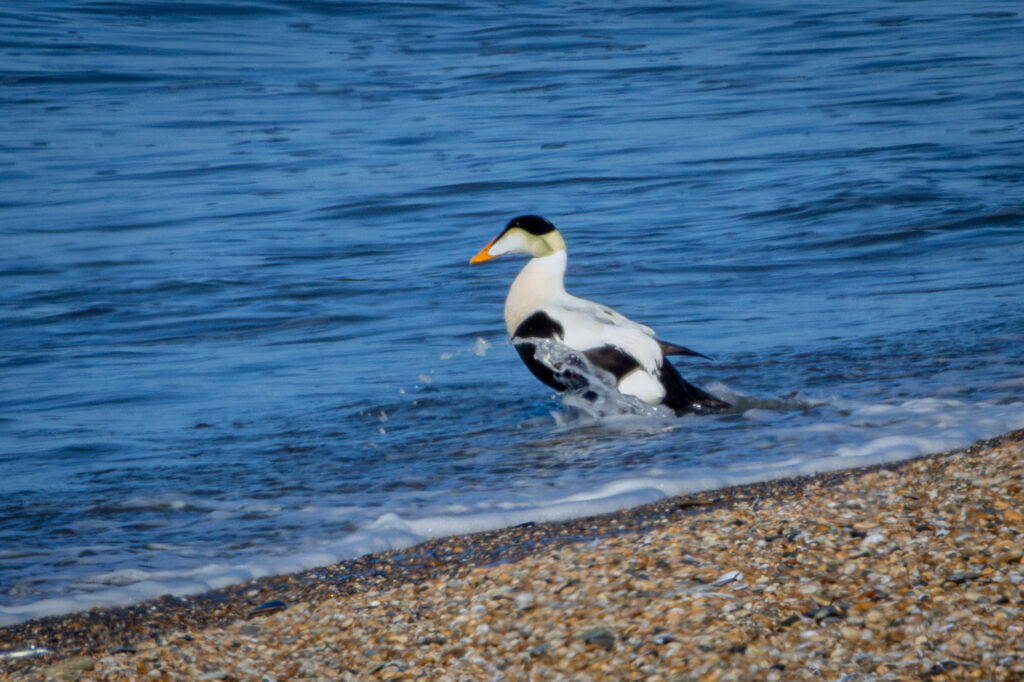
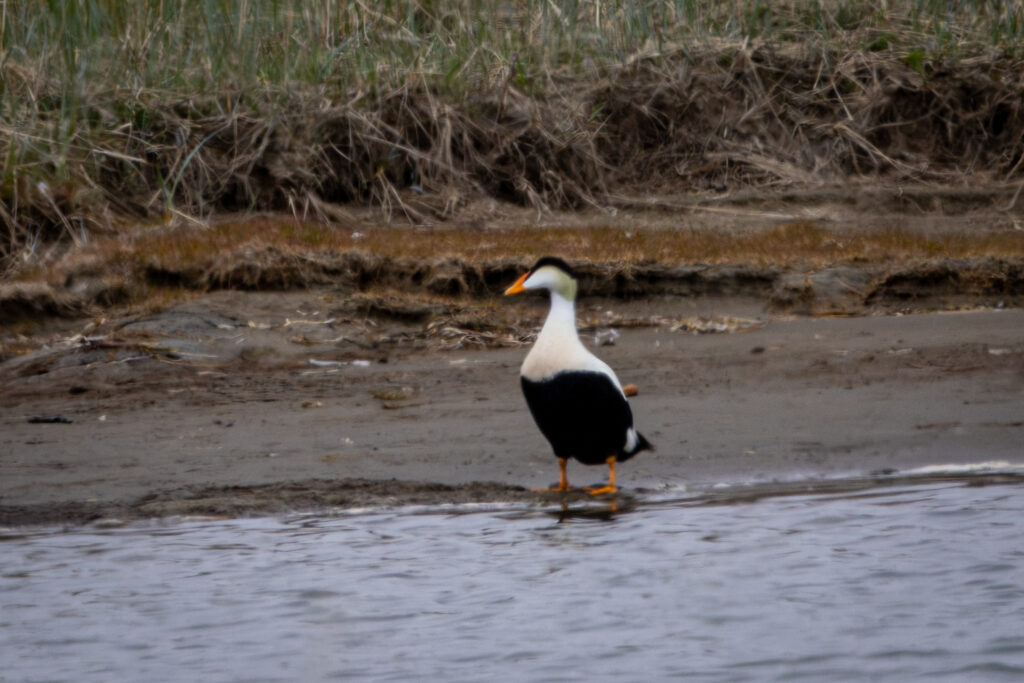
Ok, so I’ve never seen a Common Eider in Chicagoland but if you’ve been to the east or west coasts you may have seen one. Paul Demkovich shared a picture of one he saw in Halifax, Canada. I saw them previously in Reykjavik, Iceland and enjoyed observing them in their breeding territory in Alaska.
That wraps things up from Nome and I hope you enjoyed our time there. Next post we will be up in Barrow, Alaska exploring the land above the Arctic Circle – the Land of the Midnight Sun.
This is the ninth post about my Alaskan bird tour. It started in Anchorage, then went to Seward, Nome, and Barrow; additional posts are being shared each Monday. CLICK HERE to see all the posts about our Alaskan Bird Tour.
Karen and I have had the opportunity to travel to many interesting places in search of birds. If you would like read about some of our other Bird Tours CLICK HERE.
If you enjoy seeing beautiful pictures of birds from around the world and reading about them CLICK HERE to sign up for our mailing list. Members can post their own Great Bird Pics and learn more about bird photography techniques.