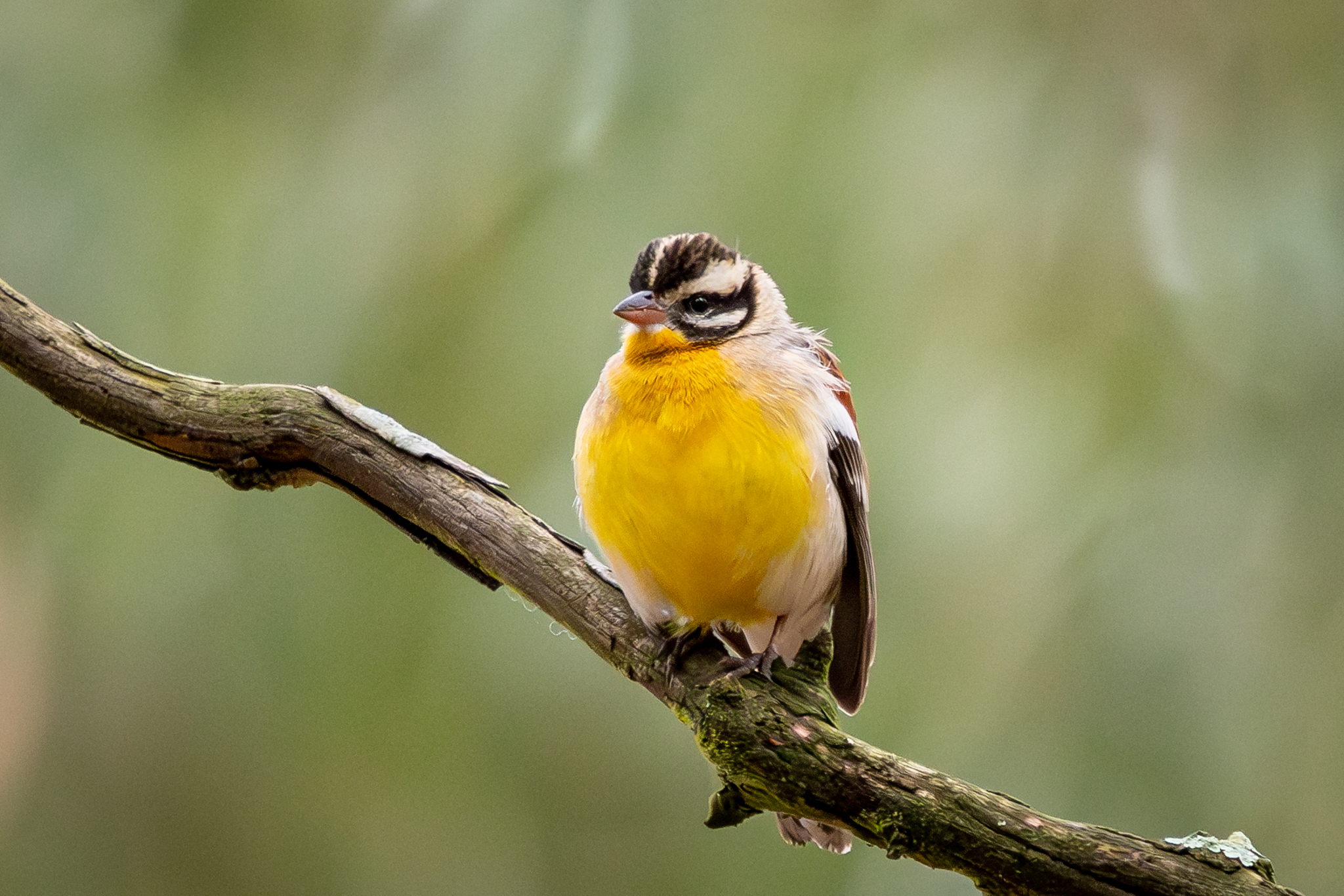
We woke up to the smell of breakfast at Forellenhof Guest Farm but, being with Josh, there was birding to be done first. We walked around the property and up the entrance road and spotted one of the most beautiful birds yet – a Golden-breasted Bunting. Such a striking breast, offset by the striped head. I could have missed breakfast just watching this bird (but I did need my coffee).
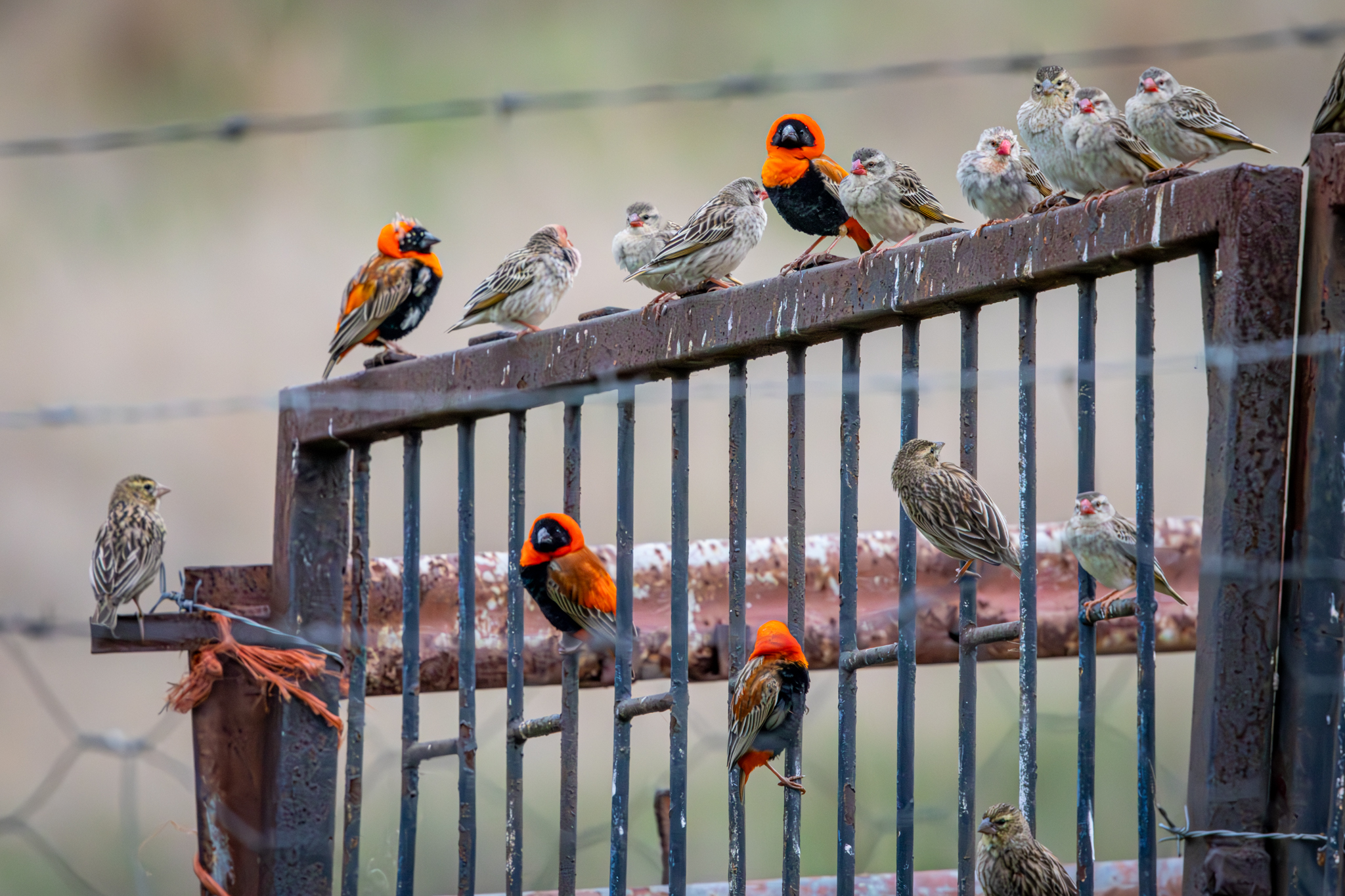
An old rusty gate keeping the sheep out of the yard was a popular gathering place for Southern Red Bishop (with the red cowl) and Red-billed Quelea (smaller gray with red bills).
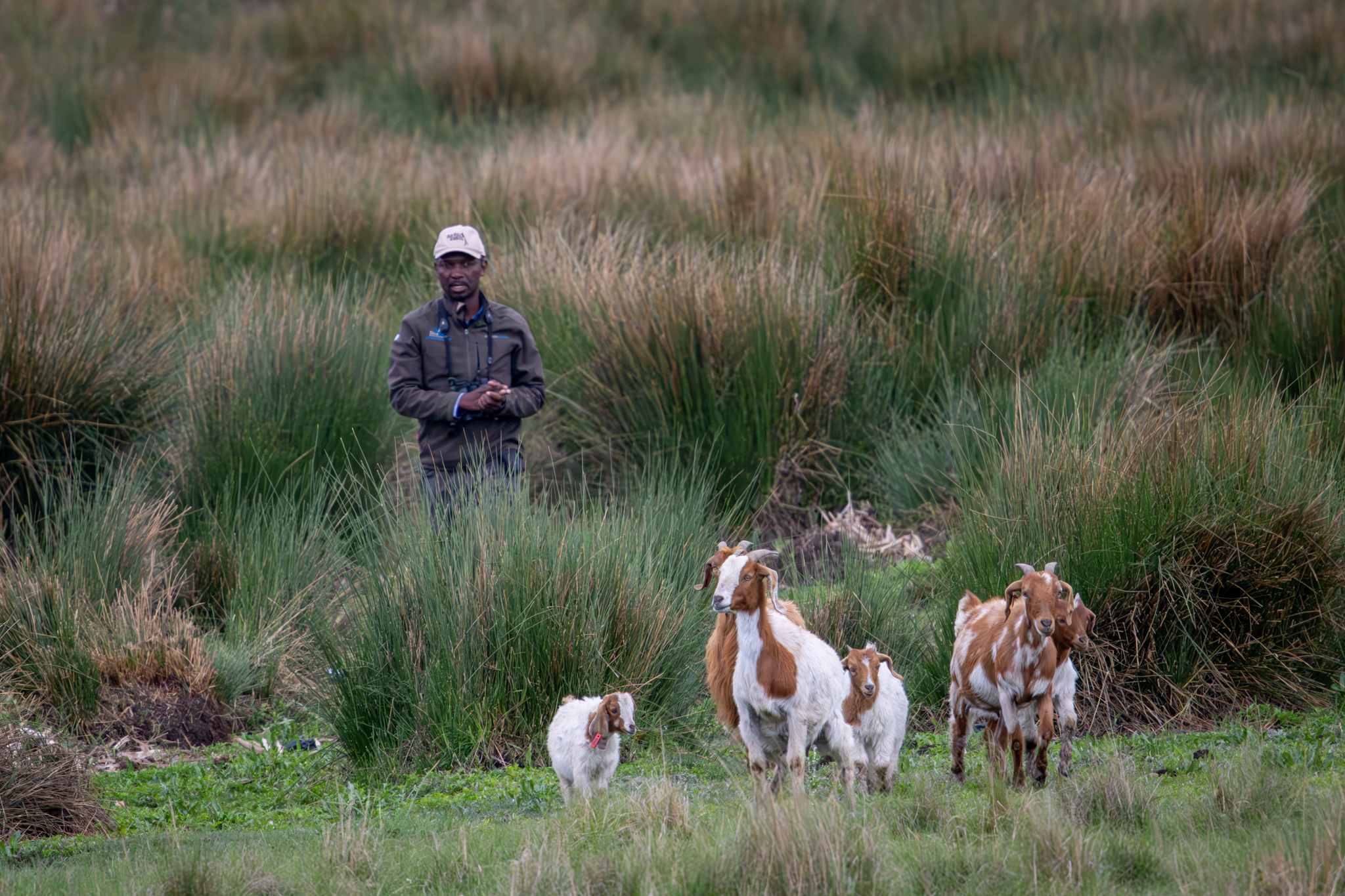
After a hearty breakfast (and coffee) we took off to explore the area around the town of Wakkerstroom. David, our local guide for the past 11 days, lived in town and knew just where to find the birds. At one spot he jumped out of the vehicle and walked along a stream running through a pasture with goats in it. Clapping his hands as he walked toward the vehicle he flushed a couple of African Snipe for us.
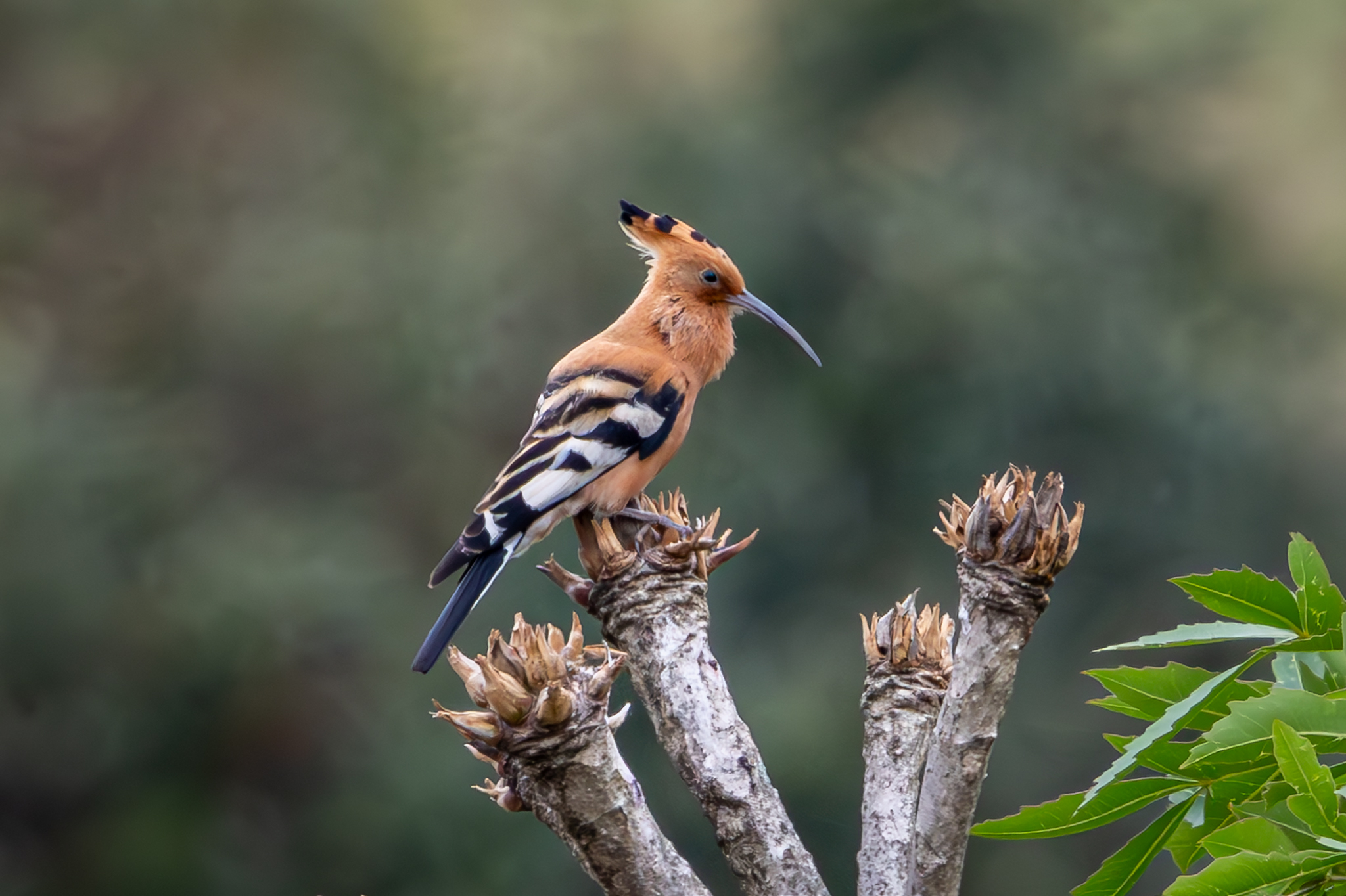
We spent two days in and around Wakkerstroom doing roadside birding; the roads were pretty deserted so we would often get out and walk a bit. A fan favorite, we stopped and watched an African Hoopoe forage for food and fly between a cluster of trees.
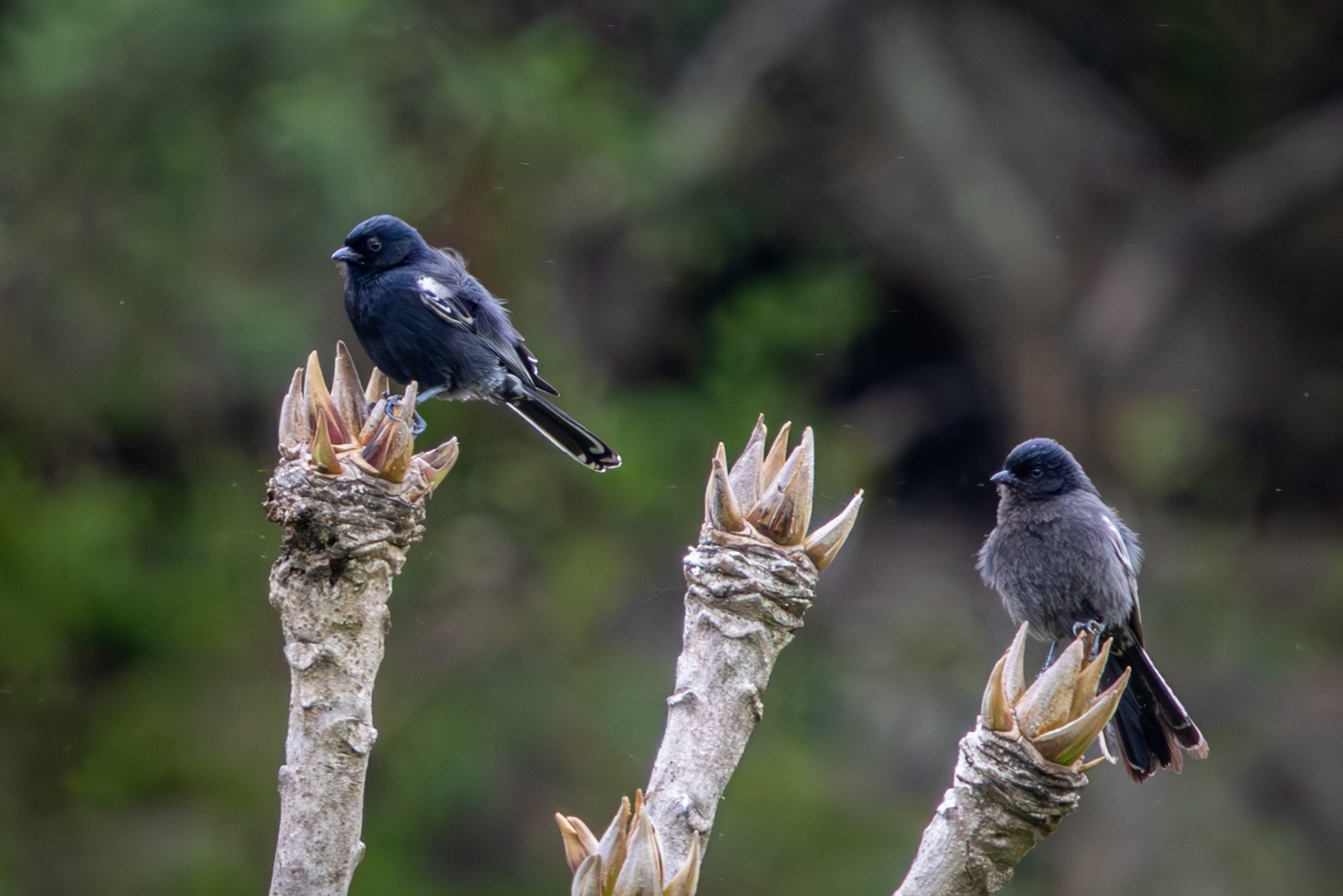
Patience has its virtues – as we lingered in the Hoopoe area a pair of Southern Black Tits few in for a few moments. Male is on the left.
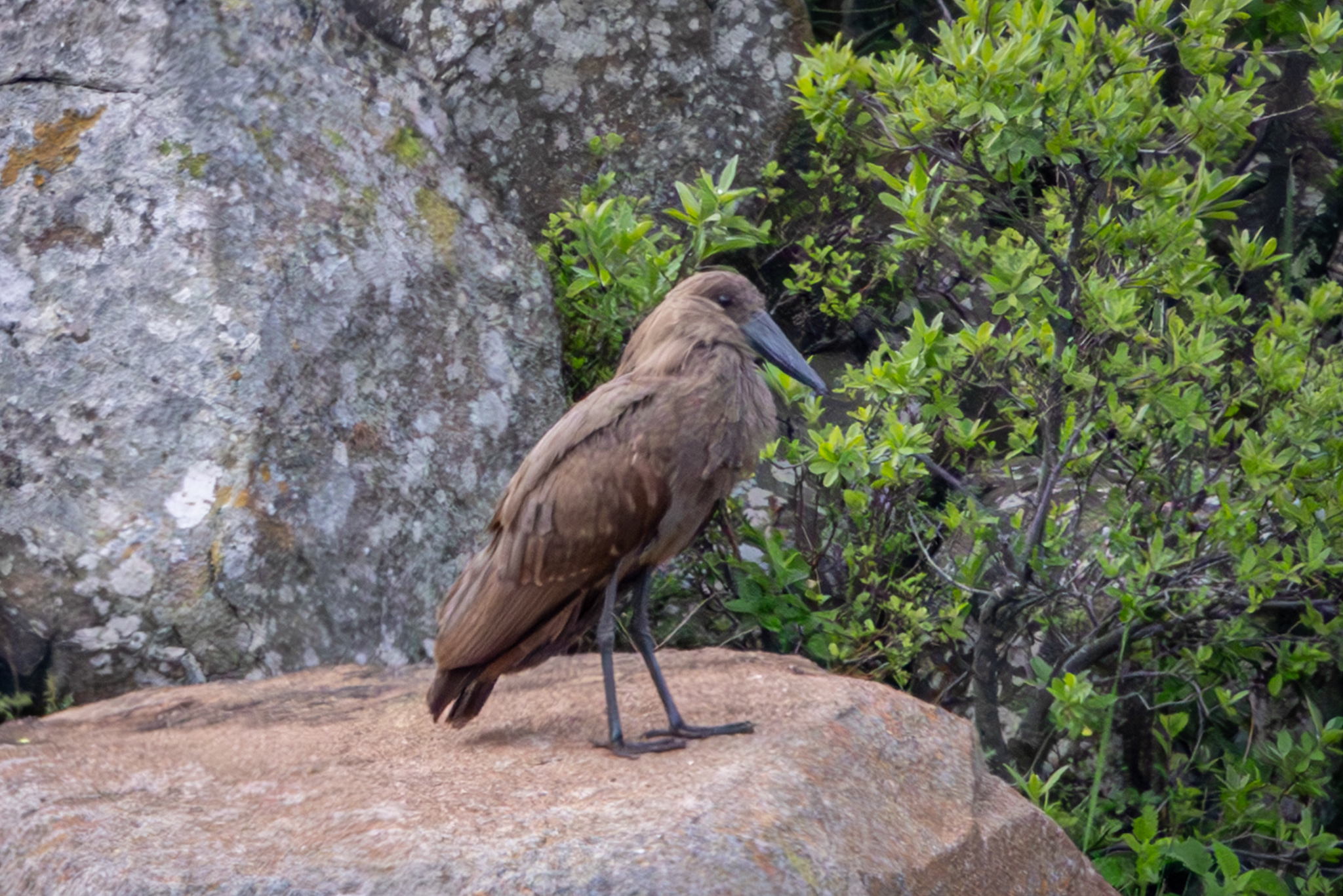
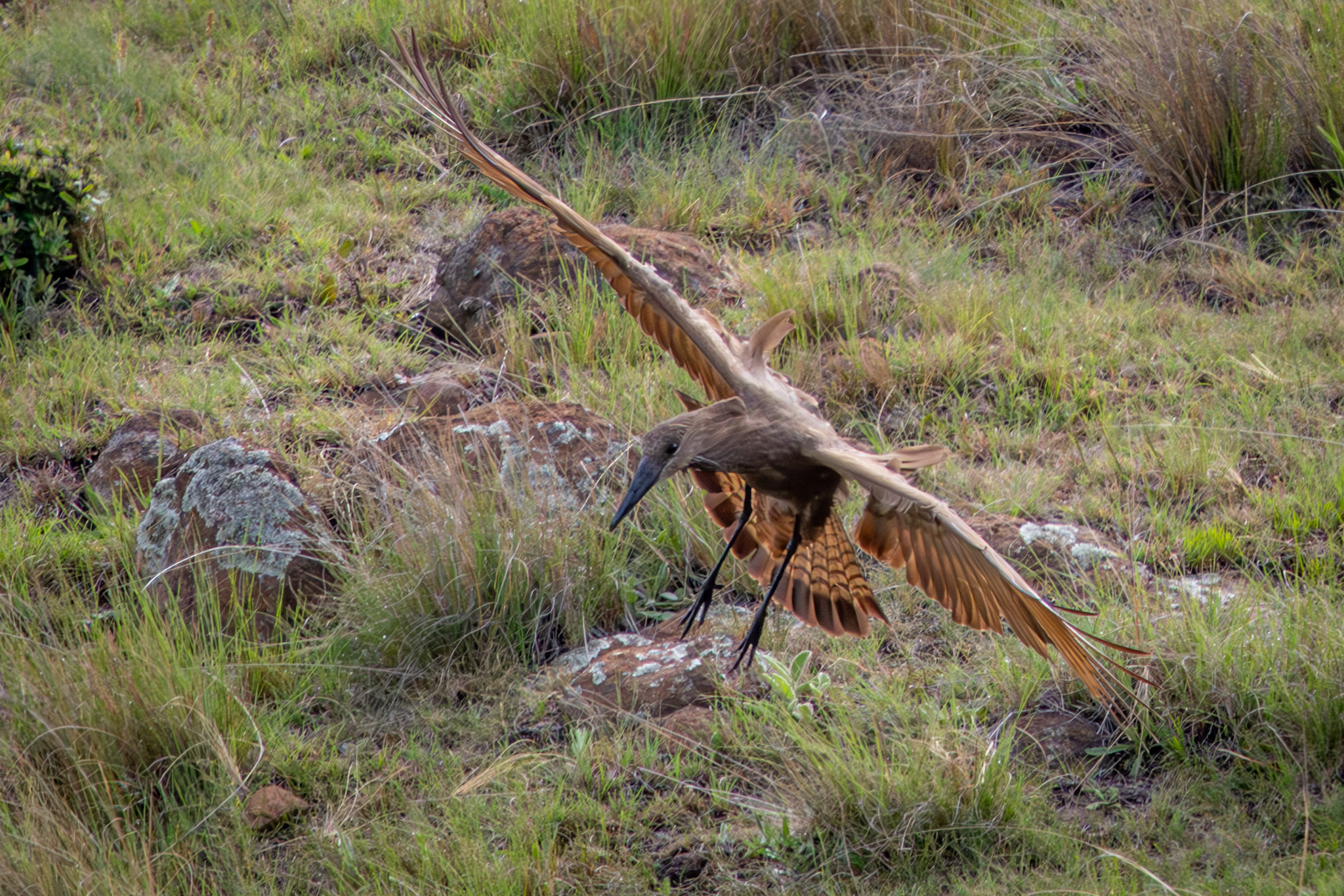
Everyone on the trip came with a list of must-see birds. High on my list was the Hamerkop. This prehistoric-looking bird has an oversized bill and oriental-looking eyes. The chocolate colored feathers are not particularly attractive and its overall appearance is sullen and exotic, but I loved it! Seeing this one bird was almost worth the price of the trip!
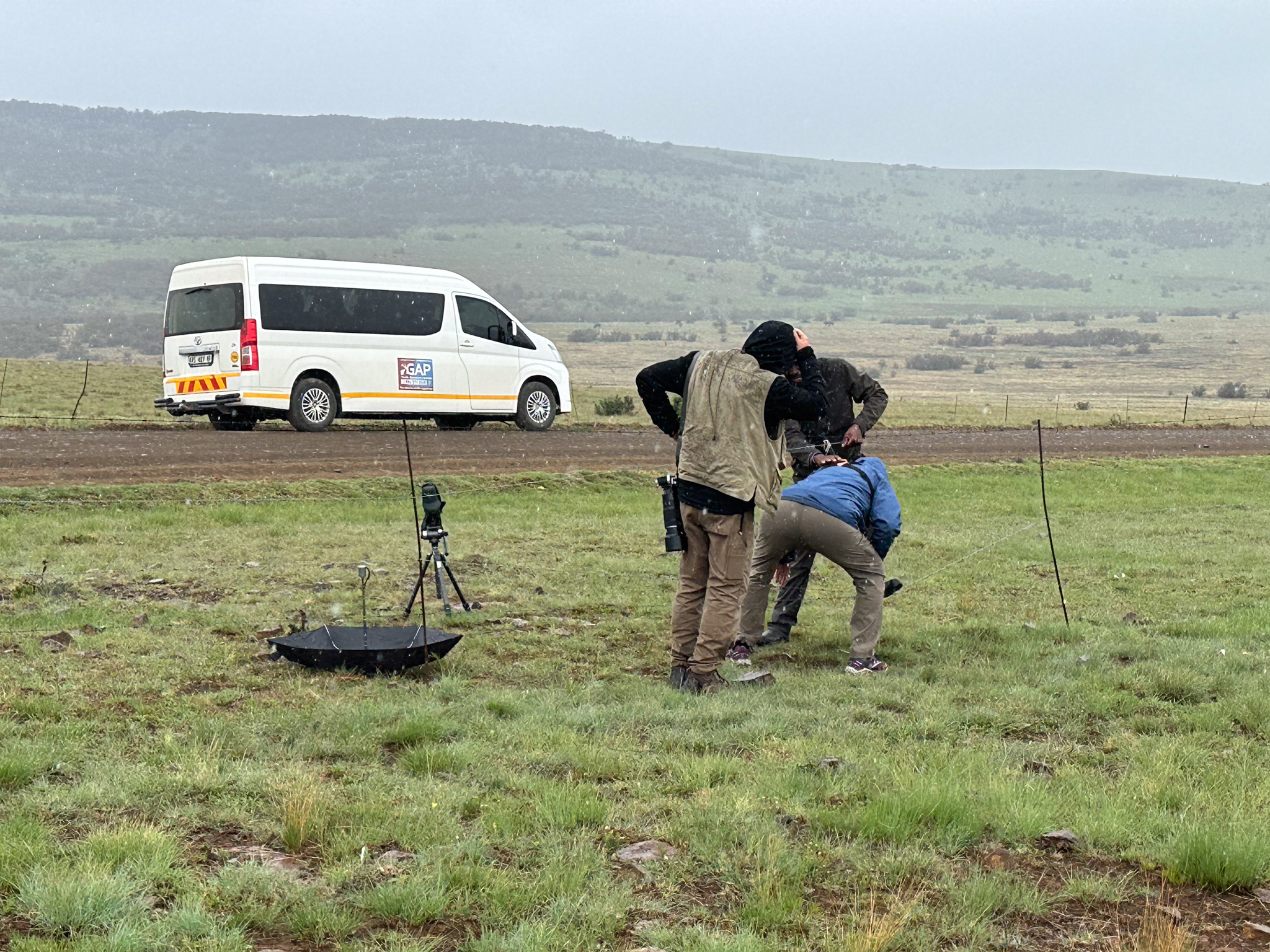
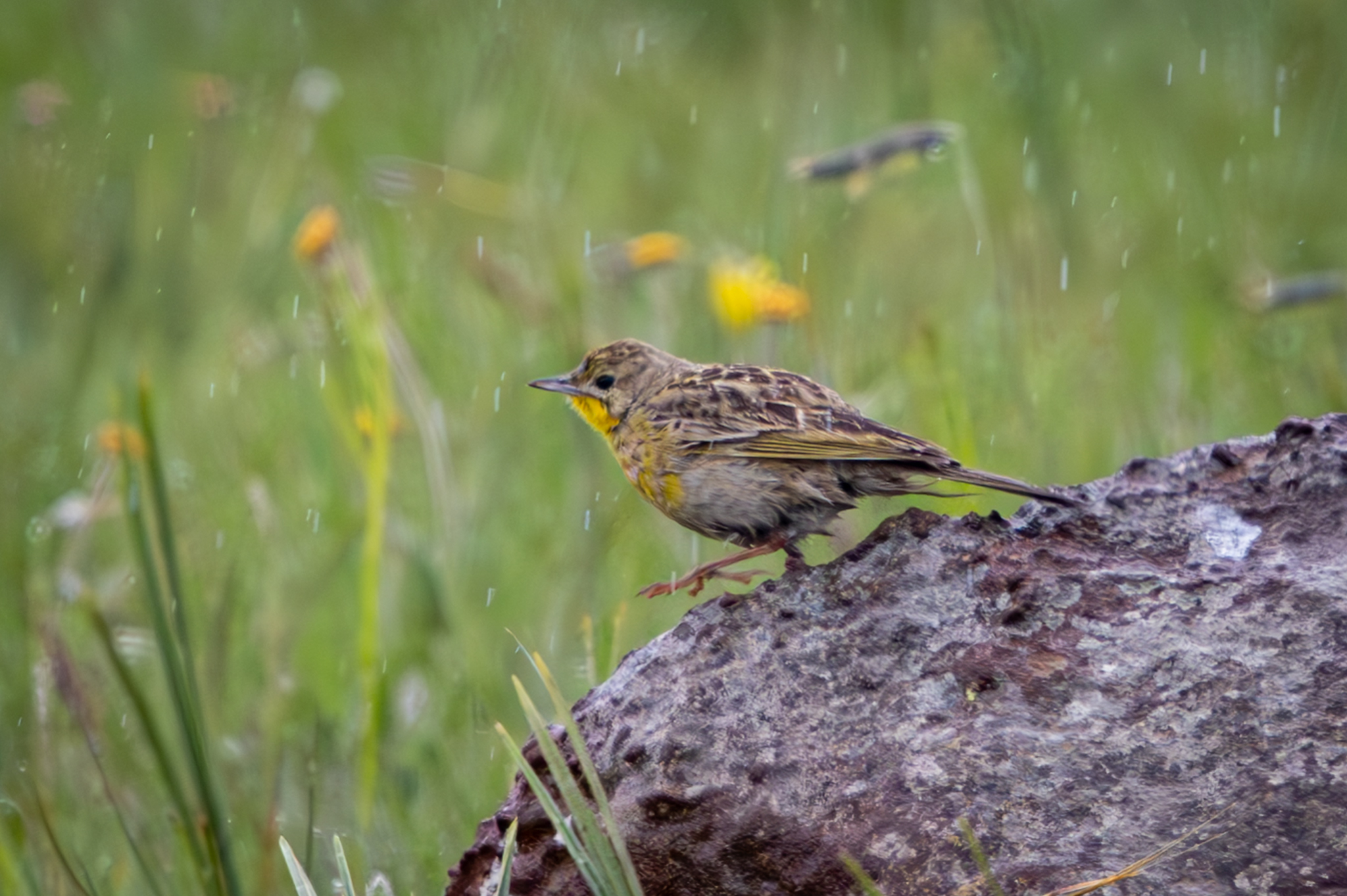
Our second day in Waakerstroom was wet and rainy. We passed by a field where David knew a Yellow-breasted Pipit could be found but it was raining so hard we decided to come back later. After lunch in a cozy restaurant in downtown Waakerstroom we went back to the field. It just so happened that the field was surrounded by a barbed wire fence but David had permission from the rancher to enter in search of the pipit. Here Karen crouches through two strands of the barbed wires as David and Edward hold them open.
About time we found the Yellow-breasted Pipit it started to rain pretty hard. I snapped a couple of pictures and then quickly returned back through the fence to the van. When I entered my pictures into our eBird checklist I noted that only 350 images of this species were in the database, which is a very low number (compared to a common bird like the American Robin which has over 375,000 images). I like to feel some of my pictures, particularly of the less-seen birds, are helpful to scientists studying the species from afar.
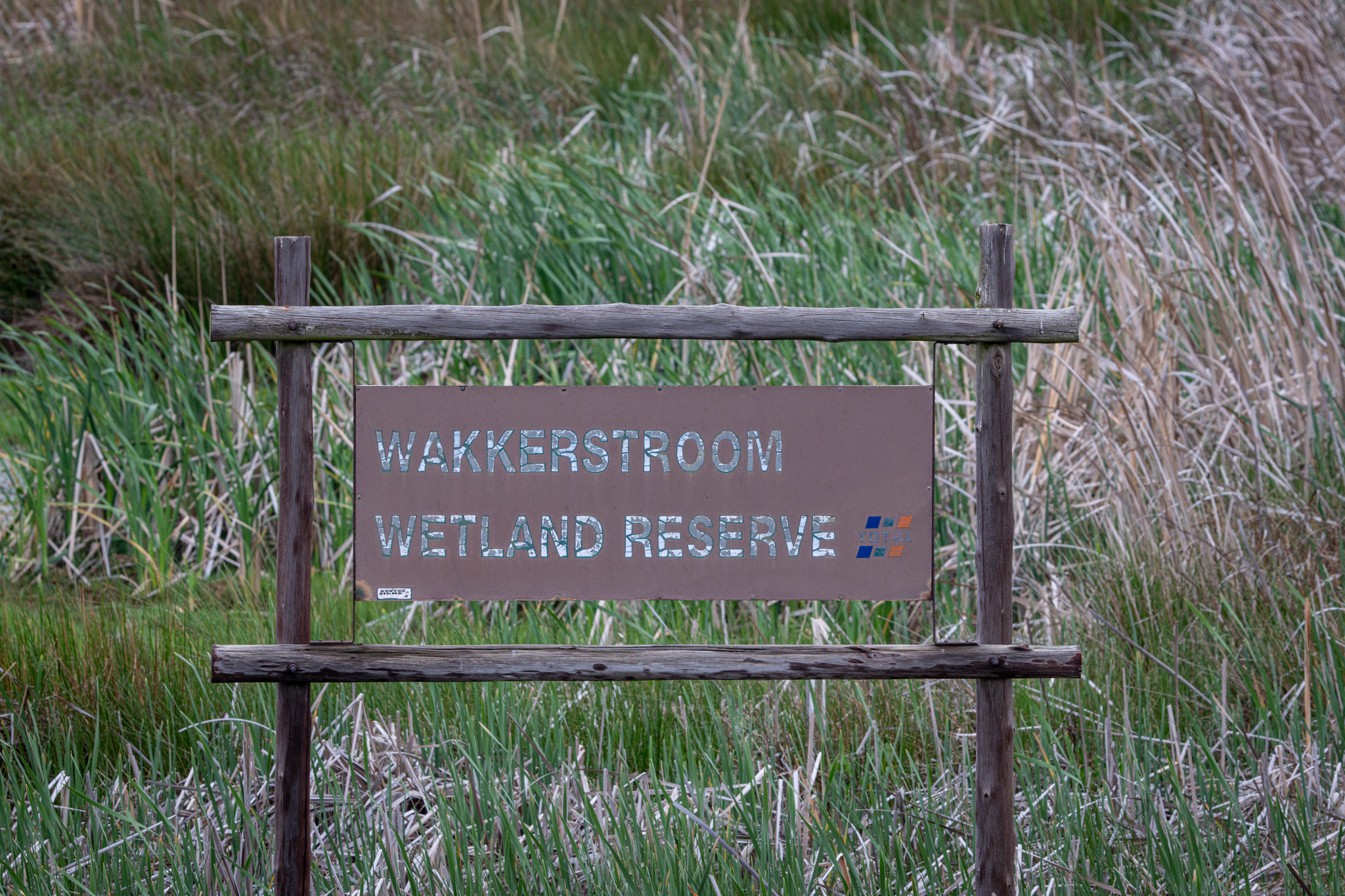
At the end of each day we would stop at the bridge crossing the Wakkerstroom Wetland Reserve looking for birds attracted to that habitat.
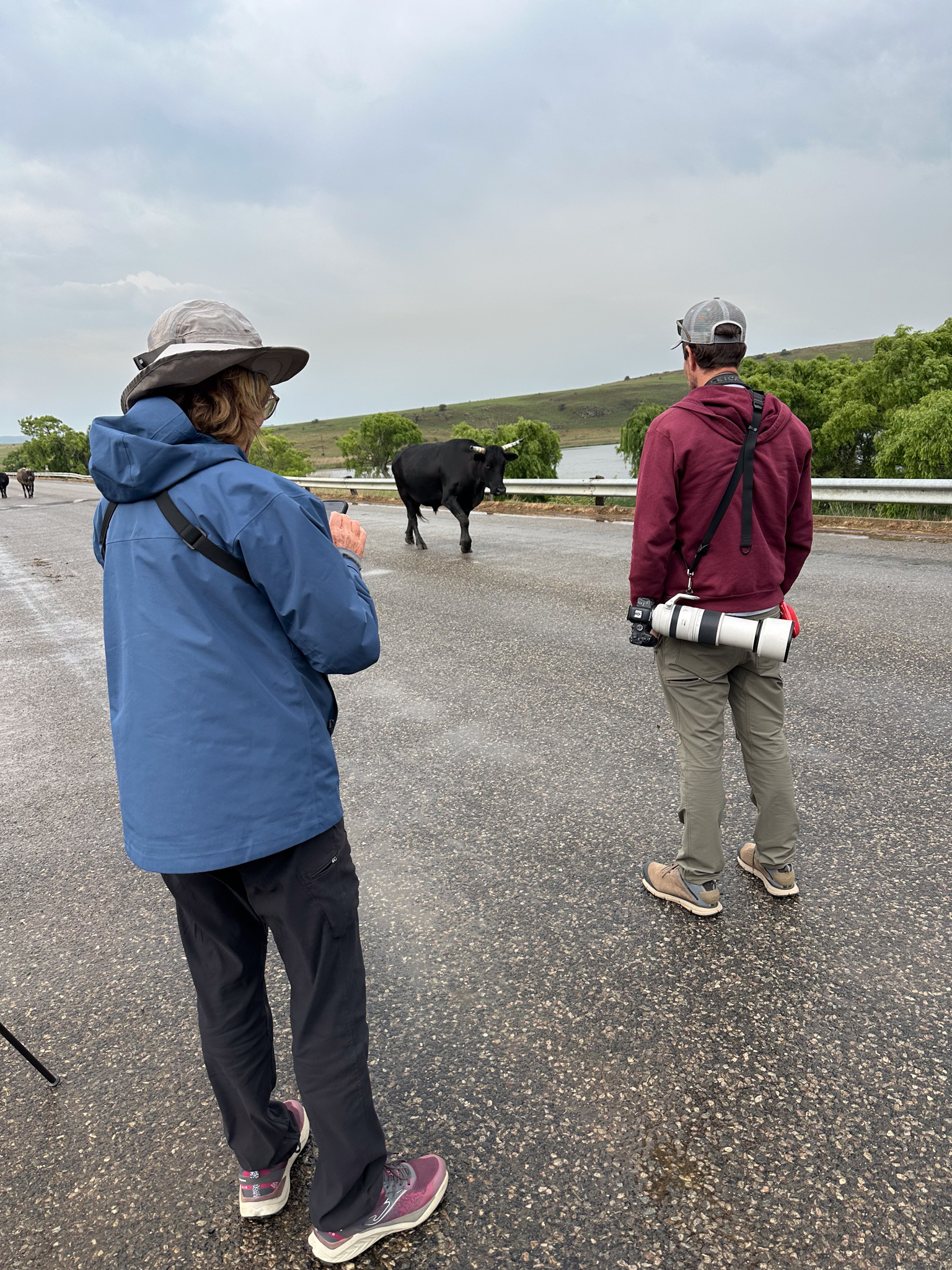
Being at the end of the day we did encounter rush hour on the bridge as cows were on their way home.
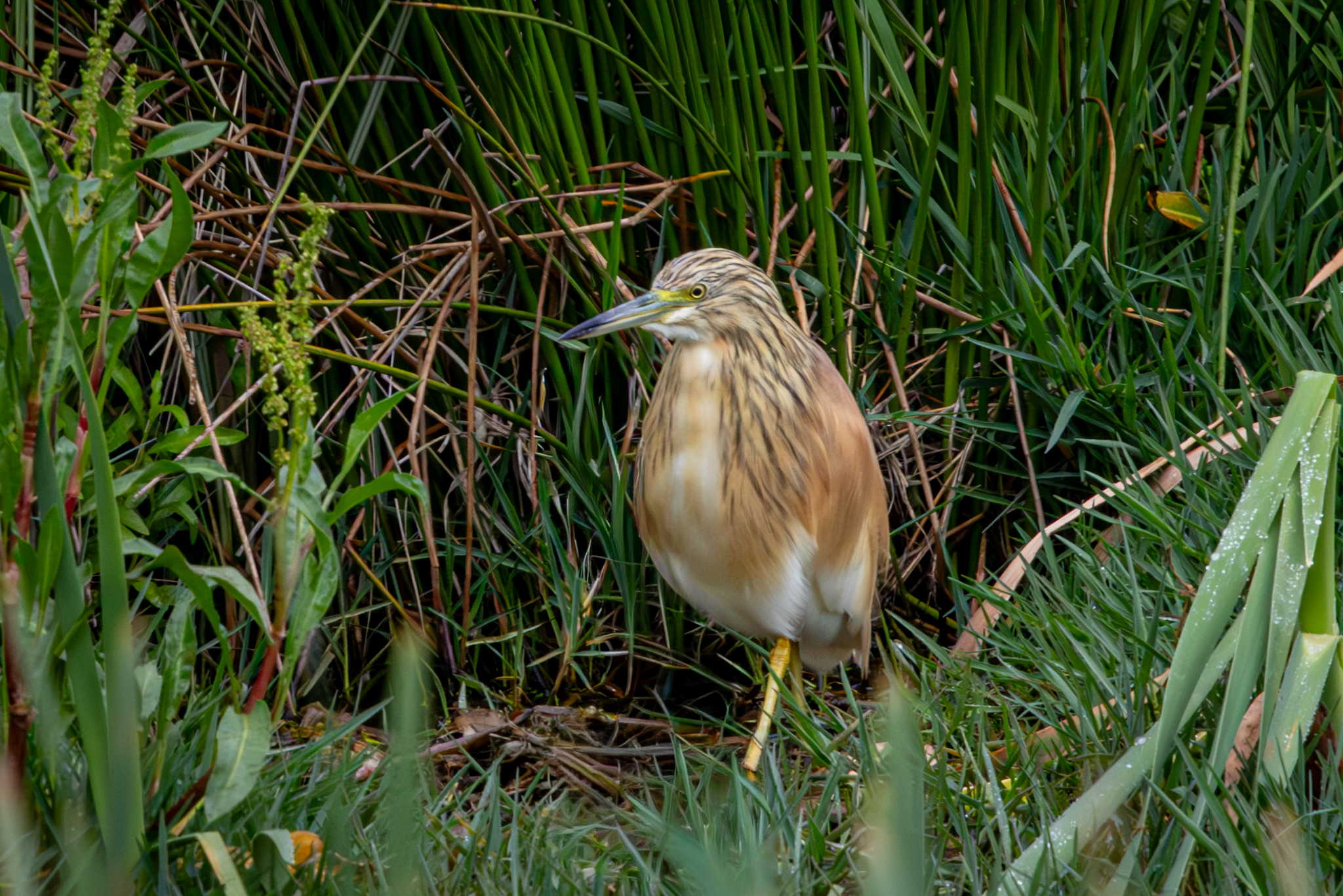
Looking down into the marsh we spotted a variety of waterfowl including South African Shelducks, Southern Pochard, and a Little Rush Warbler. My favorite (partially because I was actually able to get a picture of it as opposed to the others) was this Squacco Heron.
On the last afternoon in Waakerstroom we said goodbye to David and dropped him off at his house. David had been with us since our first day at Cinnamon House and he was as good as they get – sharp eyes and ears with a kind and gentle soul. You did a great job, David!
Our local guide for the rest of the trip was Edward (he joined us in Johannesburg), and he knew Kruger National Park like the back of his hand. In the next post I will take you right up to the entrance of Kruger, where we saw 13 Lifers while standing on a bridge.
CLICK HERE to see all the posts about our South Africa Bird Tour. Karen and I have had the opportunity to travel to many interesting places in search of birds. If you would like read about some of our other Bird Tours CLICK HERE.
If you enjoy seeing beautiful pictures of birds from around the world and reading about them CLICK HERE to sign up for our mailing list. Members can post their own GreatBirdPics and learn more about bird photography techniques.