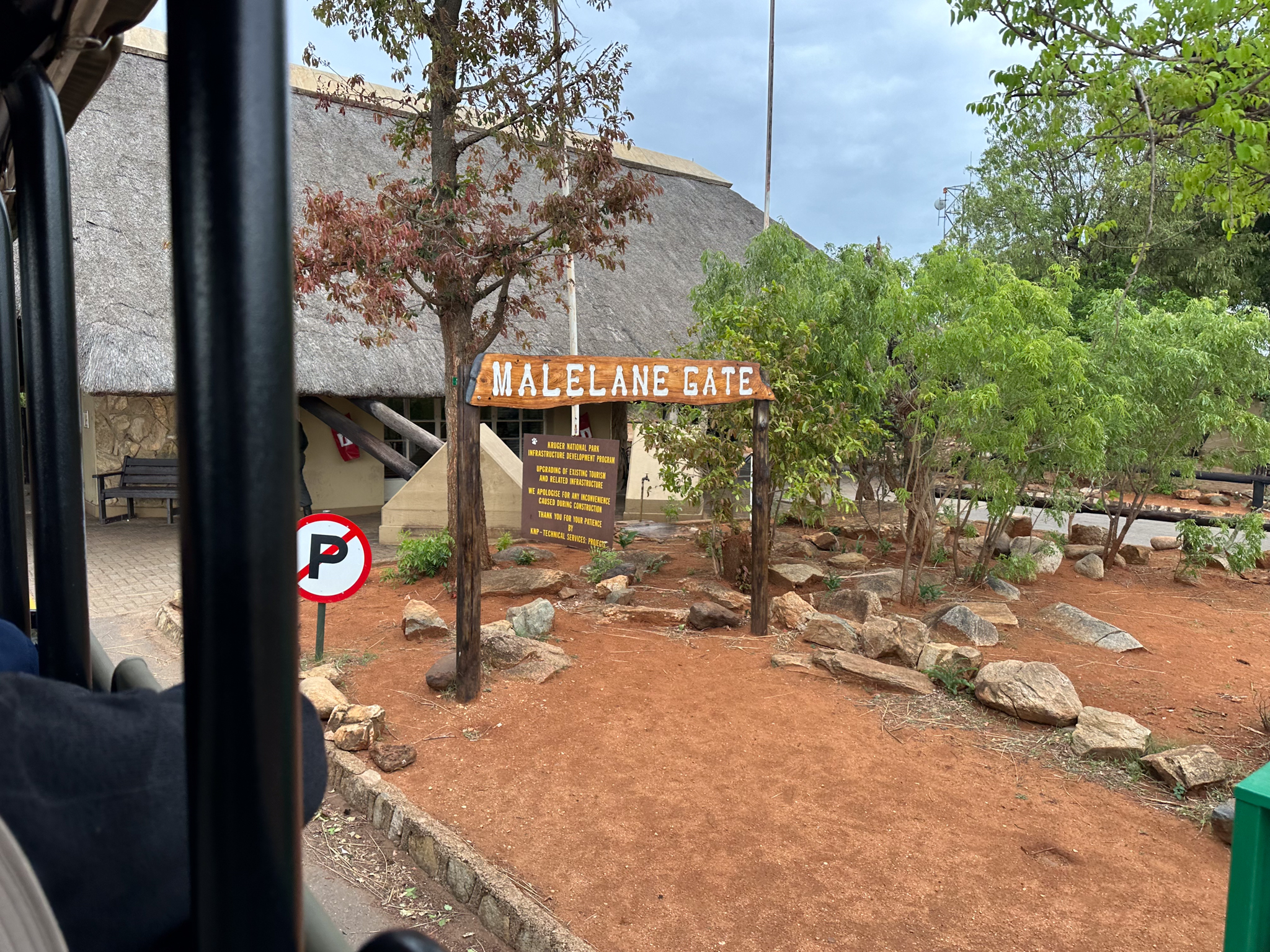
After almost two weeks in South Africa we finally passed through the Malelane Gate into Kruger National park.
Up to this point, whenever we were searching for a bird and missed, Josh would say, “We’ll see it in Kruger.” Indeed, he was right – I had 71 Lifers in the four days we were there. Add to that all the wonderful mammals we saw, Kruger definitely lived up to my expectations.
It was mid-afternoon by the time we actually passed through the gate, but we started seeing birds and animals immediately.
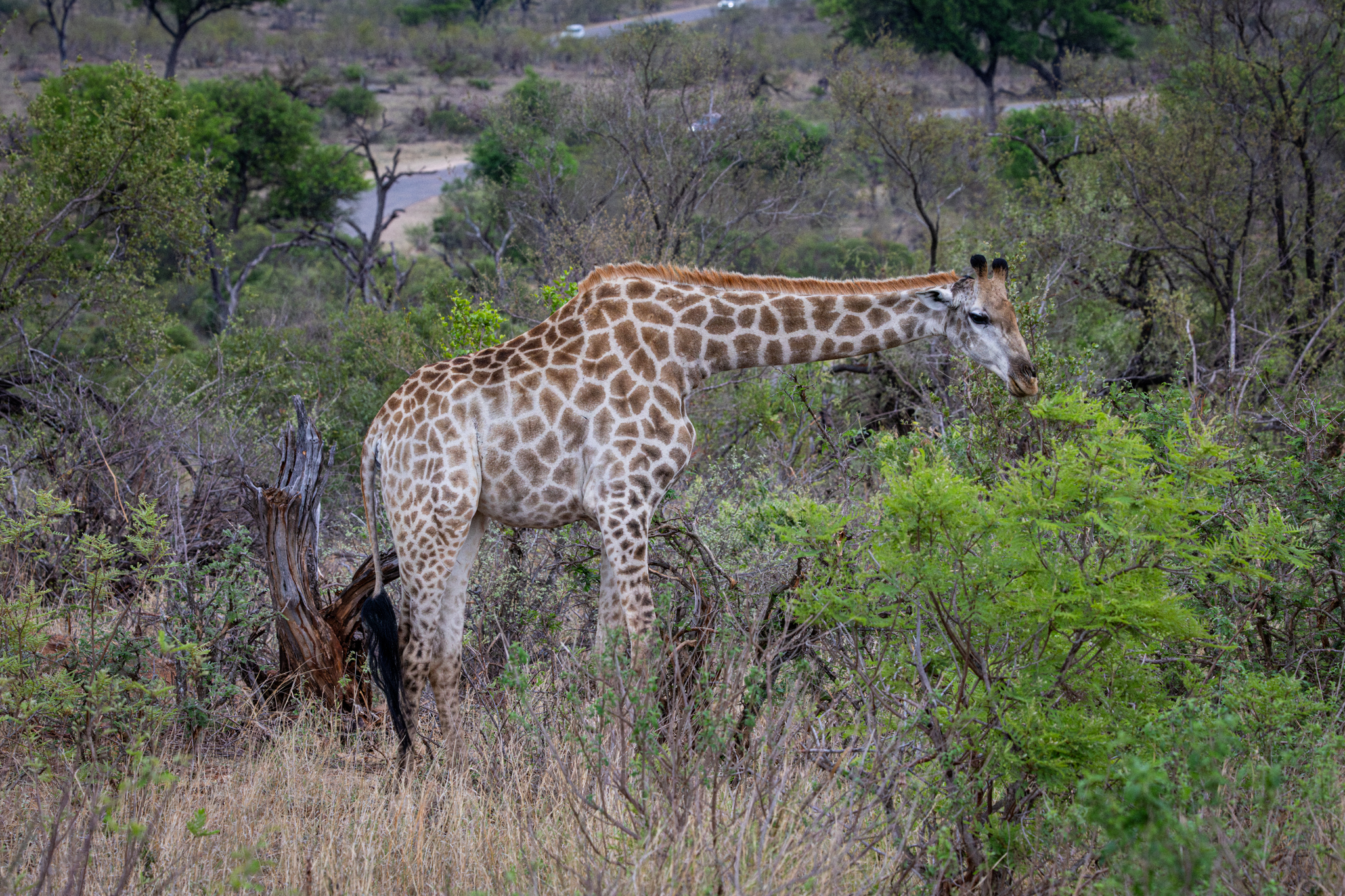
We saw many giraffe every day. These graceful animals crossed the road in front of us and grazed nearby without giving us a second thought.
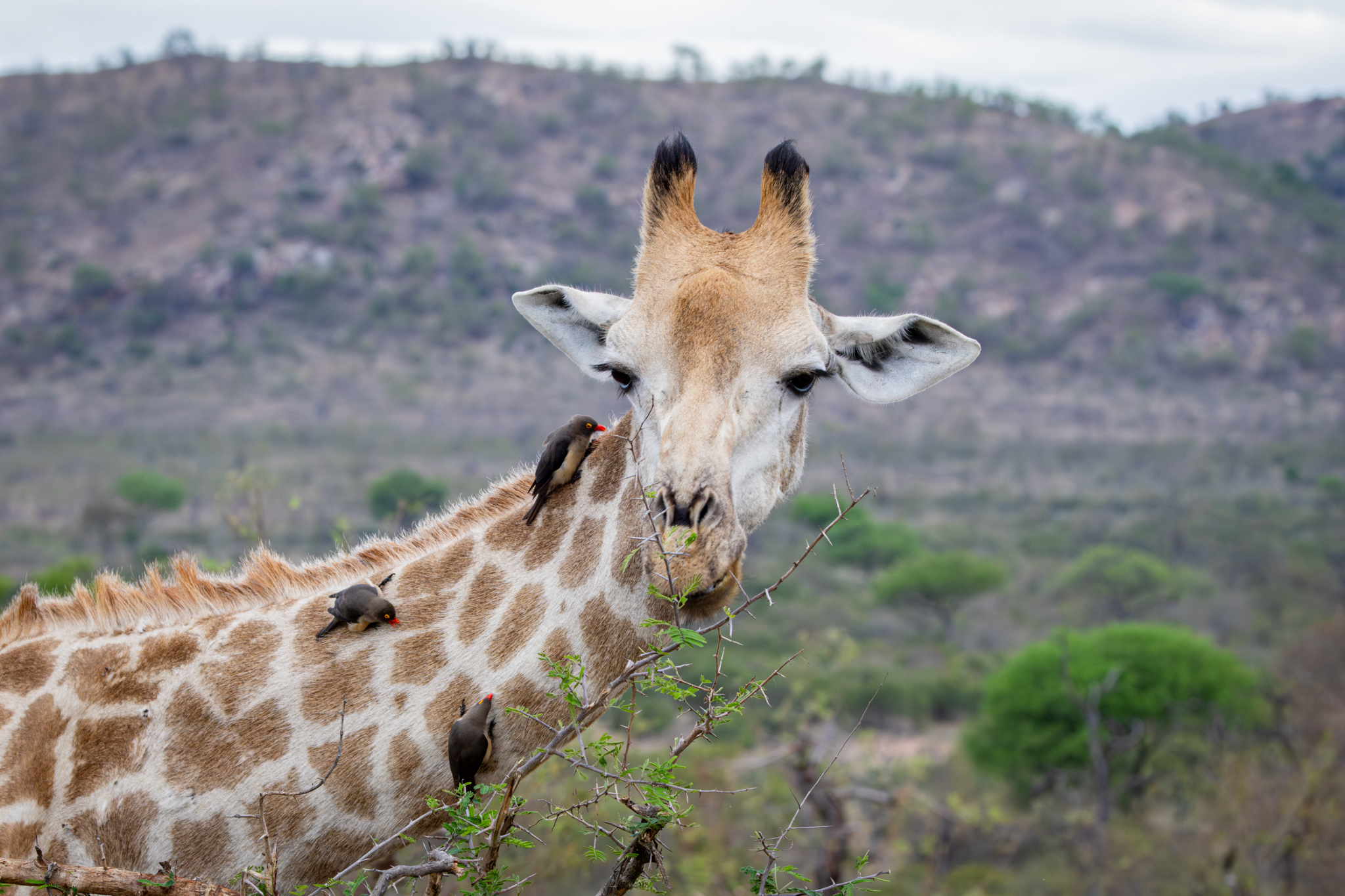
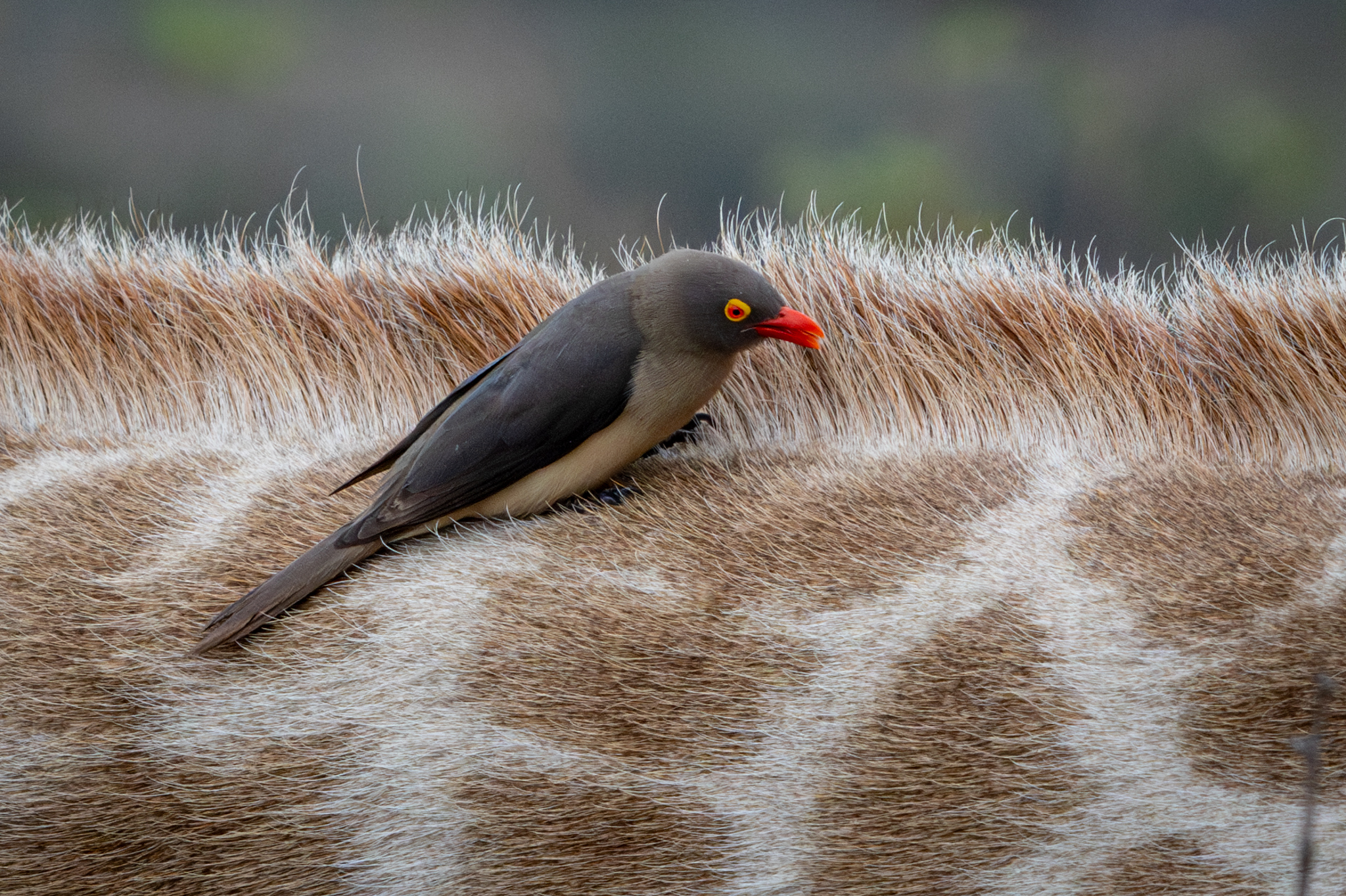
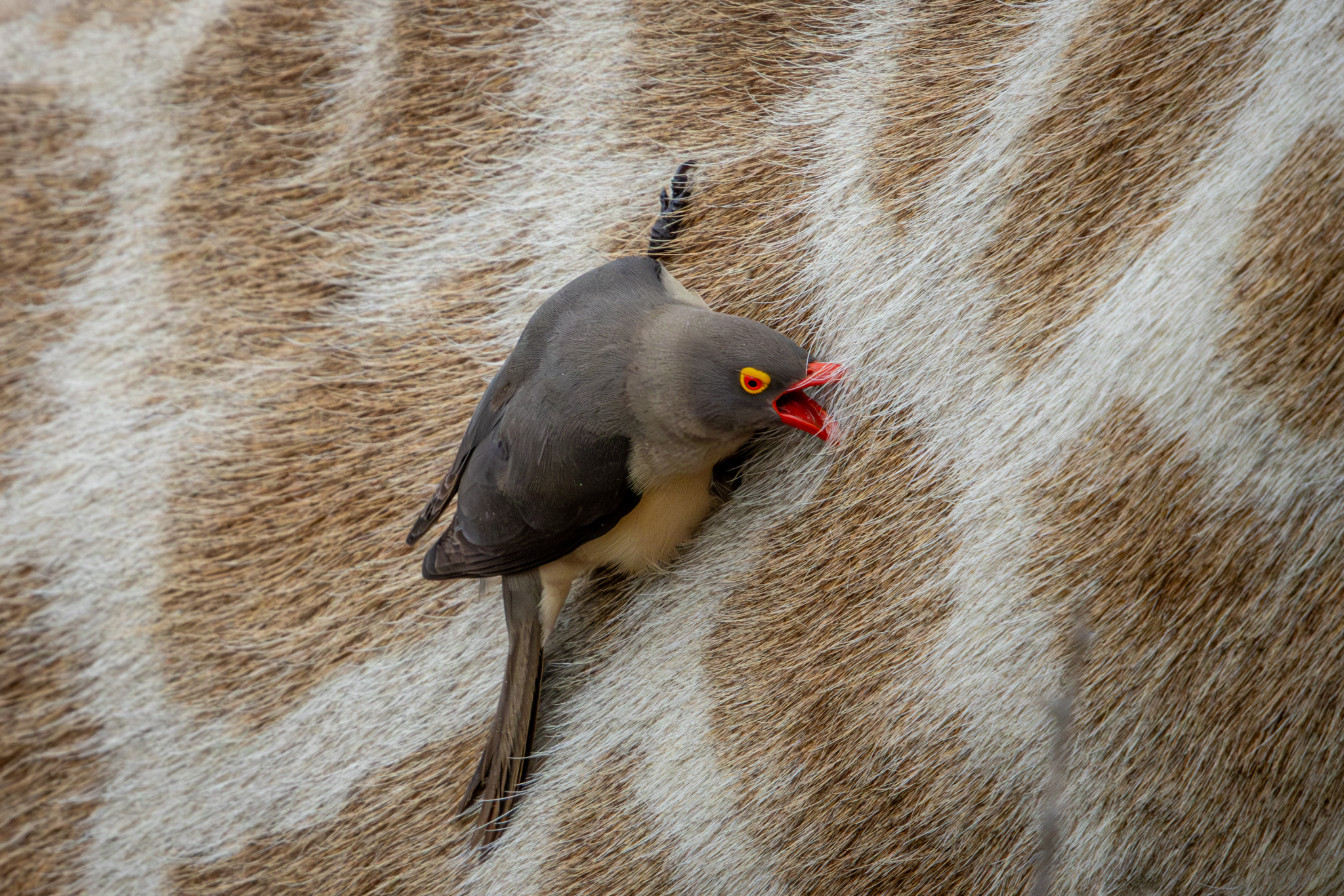
As the giraffe grazed, so did the Red-billed Oxpeckers – on the giraffe! These birds land on the giraffe and forage for parasites and mites that live in the giraffe’s hair. The giraffe usually puts up with this because it reduces the insect population on them, decreasing the chance of infection or disease.
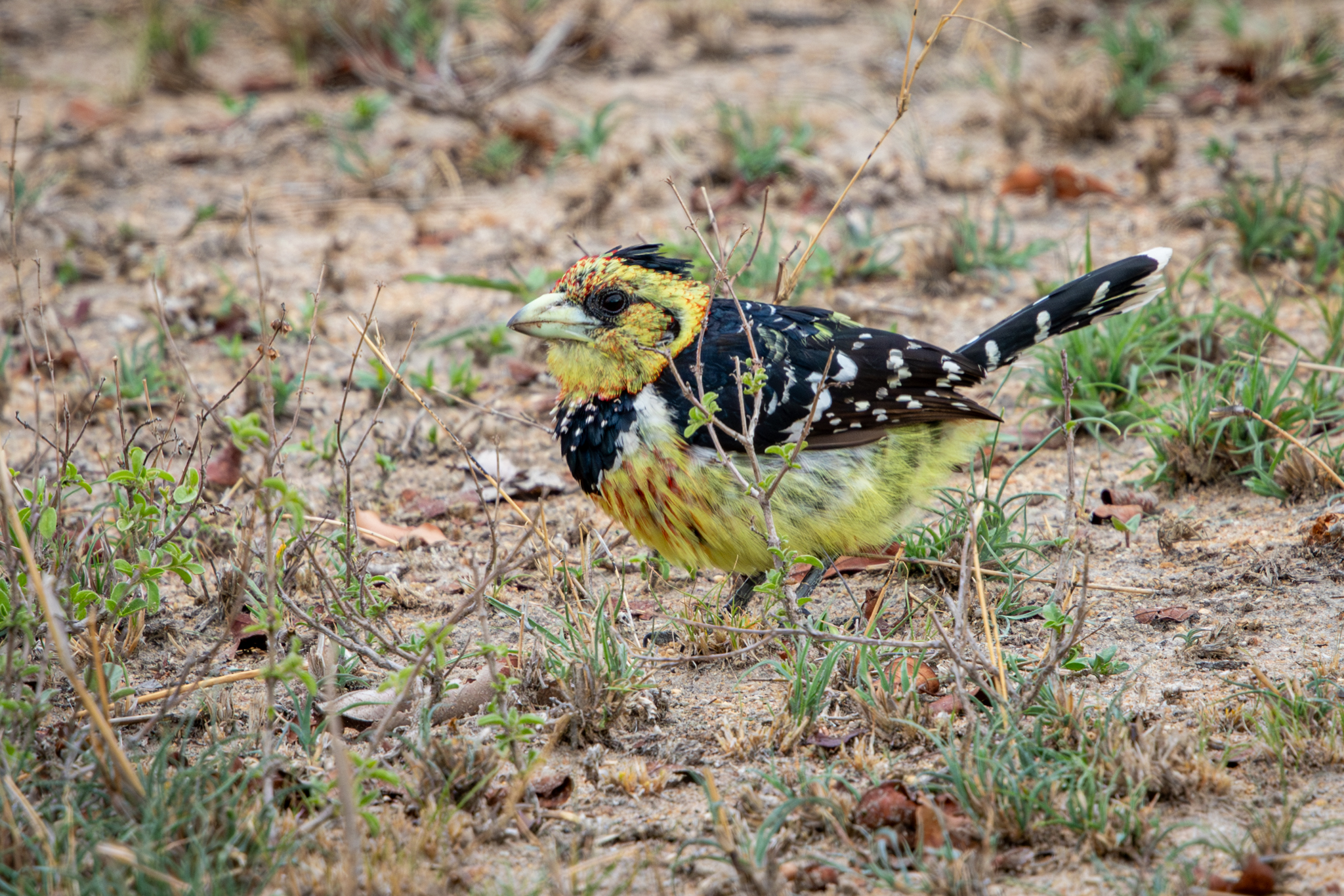
Recalling that we were not allowed to step out of our safari vehicle in Kruger we still were able to observe many birds along the roadways. Here is a Crested Barbet foraging for food on the ground.
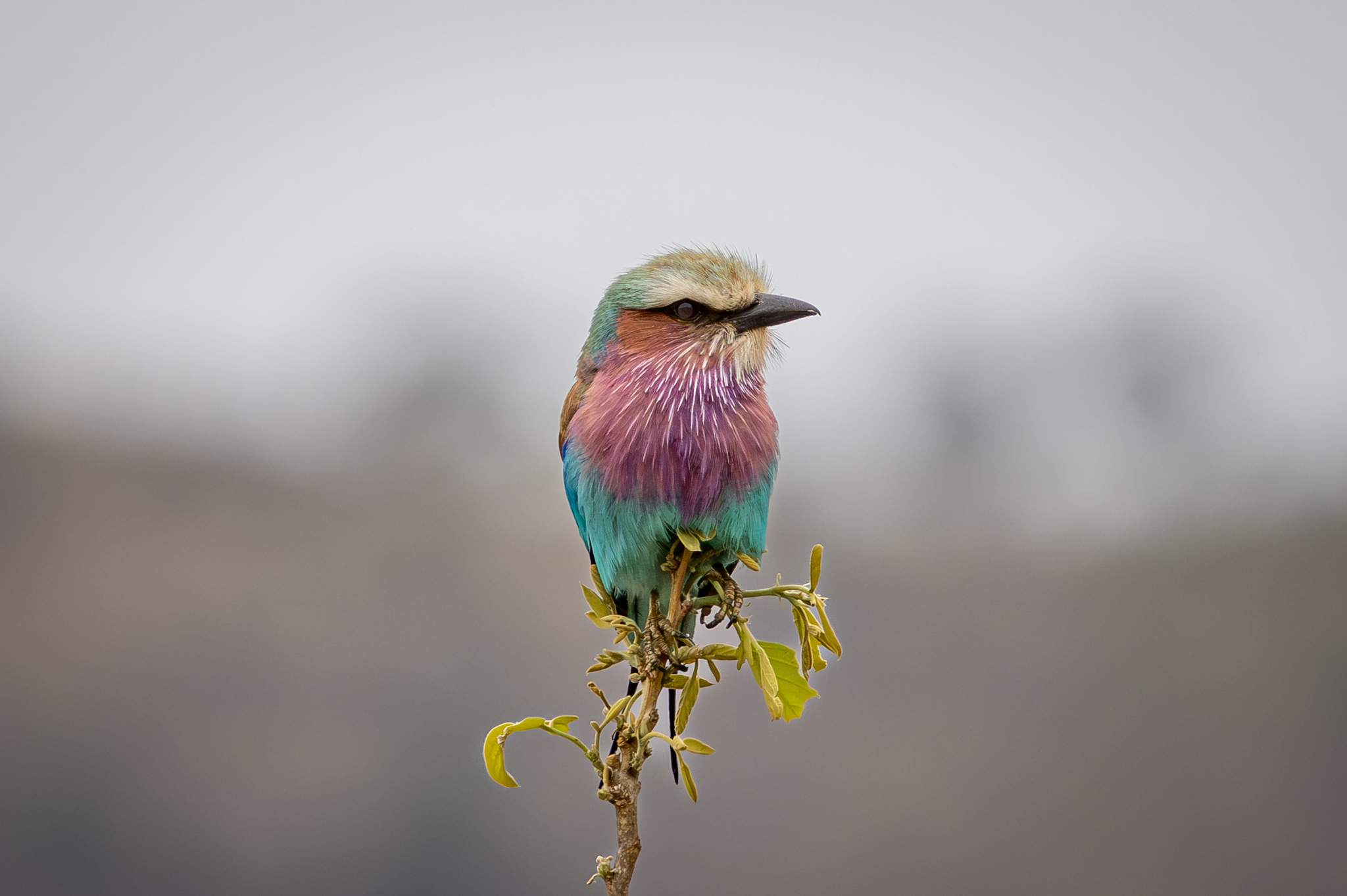
I never pass up and opportunity to photograph a Lilac-breasted Roller and this one was nearby. How many colors can you count?
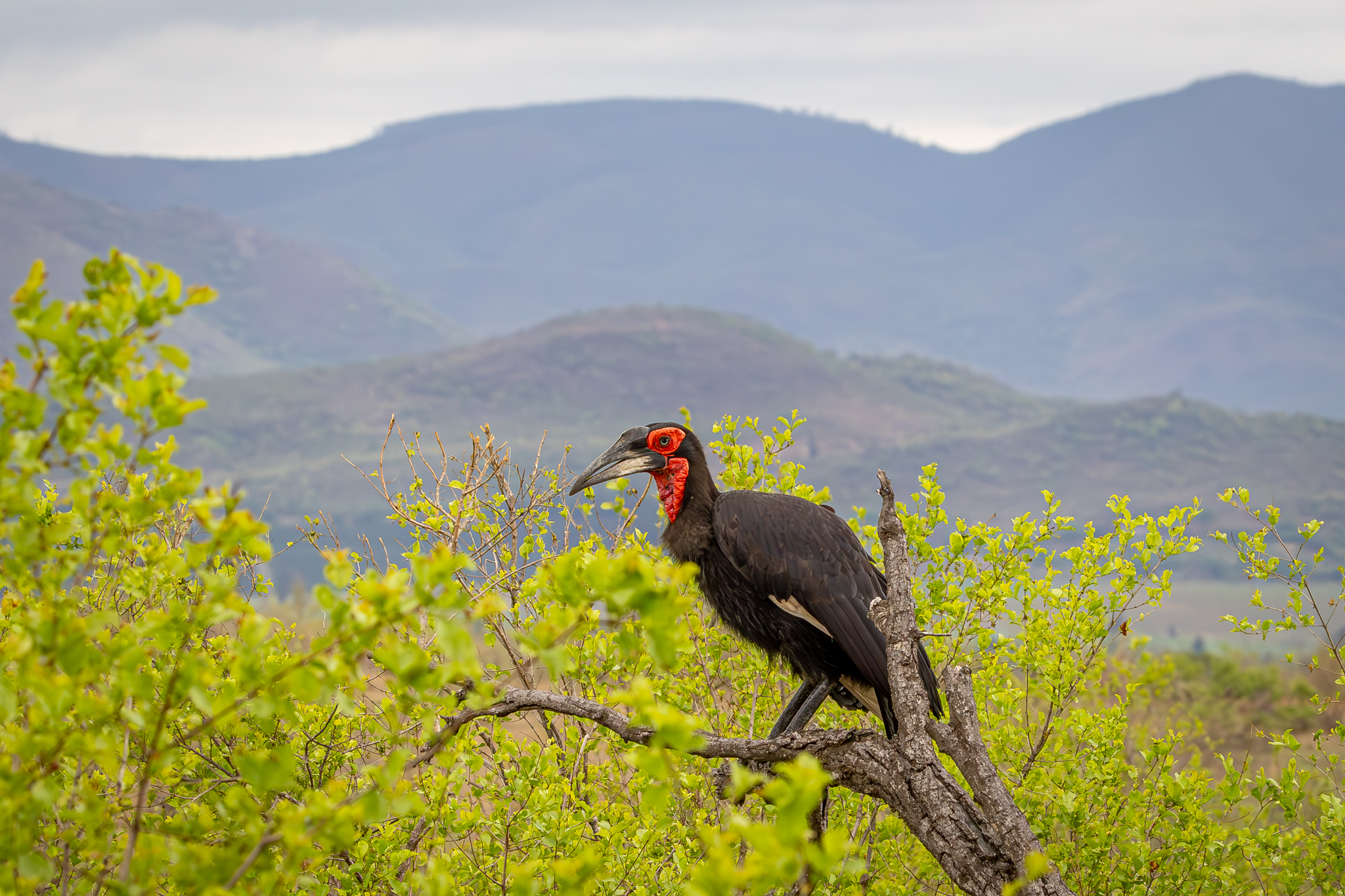
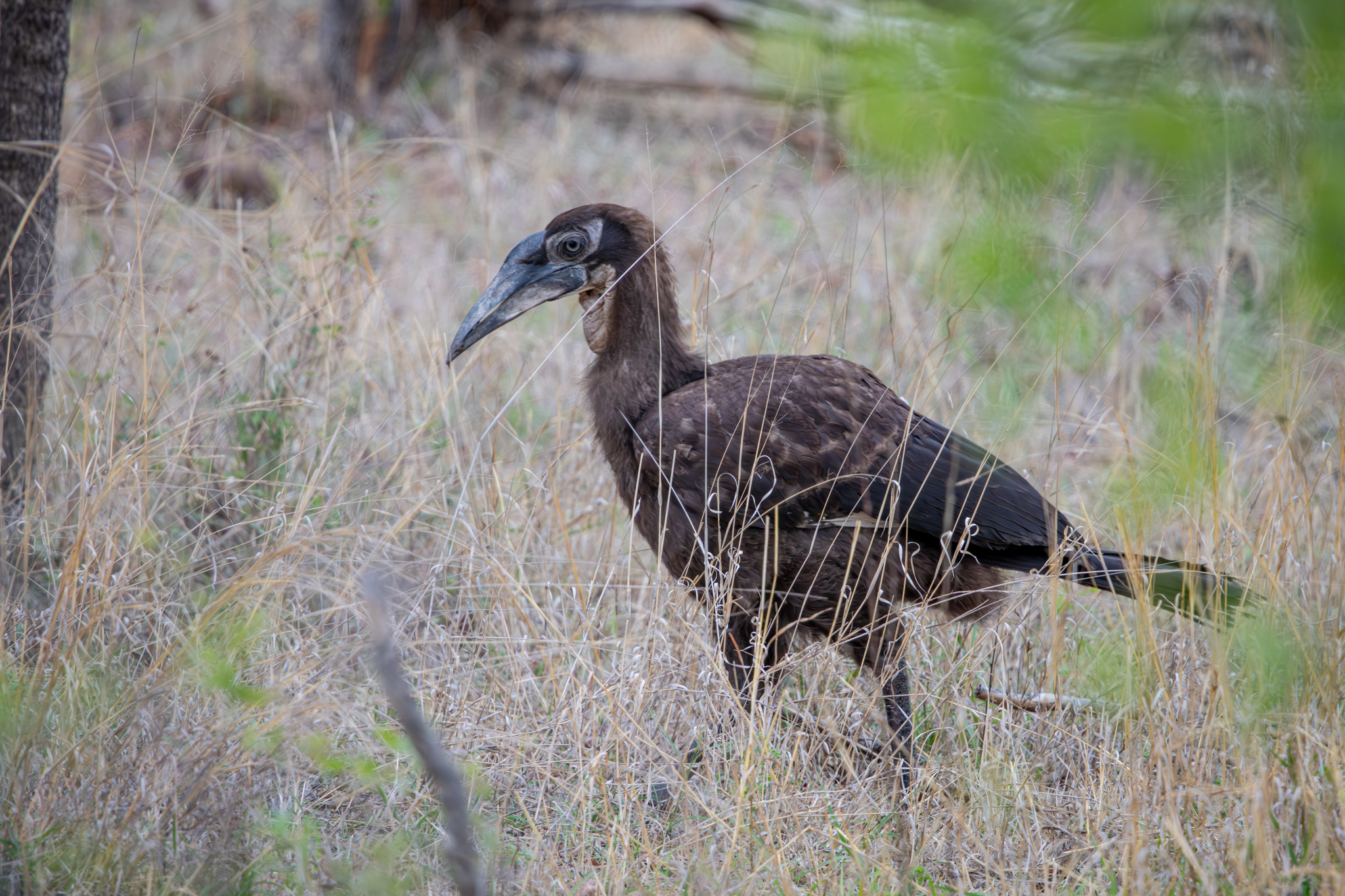
Hornbills are an iconic bird of Africa and we saw two species of them on our first day. First, a male and female Southern Ground Hornbill.
Later, a Southern Red-billed Hornbill buried in a tree.
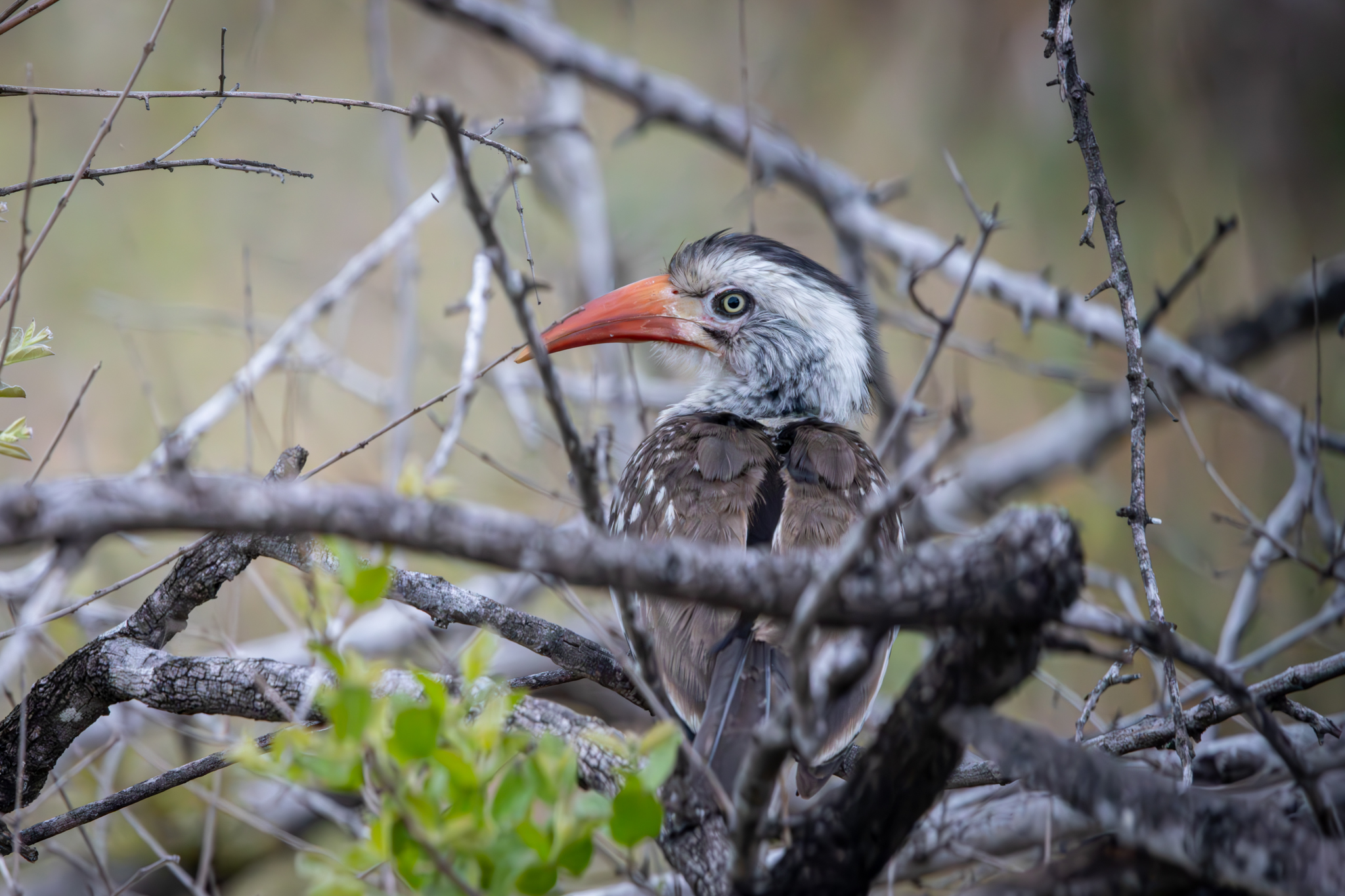
You can tell from these pictures that Kruger is not covered in lush, green jungle. Instead it is dominated by a relatively flat savannah covered in tall grasses and woodlands.
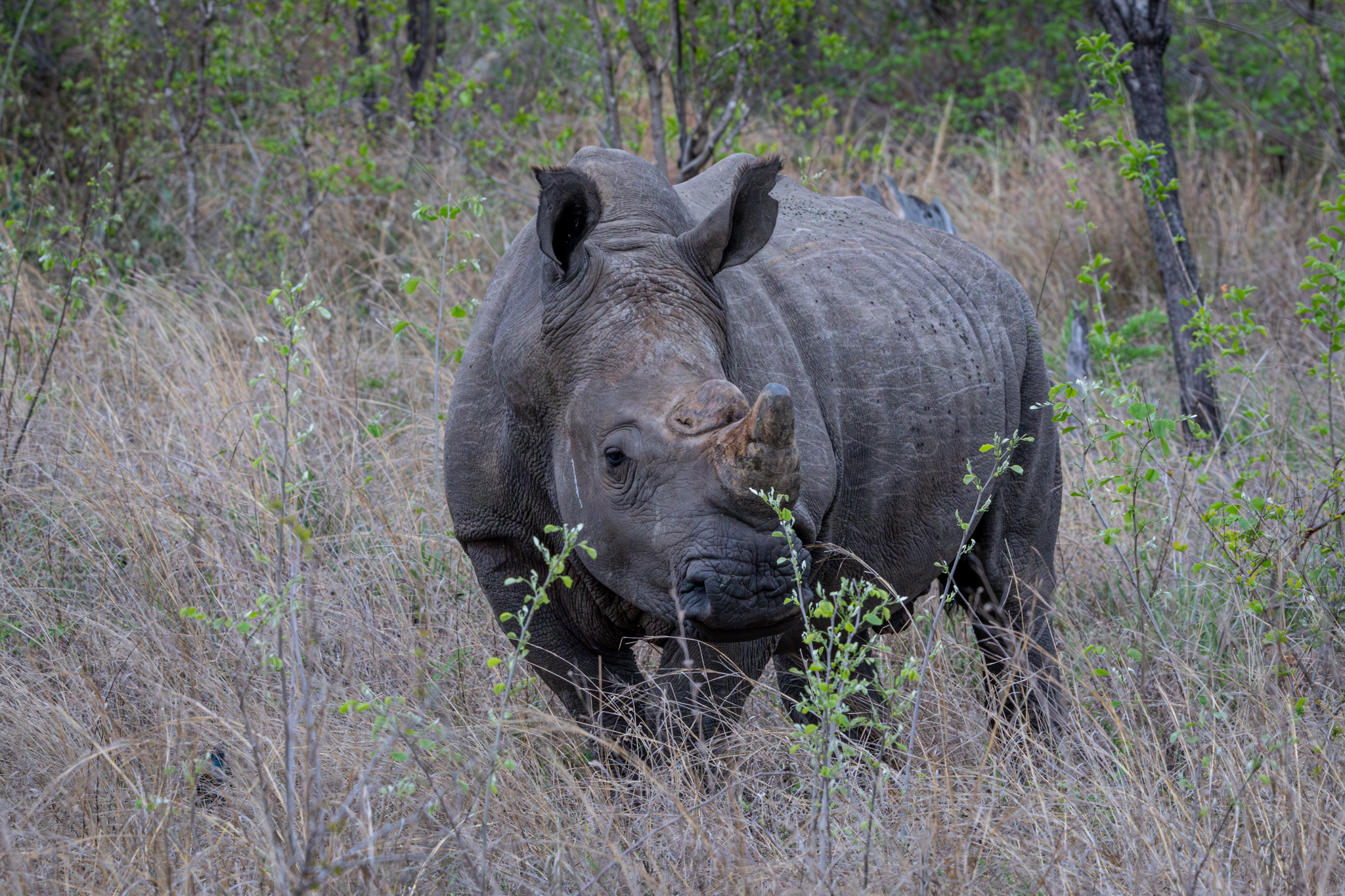
The grasslands make it an ideal habitat for herbivores. We found three Rhinoceros not far from the road. The first two shots are of a female and juvenile. Note that their horns have been removed by park staff, so poachers won’t kill them to harvest the horns (thought to be and aphrodisiac in the far East).
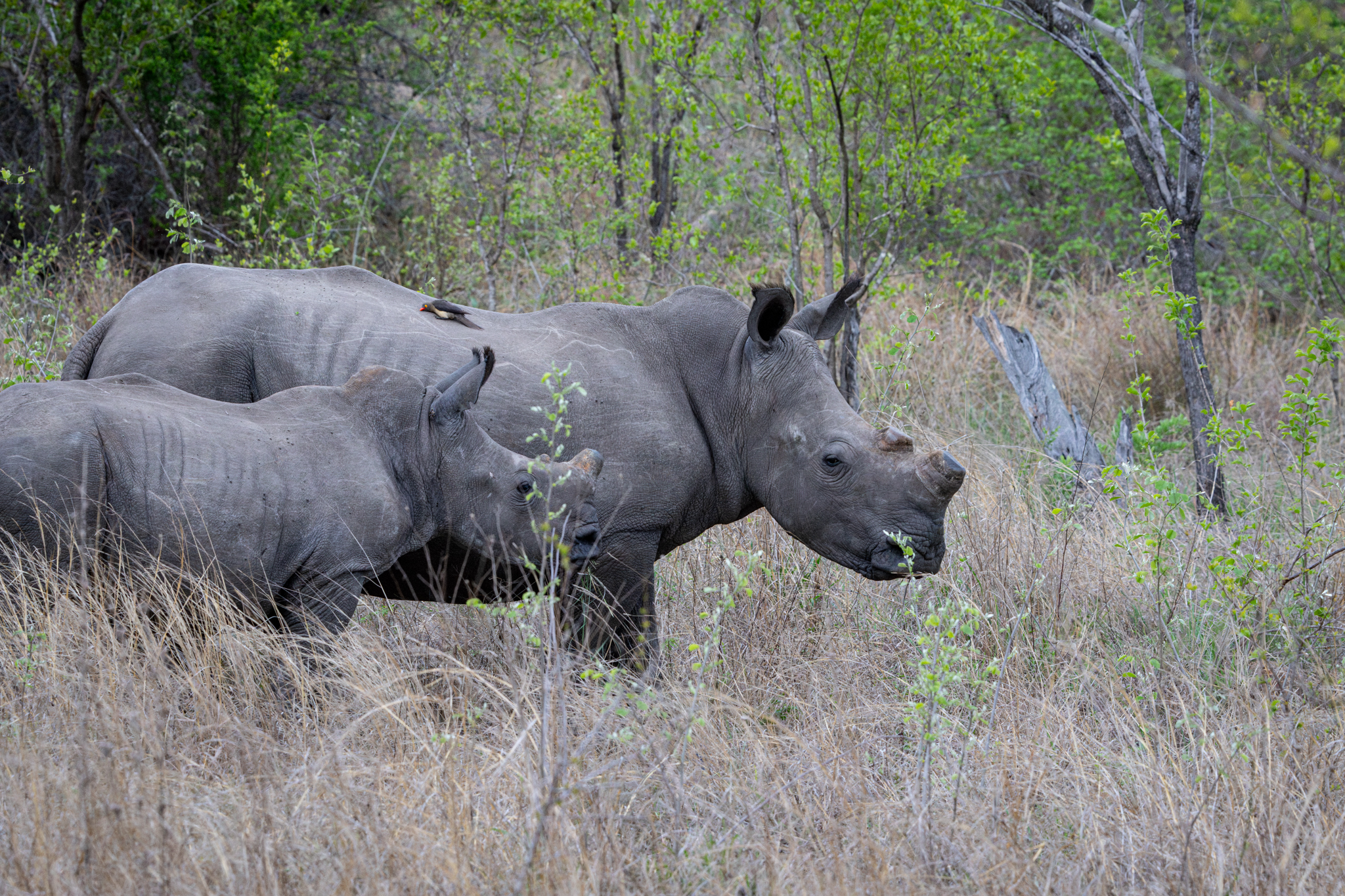
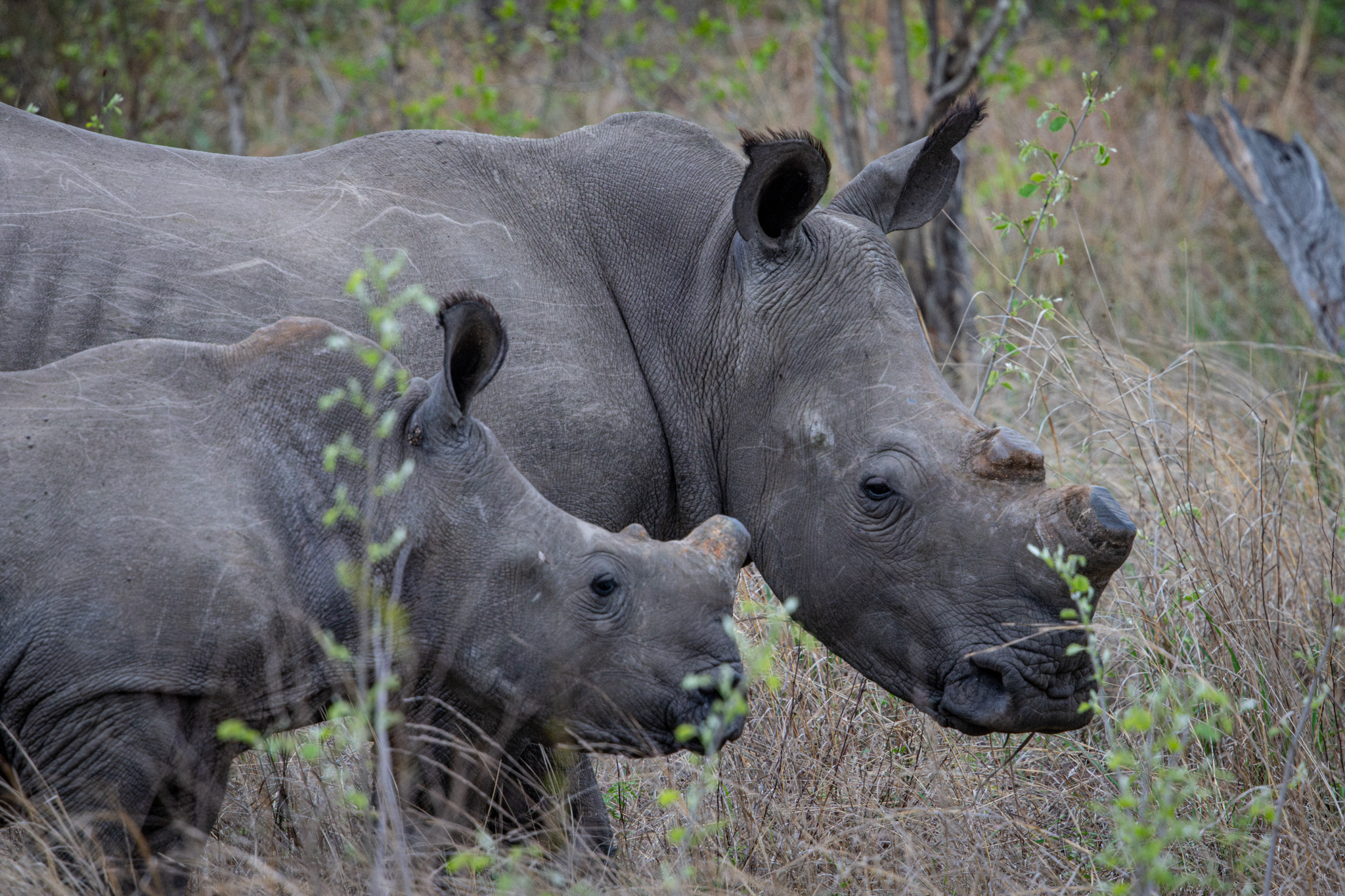
A male rhino was nearby, looking for some hanky-panky with the female. She would have none of it.
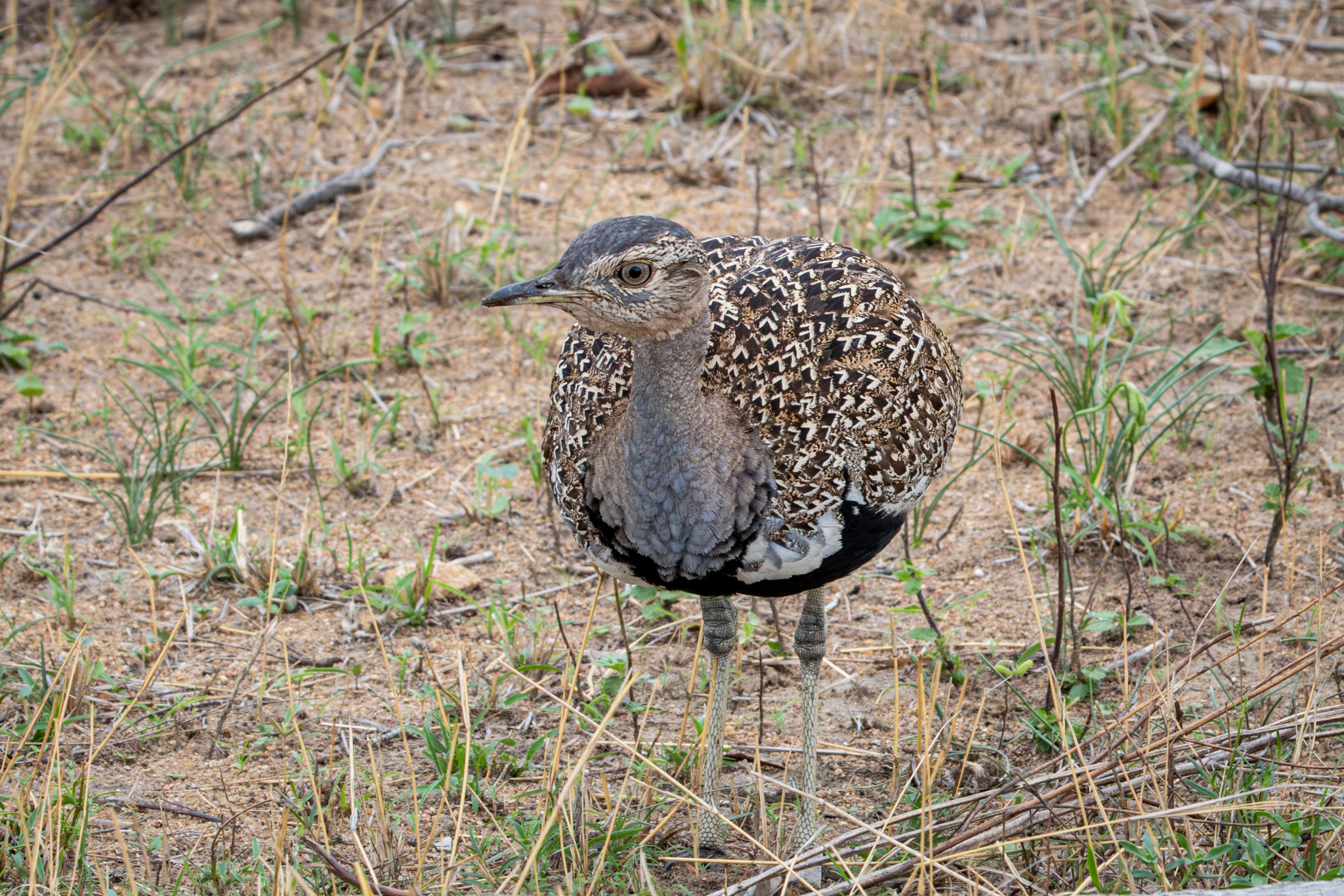
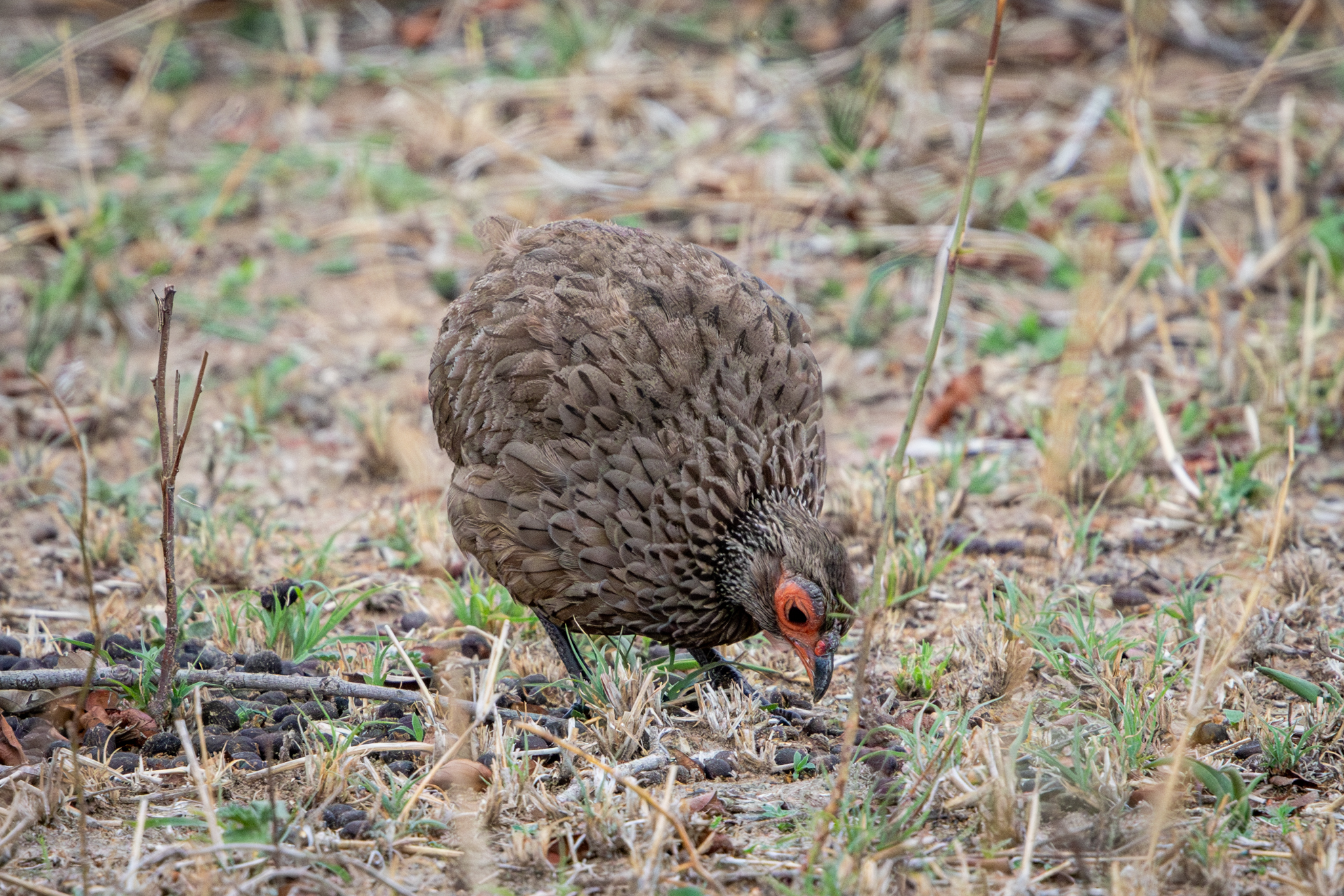
Continuing toward our lodging, we came across a Red-crested Bustard and a Swainson’s Francolin foraging next to the road.
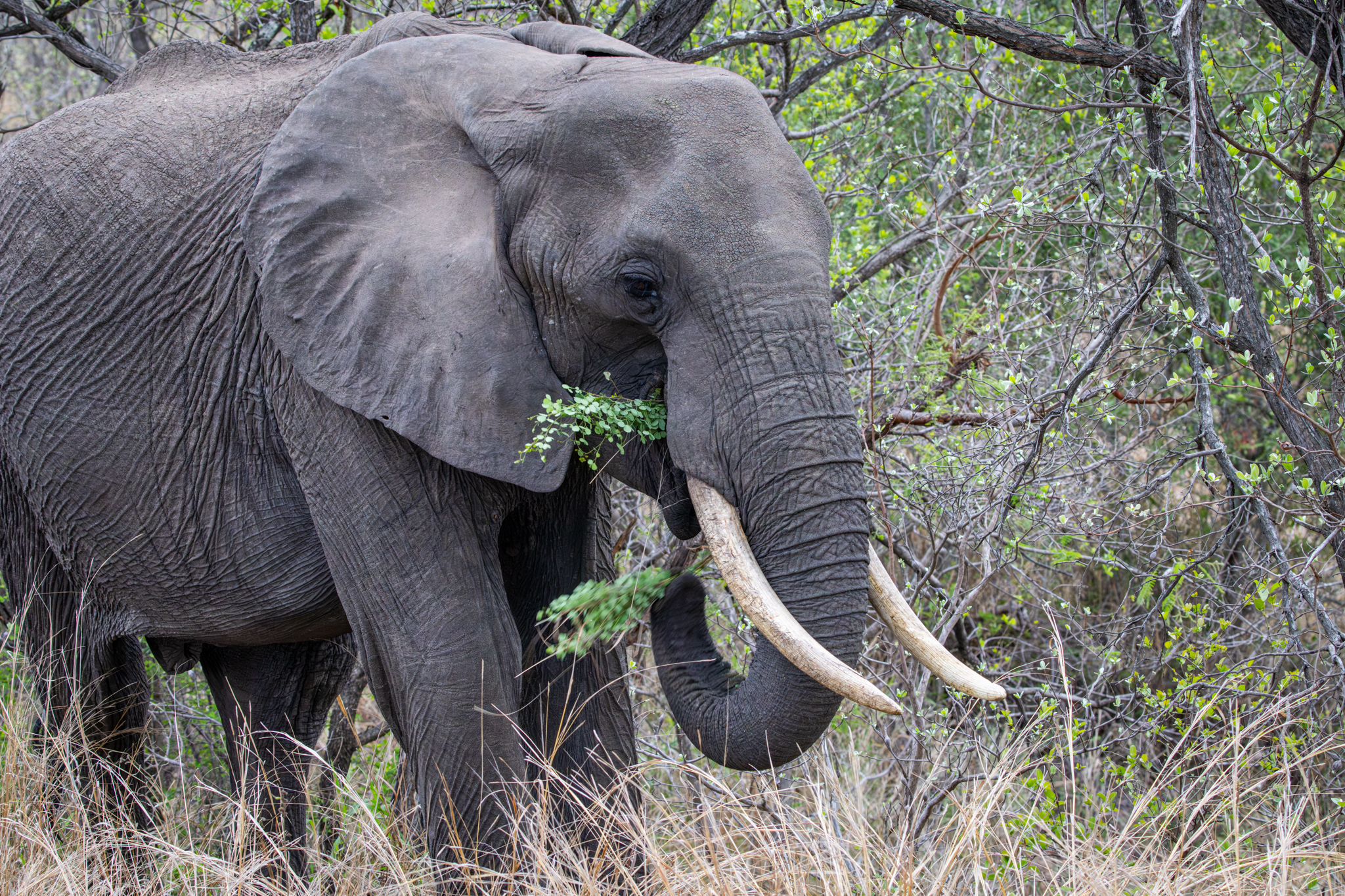
Not far down the road from the Francolin our vehicle came to a halt for a common sight – elephants crossing the road. Next to Impalas, elephants were the most numerous mammals we saw in Kruger. They definitely had the right-of-way in Kruger as an adult elephant could easily push over a safari vehicle if they wanted to.
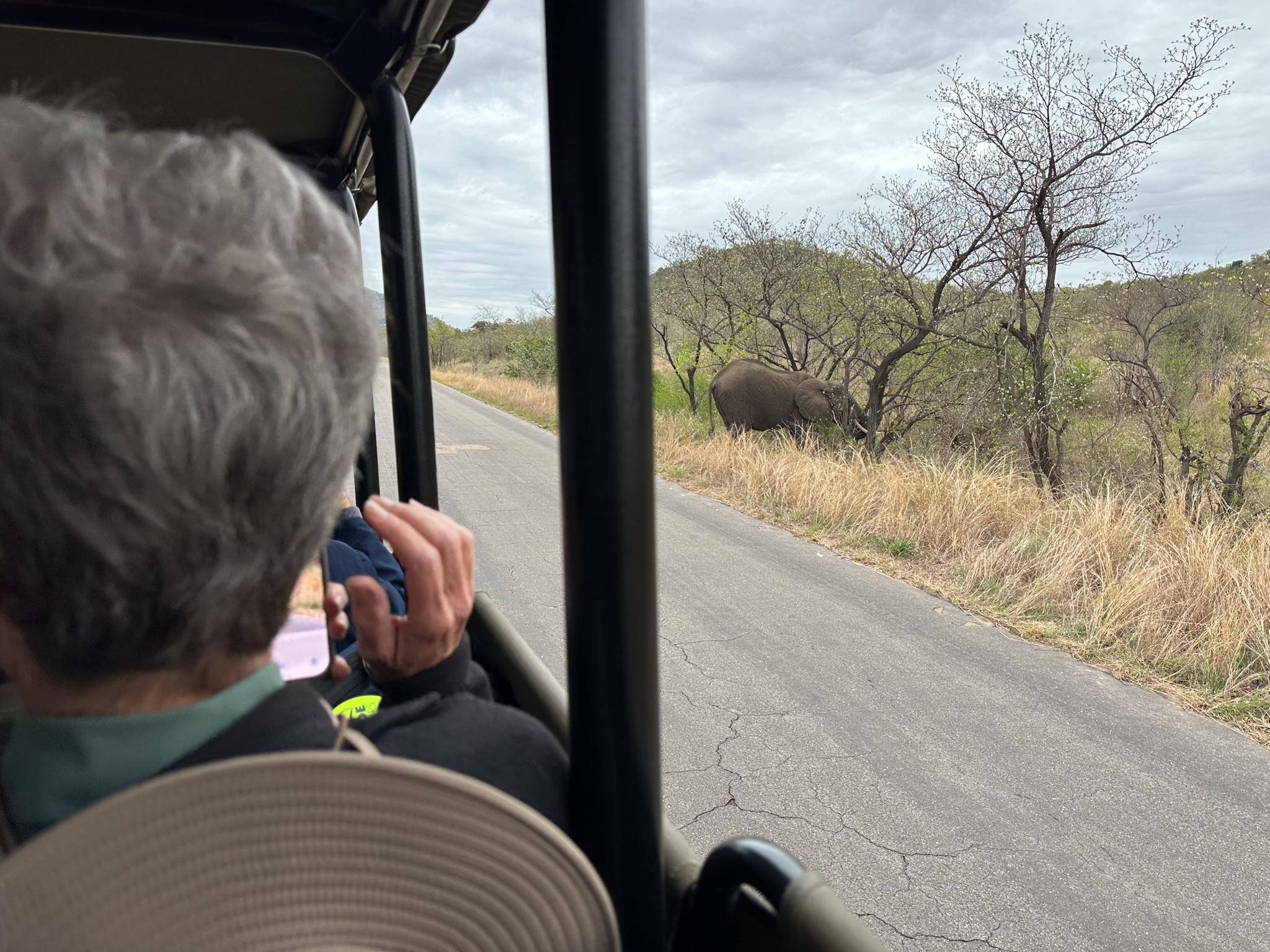
Here, a big bull elephant quietly feeds on the side of the road.
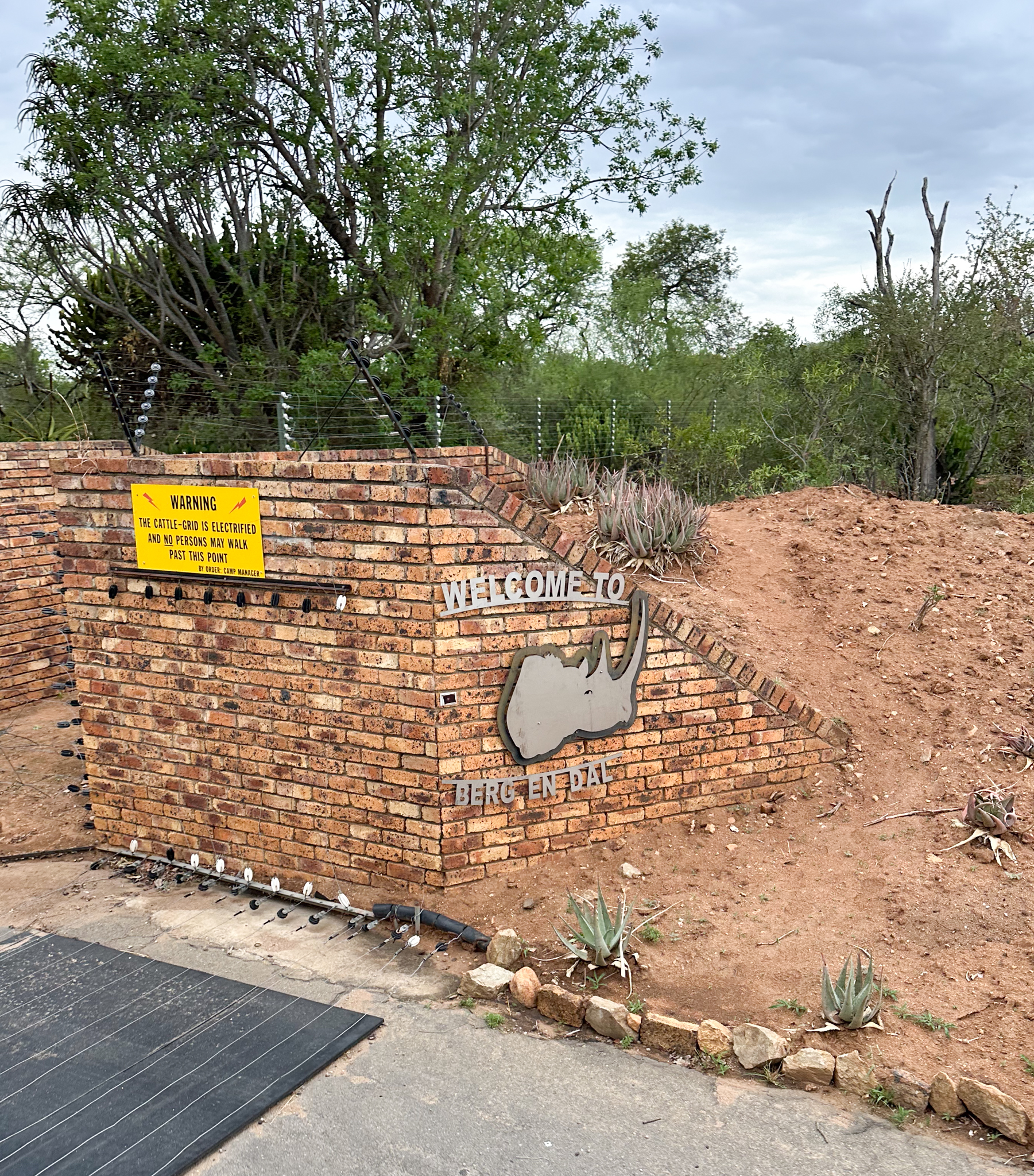
It was approaching sundown as we arrived at our lodging for the first two nights, Berg En Dal. Note the high wall with an electric fence – it surrounded the entire compound to keep out any animals that might hurt the tourists inside. An electrified metal mat on the ground in front of the entrance gate dissuaded animals from walking directly through the gate.
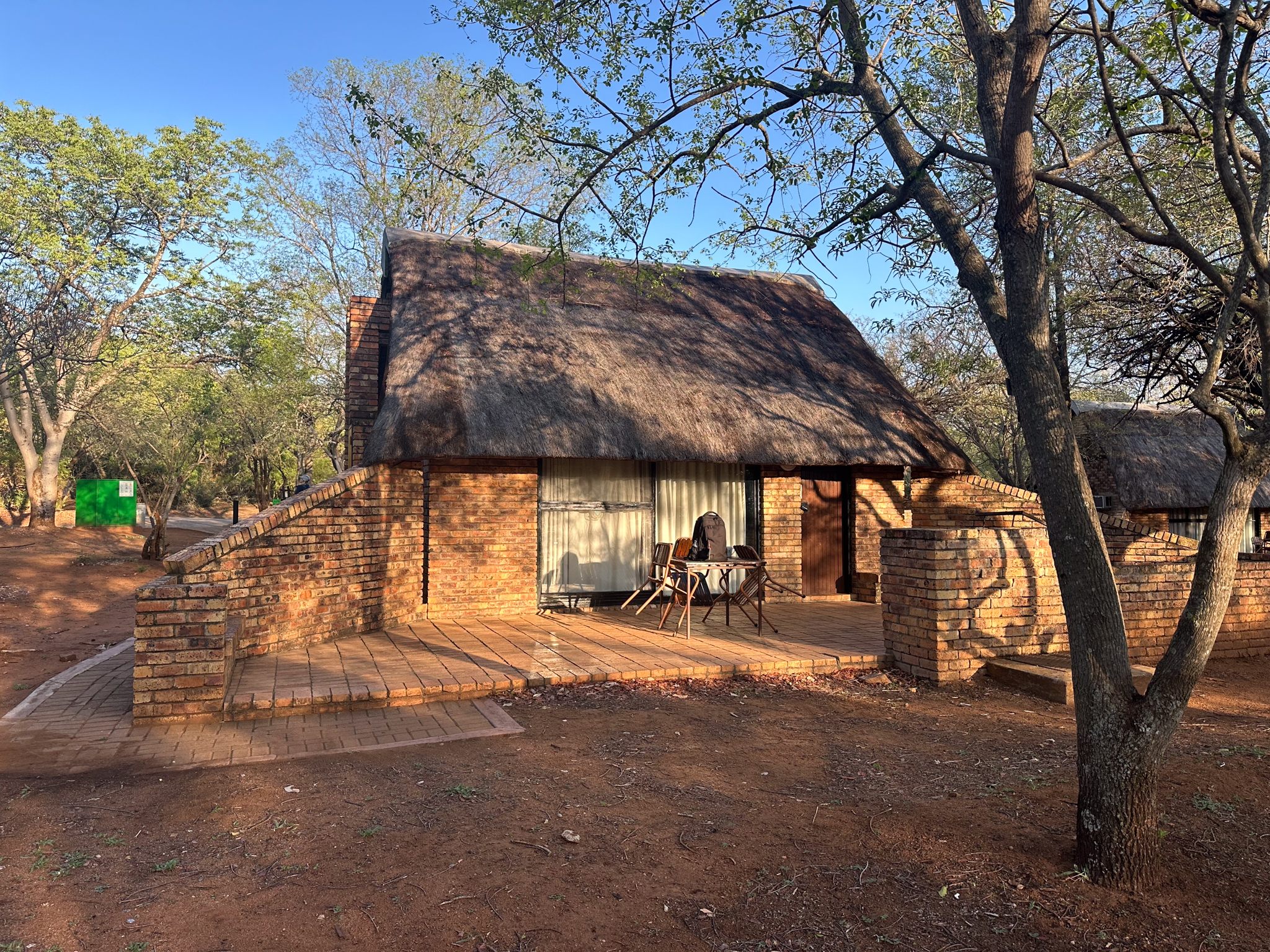
Our lodging was quite nice – it was a large brick cabin with a thatched roof and patio.
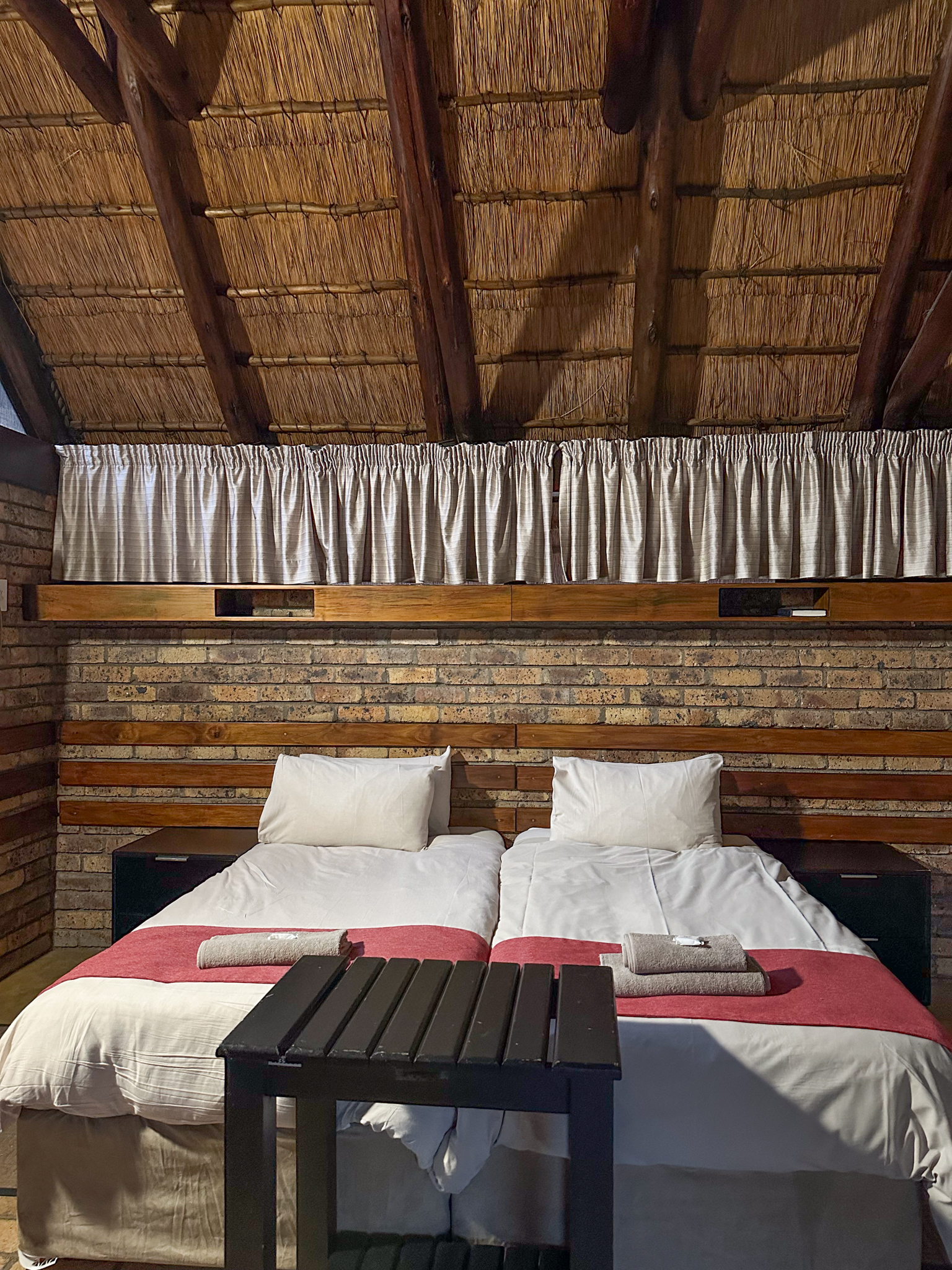
Inside was a spacious room with all the amenities, including Wi-Fi! Signs were placed on the sliding glass doors to remind guests to keep the doors locked to prevent monkeys and baboons from entering the room.
A great start to our stay at Kruger. More to come in the next post.
CLICK HERE to see all the posts about our South Africa Bird Tour. Karen and I have had the opportunity to travel to many interesting places in search of birds. If you would like read about some of our other Bird Tours CLICK HERE.
If you enjoy seeing beautiful pictures of birds from around the world and reading about them CLICK HERE to sign up for our mailing list. Members can post their own GreatBirdPics and learn more about bird photography techniques.