Be sure to enter GreatBirdPics.com’s latest Bird Photography Contest! Win $100 for the best photograph using the theme In or By Water. Click the following link – In Or By Water Contest Rules – for important details. Deadline for submission is May 12, 2026.
Believe it or not Xwinger (and everyone else who is wondering when these South Africa trip reports will ever end) this post describes our last full day in South Africa! The post after this one will describe the end of the trip – a half-day in Kruger and a loooooong travel day(s) home. Maybe one more post after that to wrap up numbers (Lifers, Keepers %, etc). Then I can move on from South Africa and focus on some of the birds we saw in California and Costa Rica that I alluded to recently. No, brother Xwinger, I won’t send as many posts for those as I did for South Africa (he always had a short attention span). Try and follow along, Xwinger…
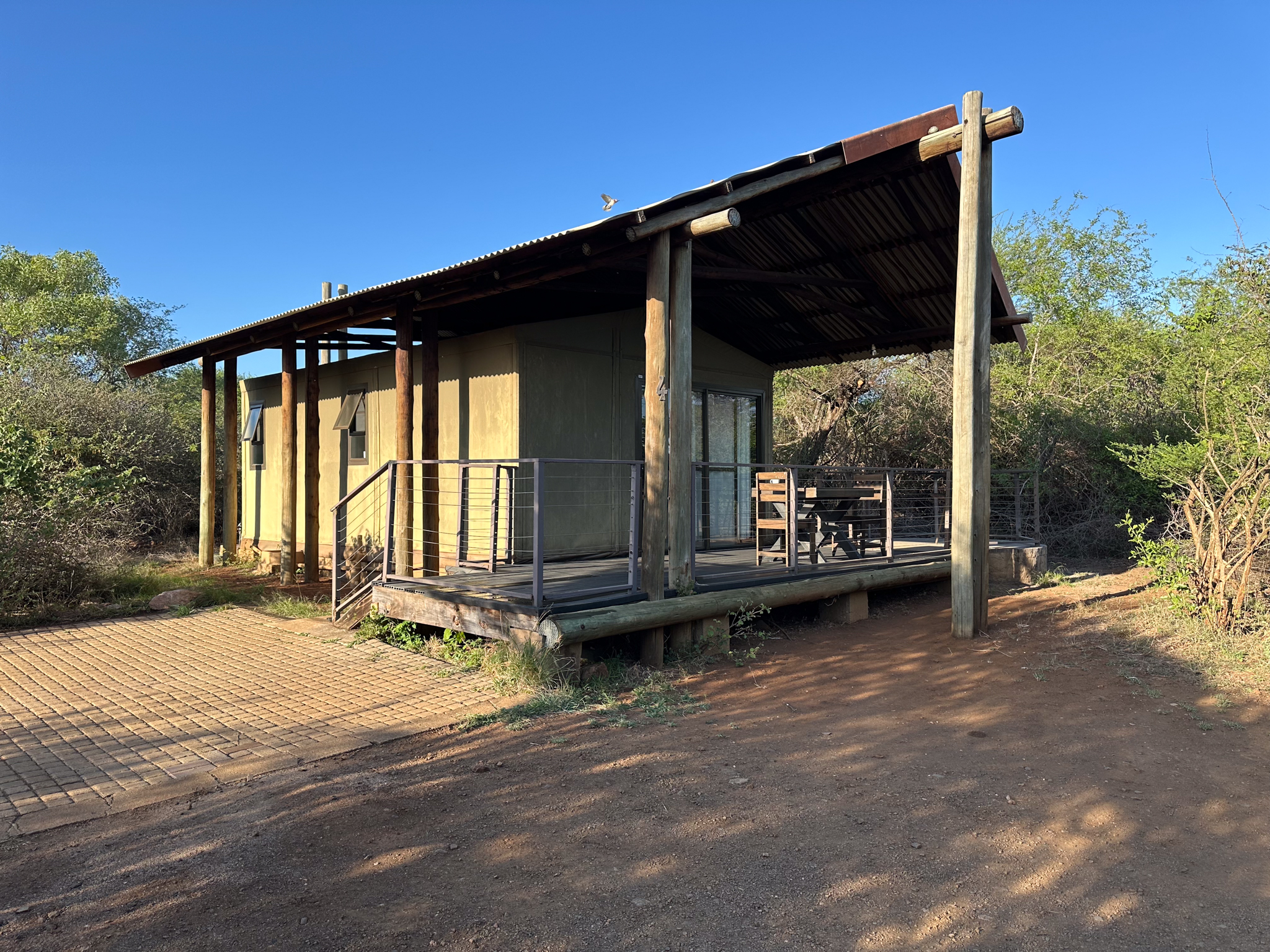
We woke up bright and early in our permanent tent cabin at Lower Sabie Rest Camp. The outside walls were made of thick canvas but they covered a hard (plywood?) surface. It was quite comfortable with a little kitchenette right off the porch and a spacious sleeping area.
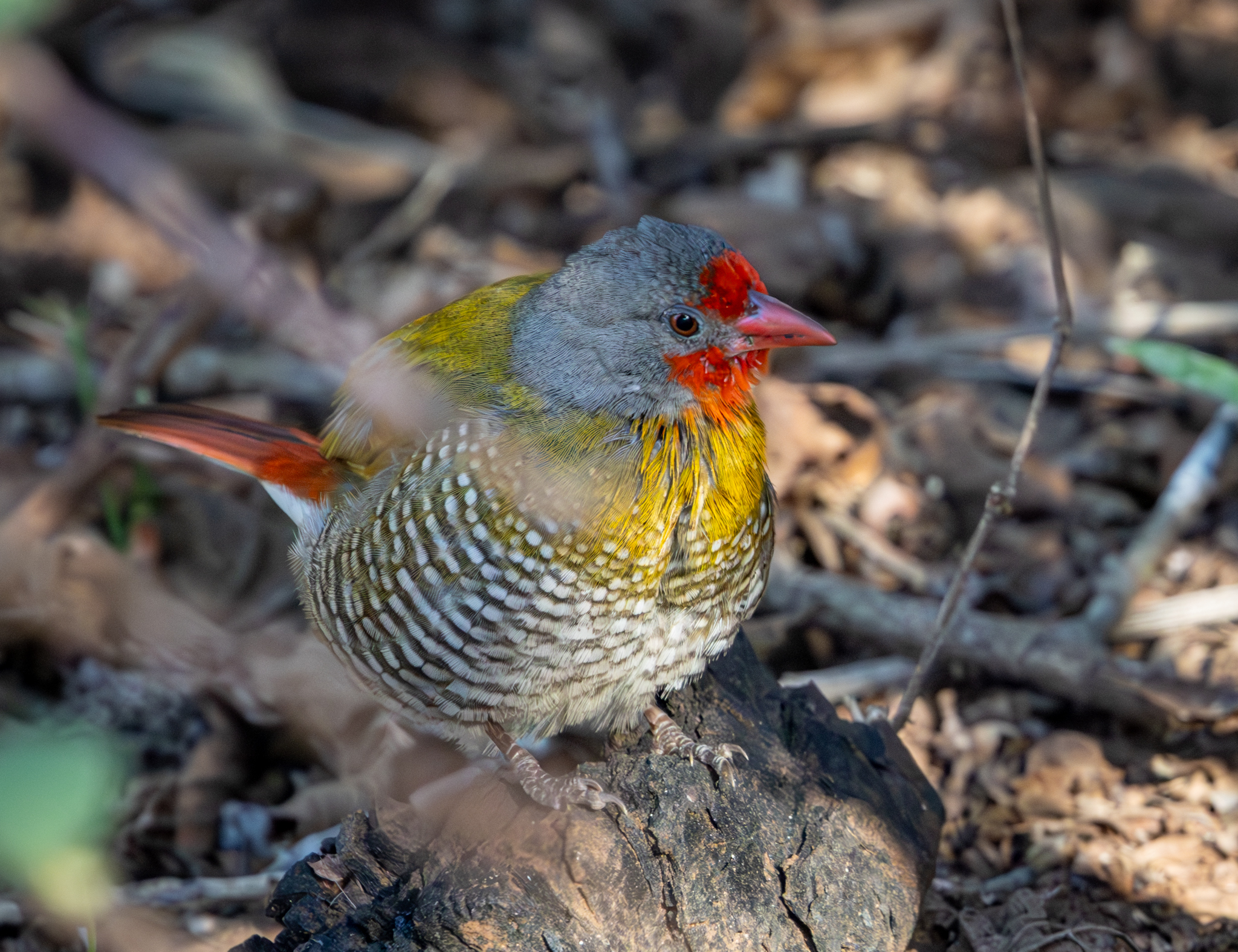
As I went out to greet the day, I almost tripped over a Green-winged Pytillia right outside our door.
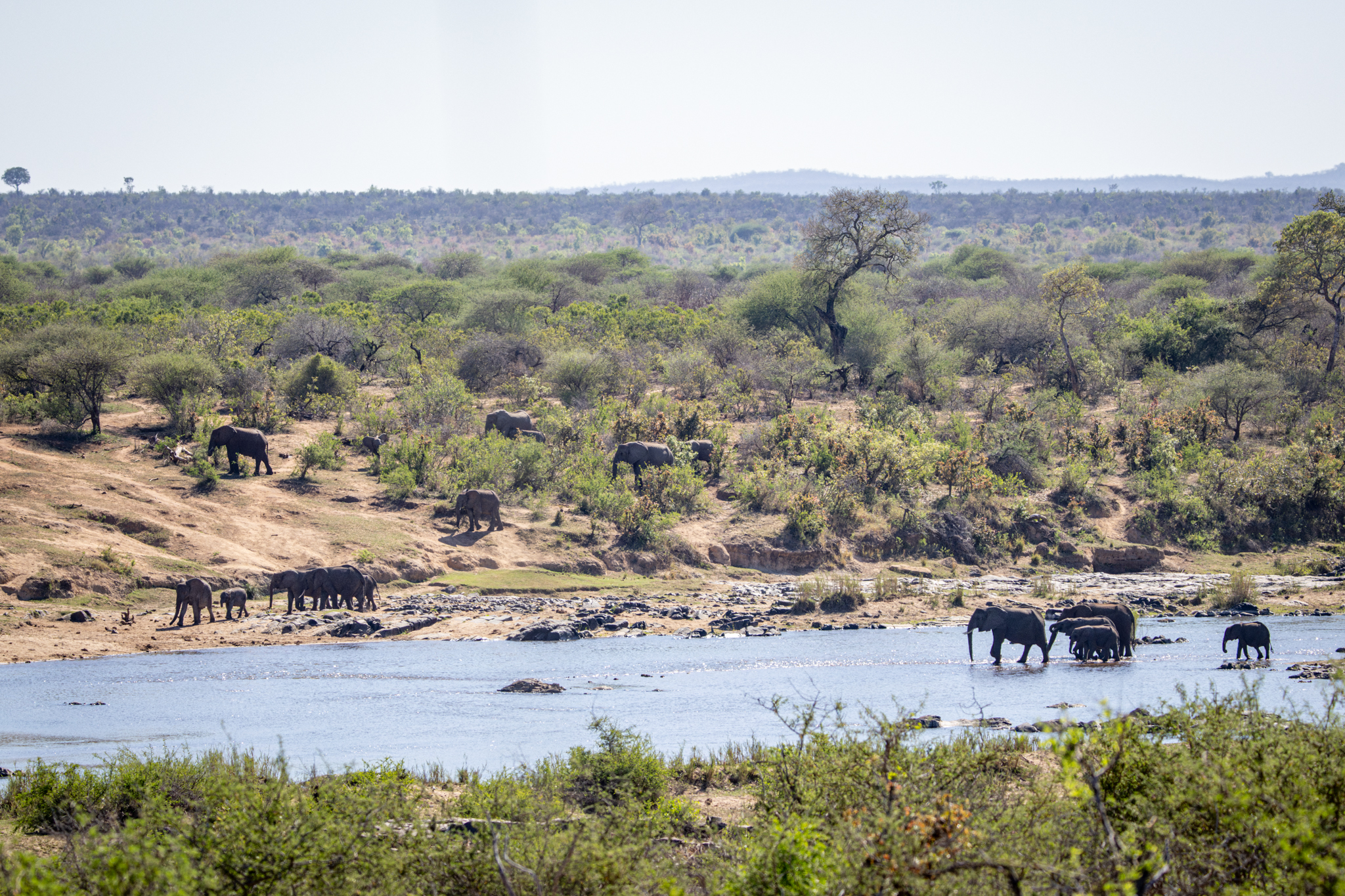
After a quick breakfast we hopped back into our safari vehicle and headed out through the gate to explore this region around the Sabie River. As we traveled along parallel to the river we came across a herd of elephants crossing over it. I counted 17 elephants in the shot, many of which were youngsters.
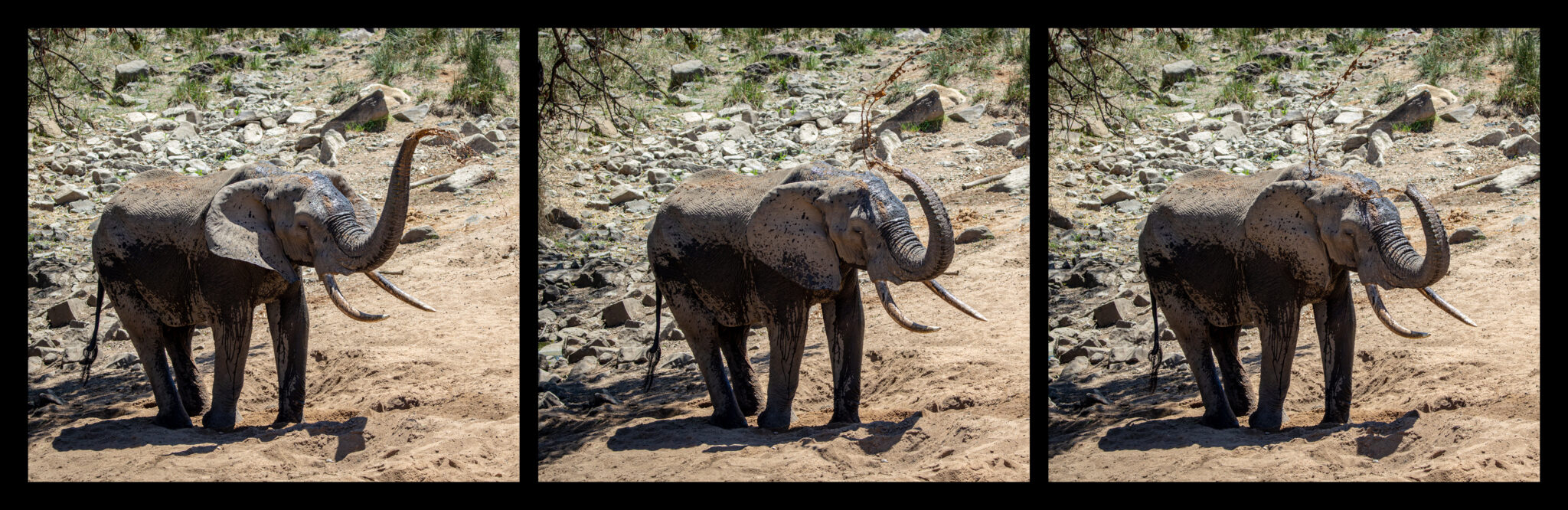
Speaking of elephants, a little later in the day we came across a lone bull elephant taking a dust bath. As you can see in the sequence below the elephant takes some dirt in its trunk and then sprays it over its back. This provides the elephant with a natural sunscreen (can you image how much Coppertone it would take to cover an elephant) and insect protection.
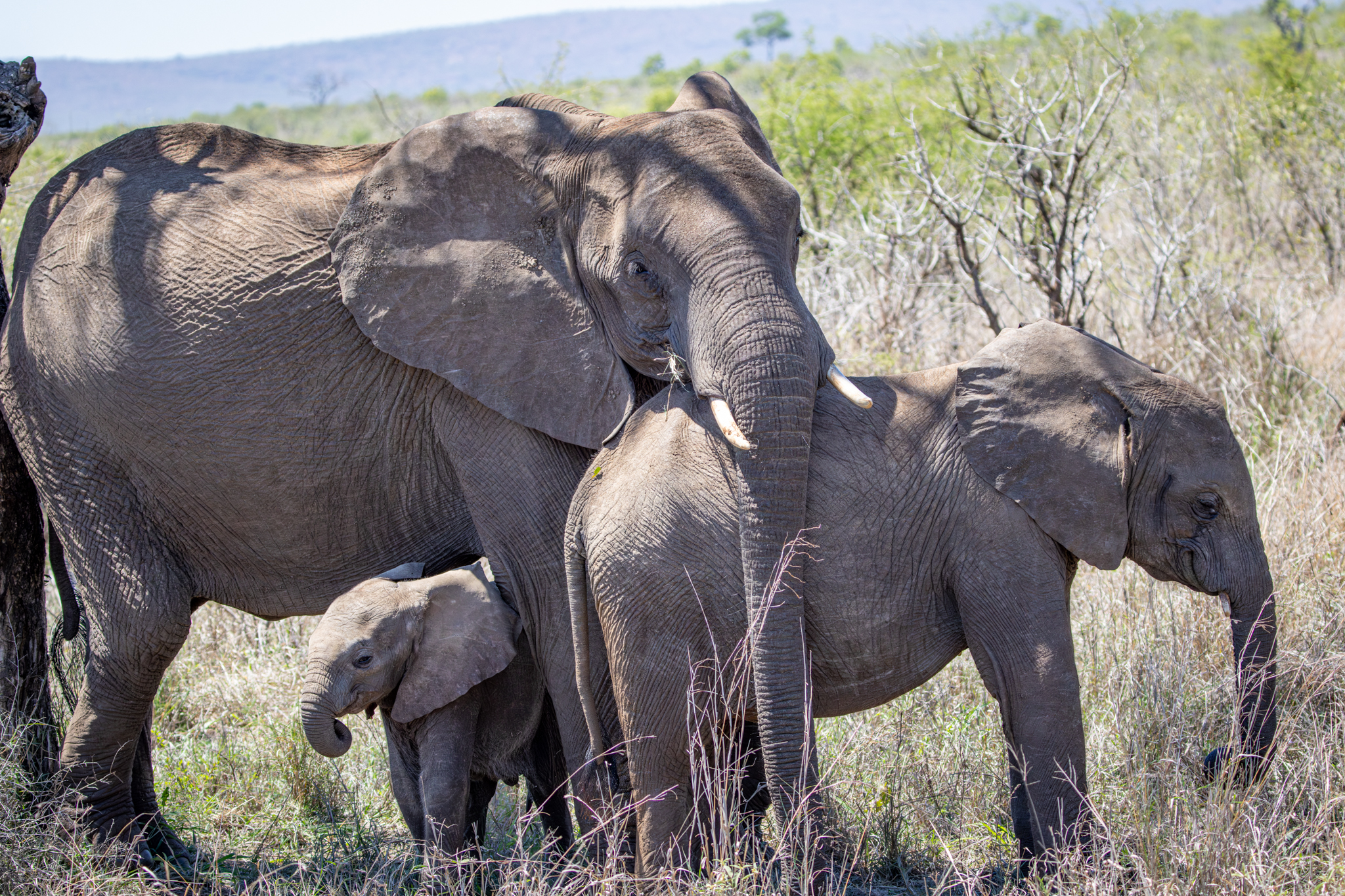
Just one more elephant pic for today – a mamma wrapping her trunk around junior while the baby stands beneath. Can I get and “Awwwww?”
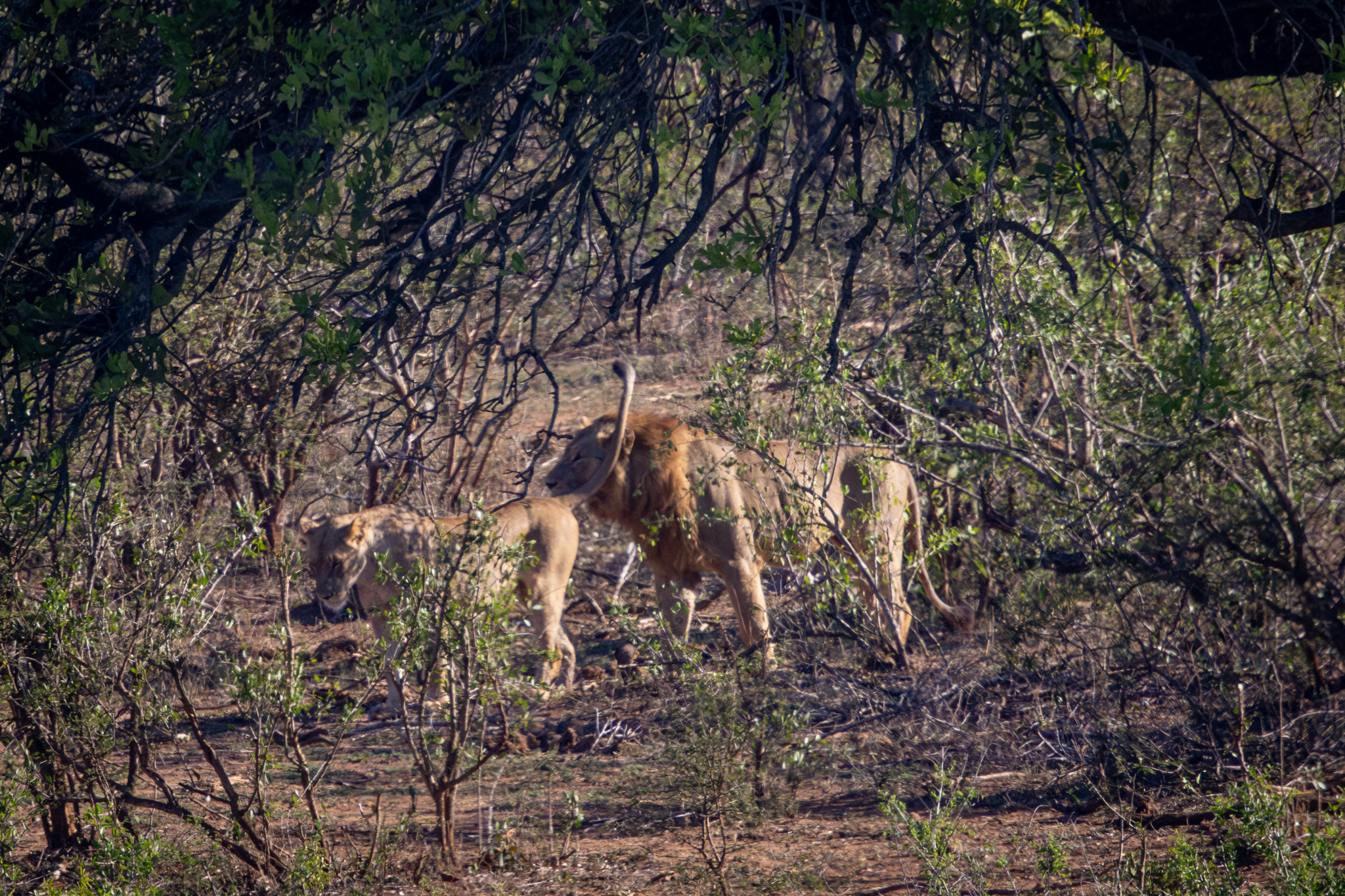
On the far side of the river our sharp-eyed local guide Edward spotted a male and female lion walking toward the river bank for an early-morning drink.
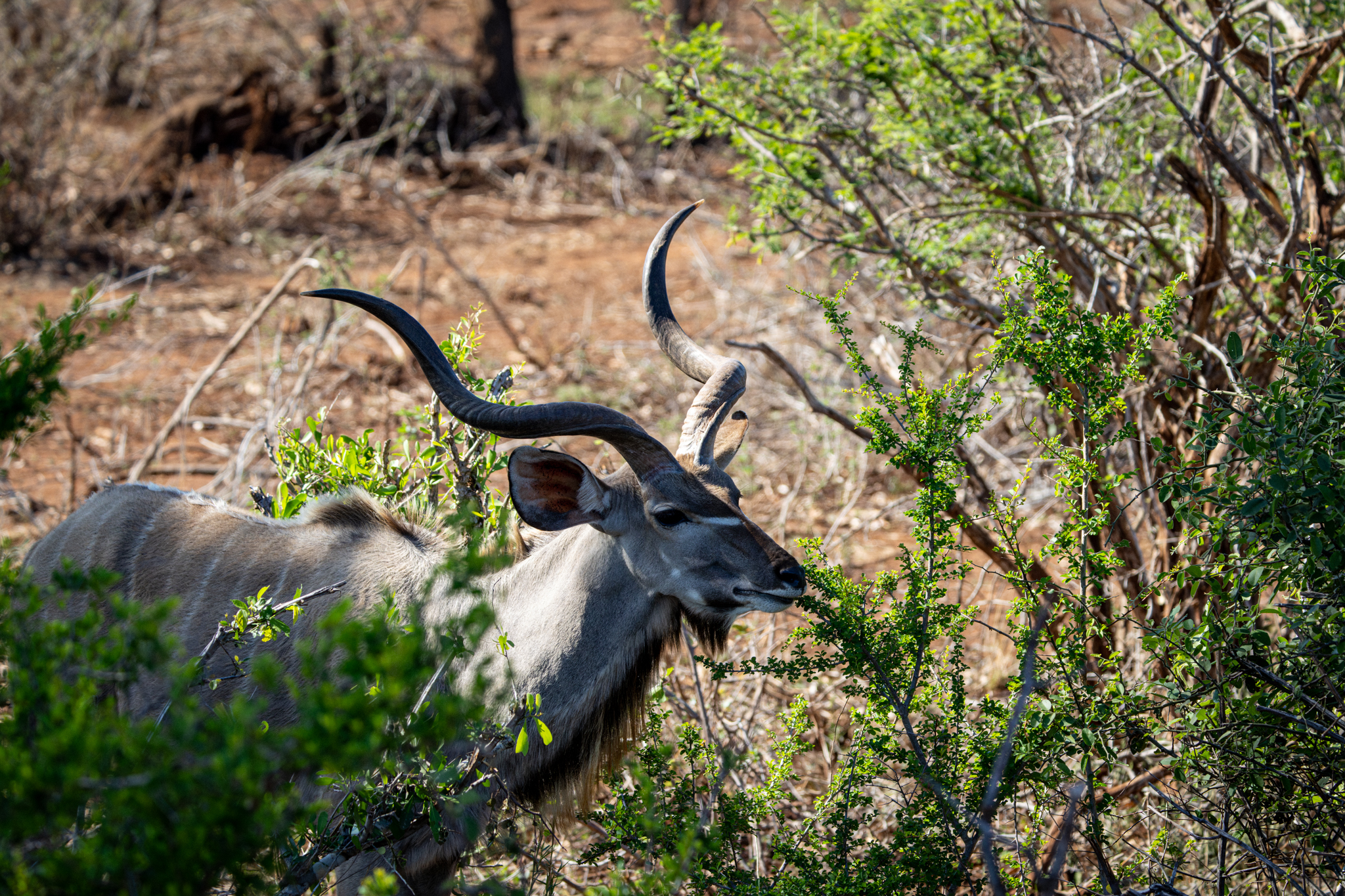
Much closer to us, a male Greater Kudu fed on the tender leaves of a nearby shrub.
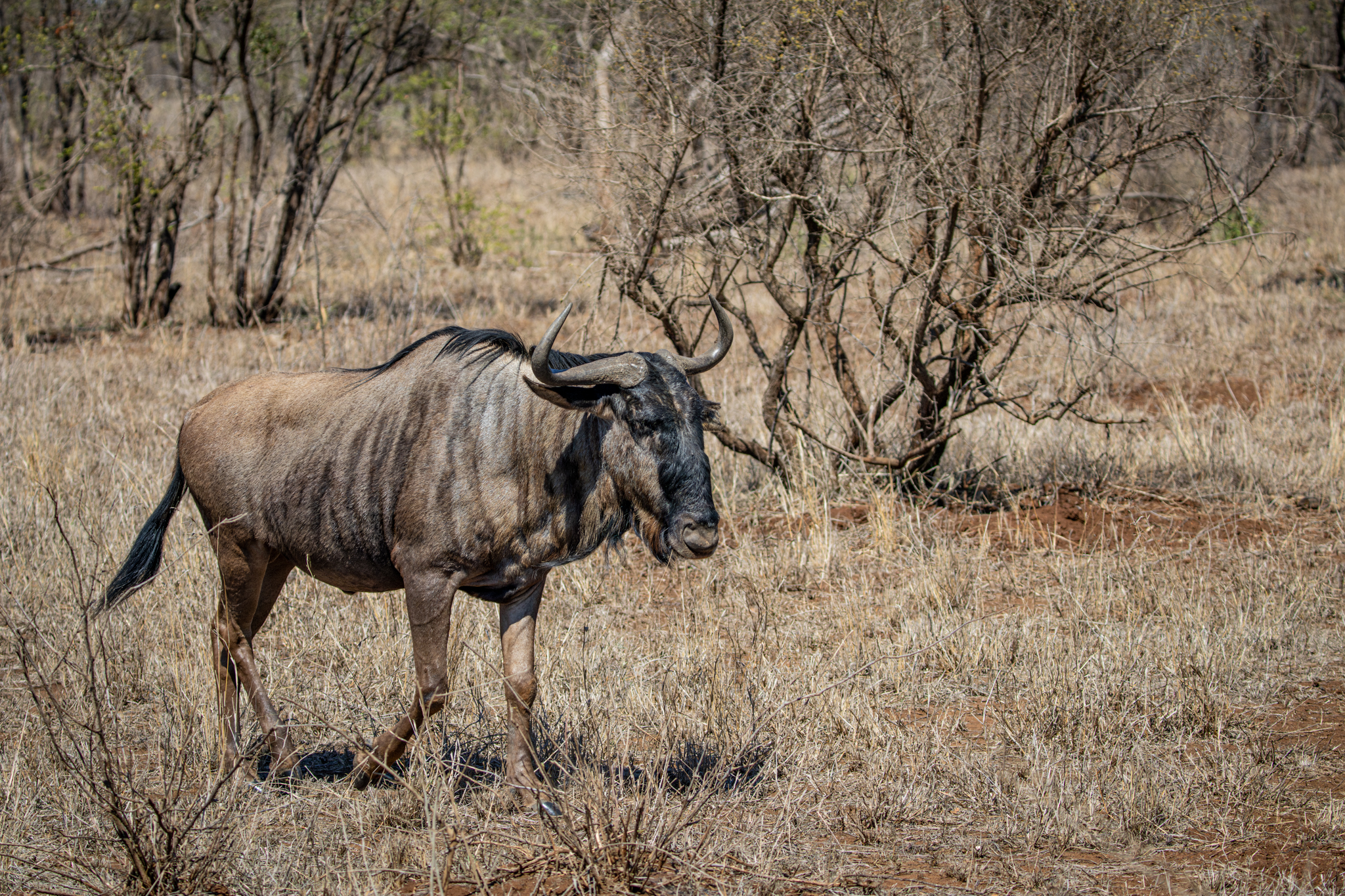
We did come across several Wildebeest in Kruger. Although they do migrate, the number of Wildebeest traveling to and from Kruger is much smaller than the Great Migration in and out of the Serengeti. In part this is due to fencing erected in Kruger across the migration path about 80 years ago.
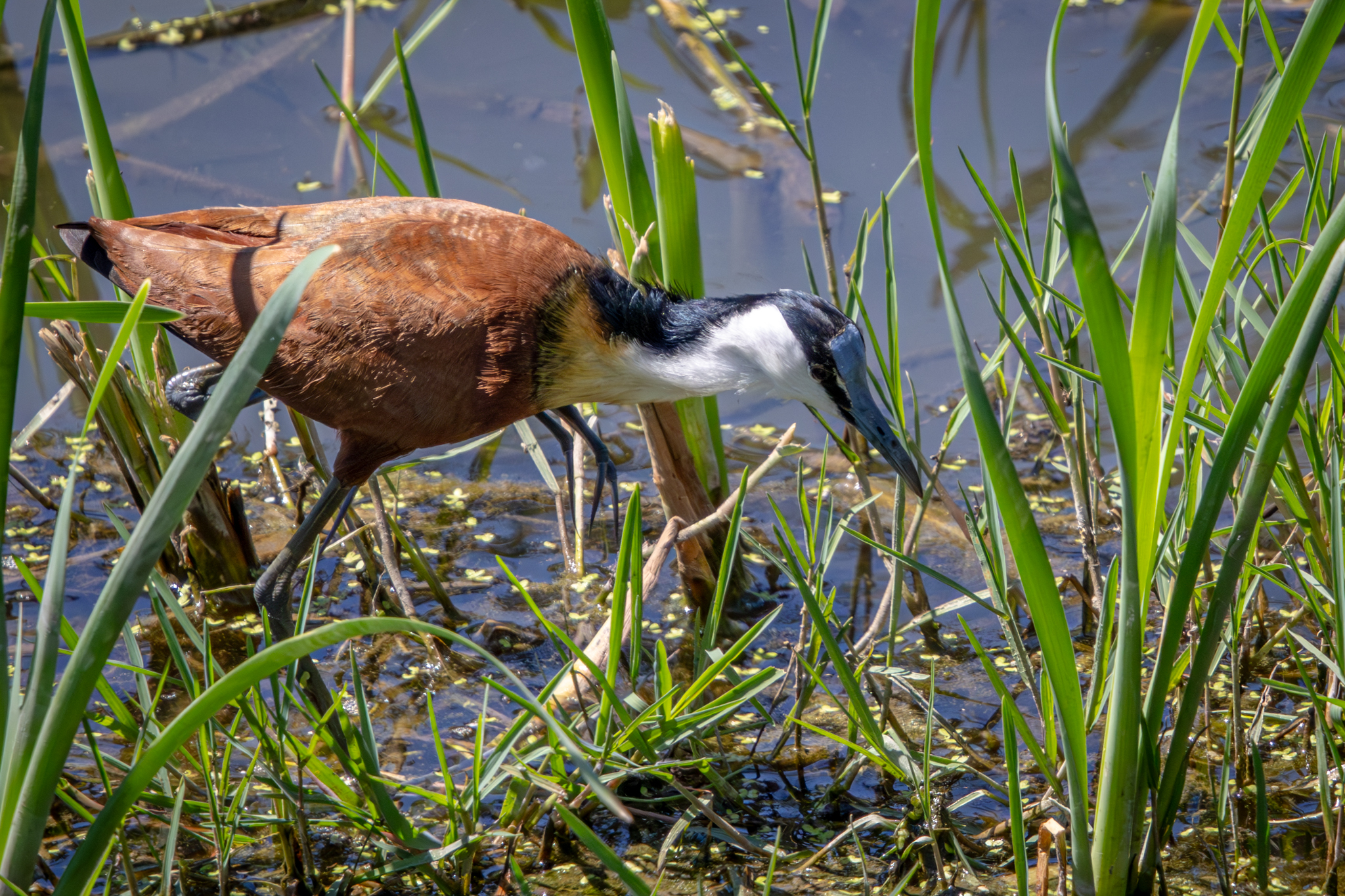
Yes Xwinger, we did see some birds that day (he’s so impatient!) Stopping by a marshy area we observed an African Jacana foraging for food.
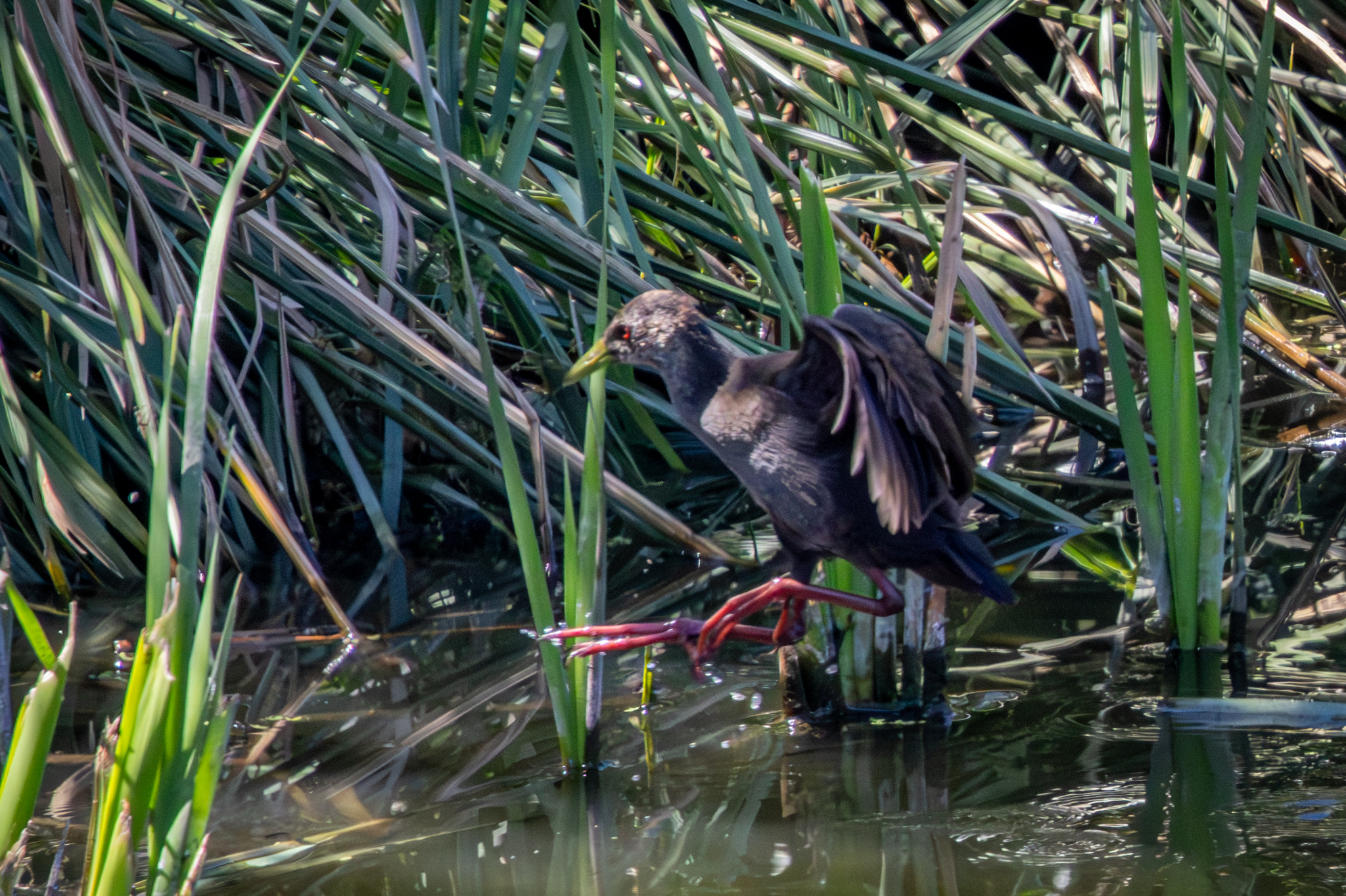
Another bird lurking in the reeds was a Black Crake. Notice the green bill and the size of those bright red feet!
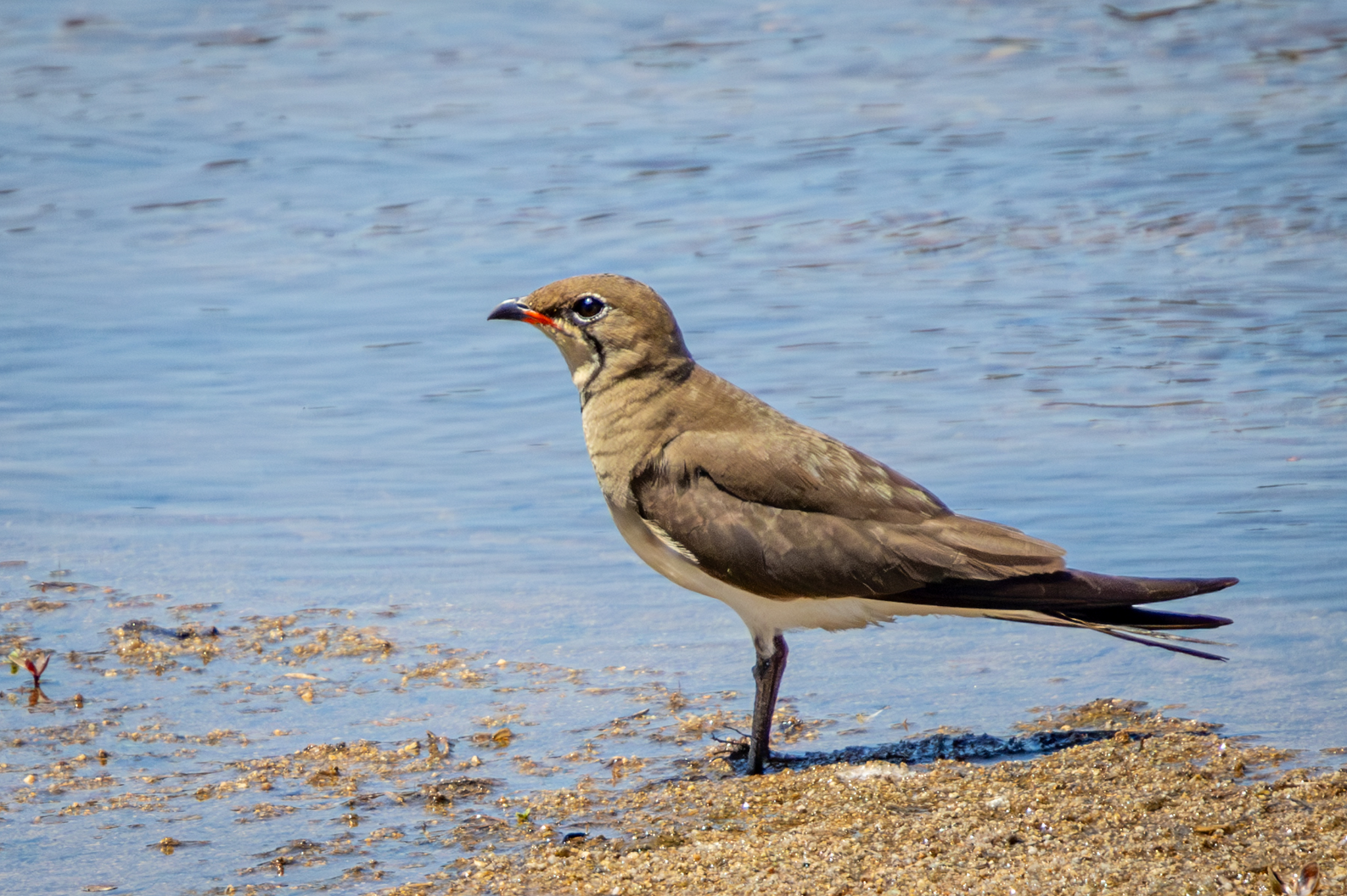
Along the shore, a Collared Pratincole gets ready to take off. Note the black line on the face that outlines its neck. When flying it has a forked tail.
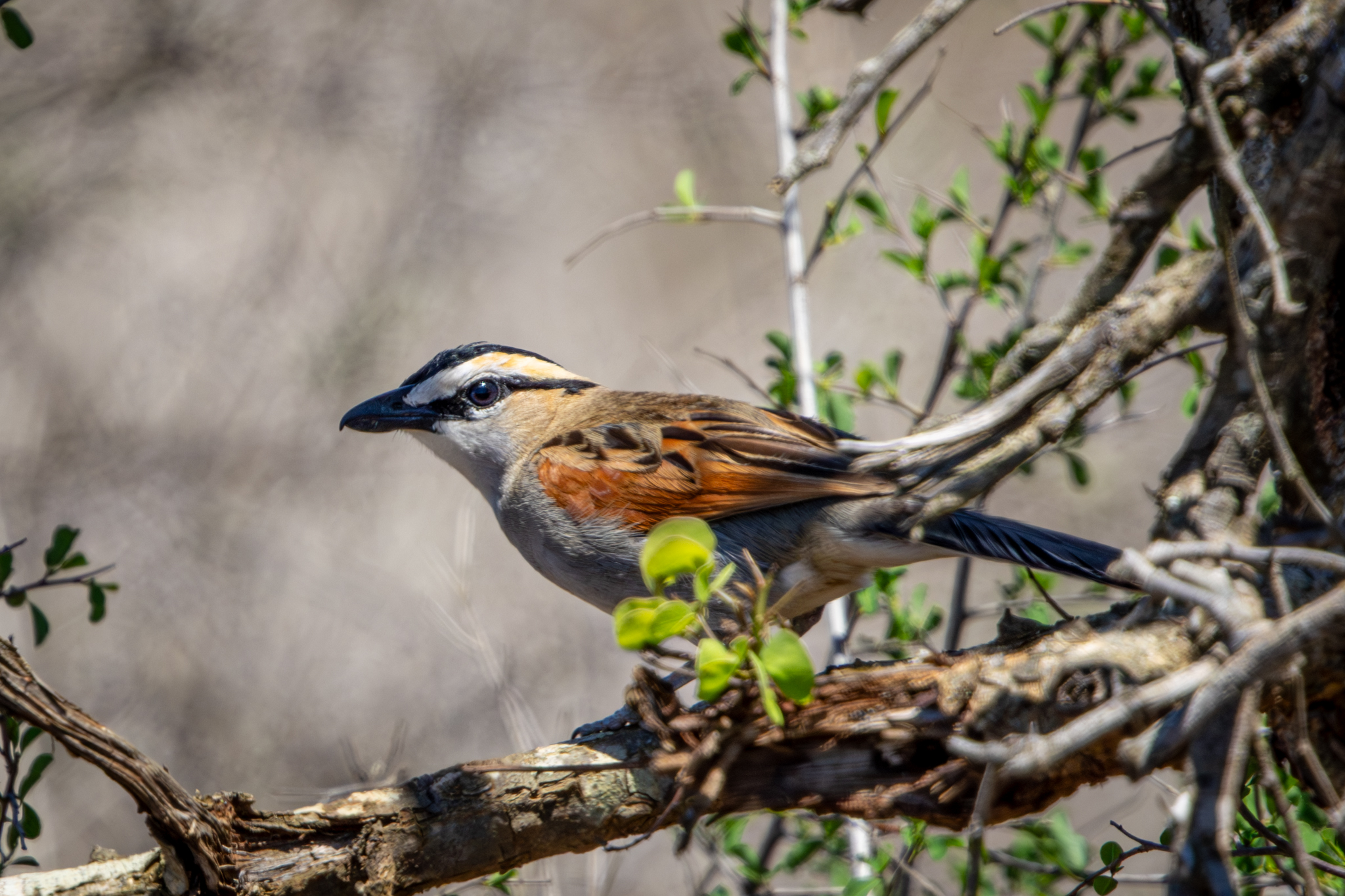
Along the road we came abreast with several Lifers in the trees. Here is a Black-crowned Tchagra.
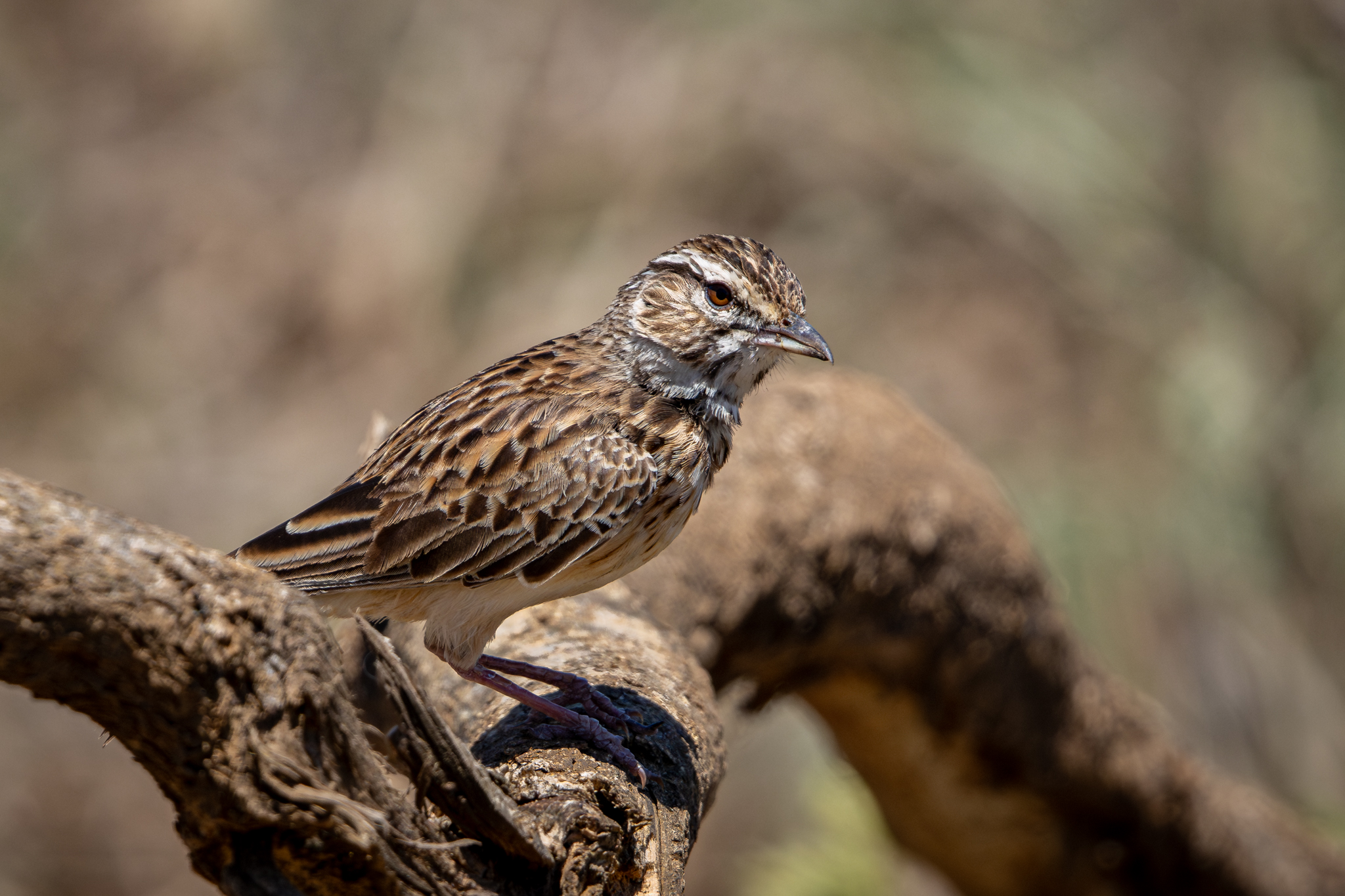
I don’t quite get where larks fit in the bird scheme of things but this Sabota Lark was a good-looking bird.
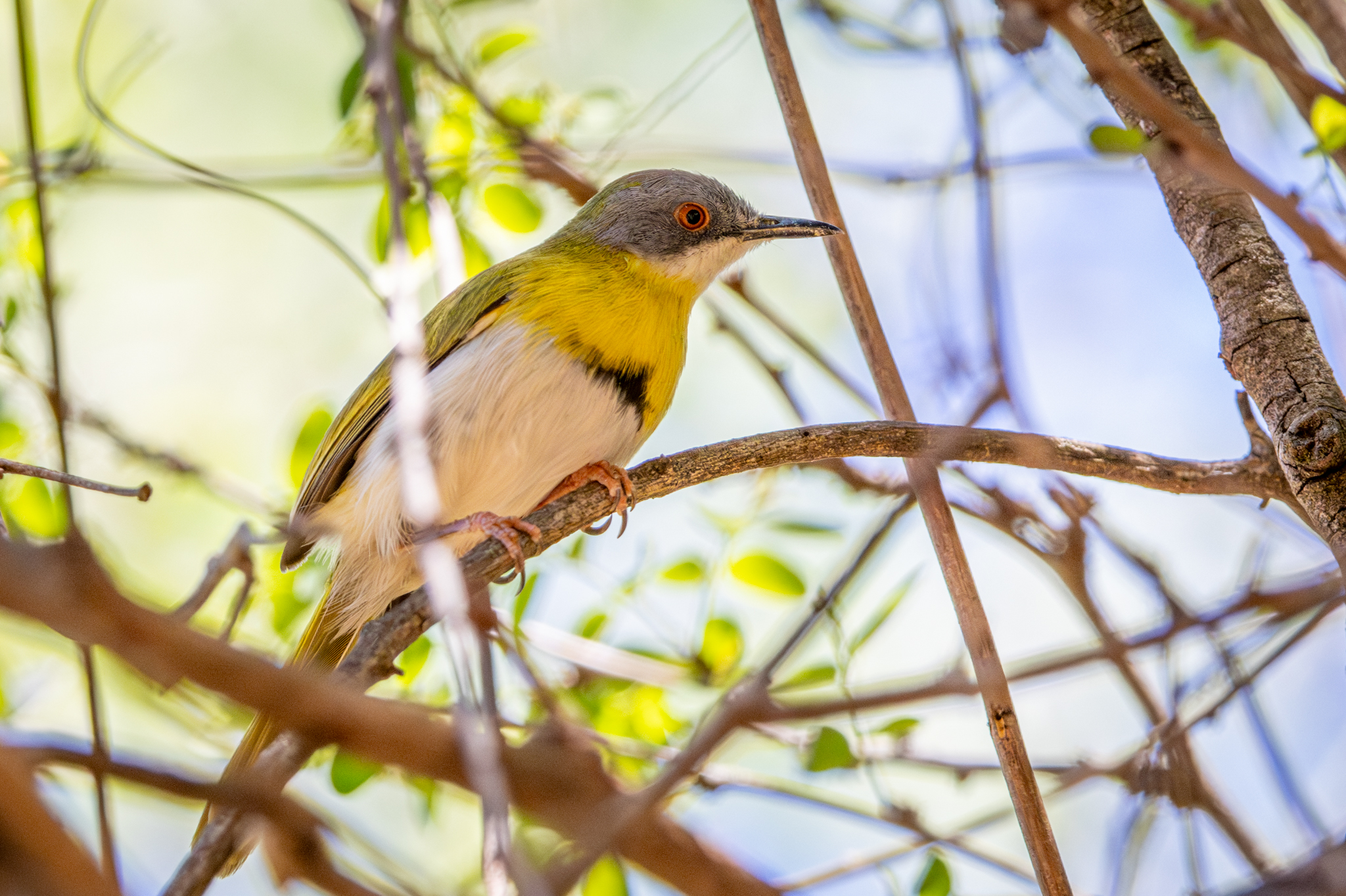
An even more-interesting bird was this Yellow-breasted Apalis. The red eye doesn’t compliment the other colors in the bird, but who am I to question Mother Nature?
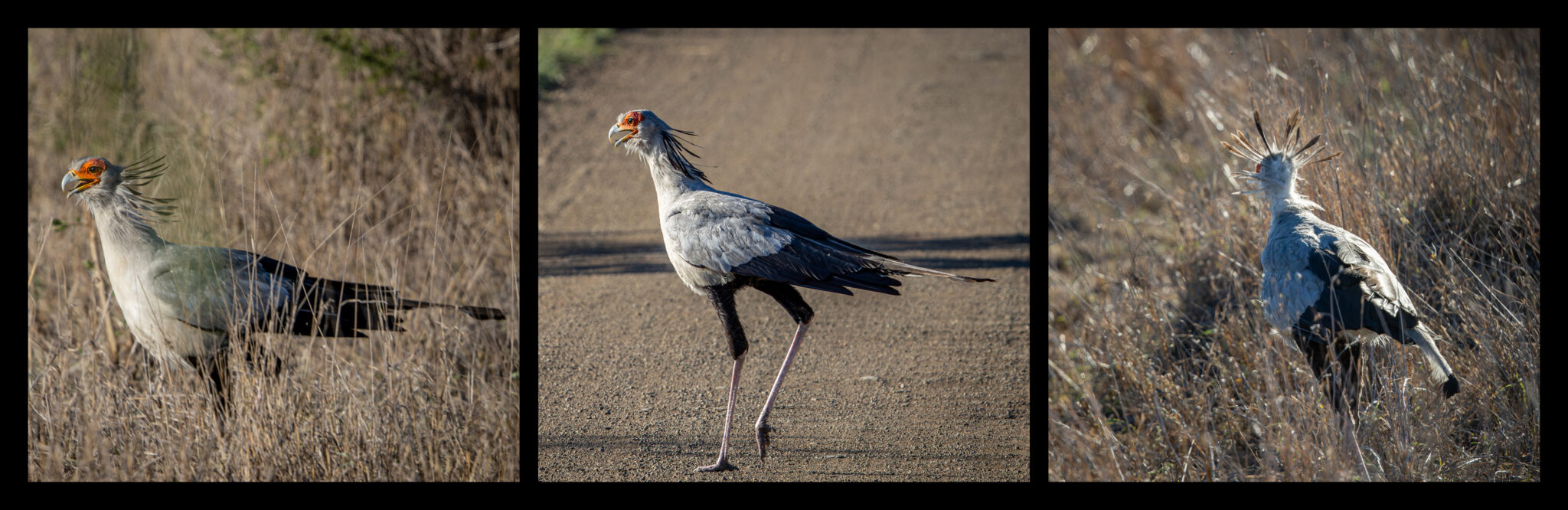
One of the better-known birds in southern Africa is the Secretarybird. This large bird walked across the road right in front of us. Take a closer look at the photo on the right which shows its head from the back. Does it remind you of a bunch of quills standing up (like the quills on a secretary’s desk in olden-times)?
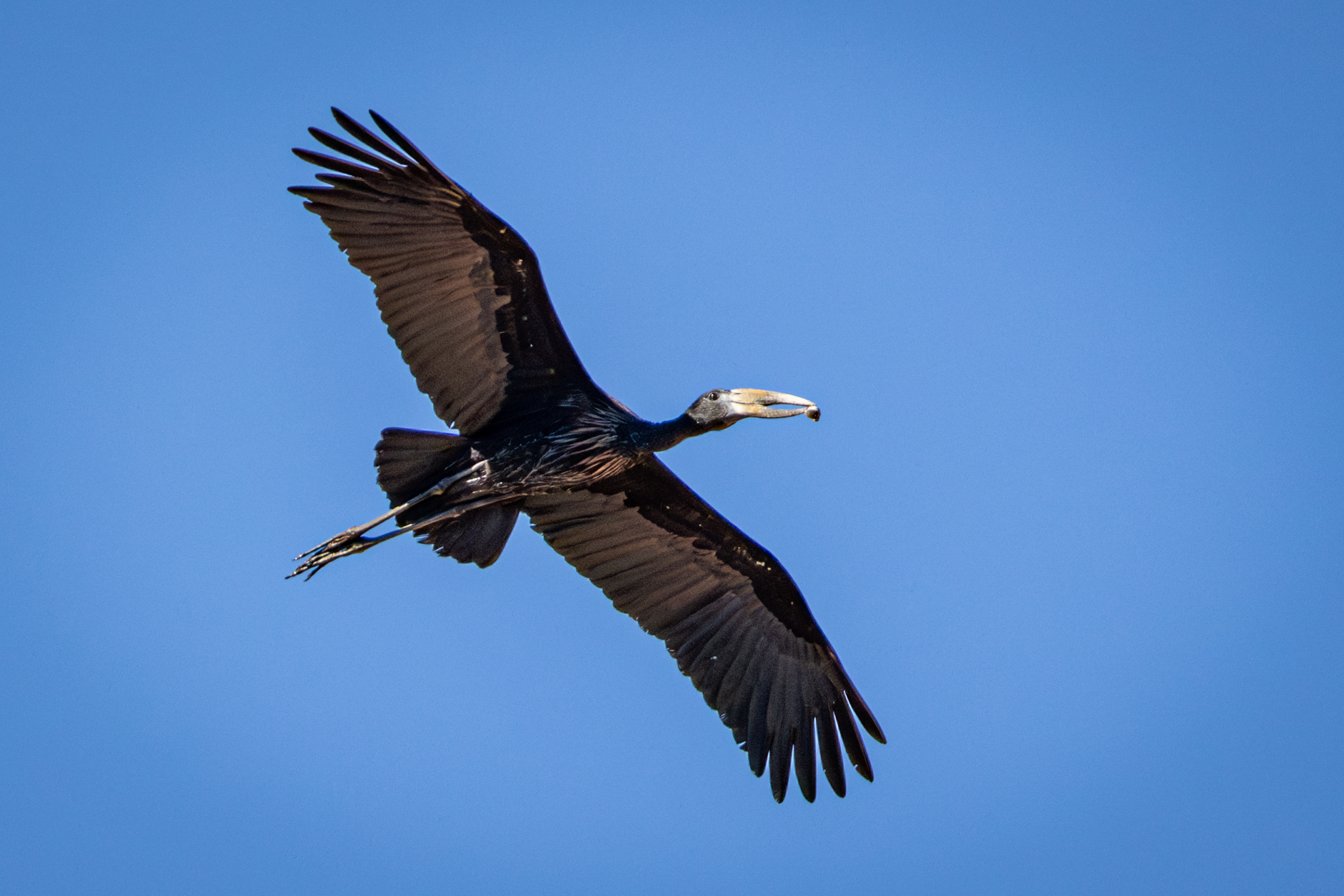
Just a few more bird pics from the day and then we’ll end with some monkey business. This African Openbill Stork flew over and you can see the sky right through its open bill.
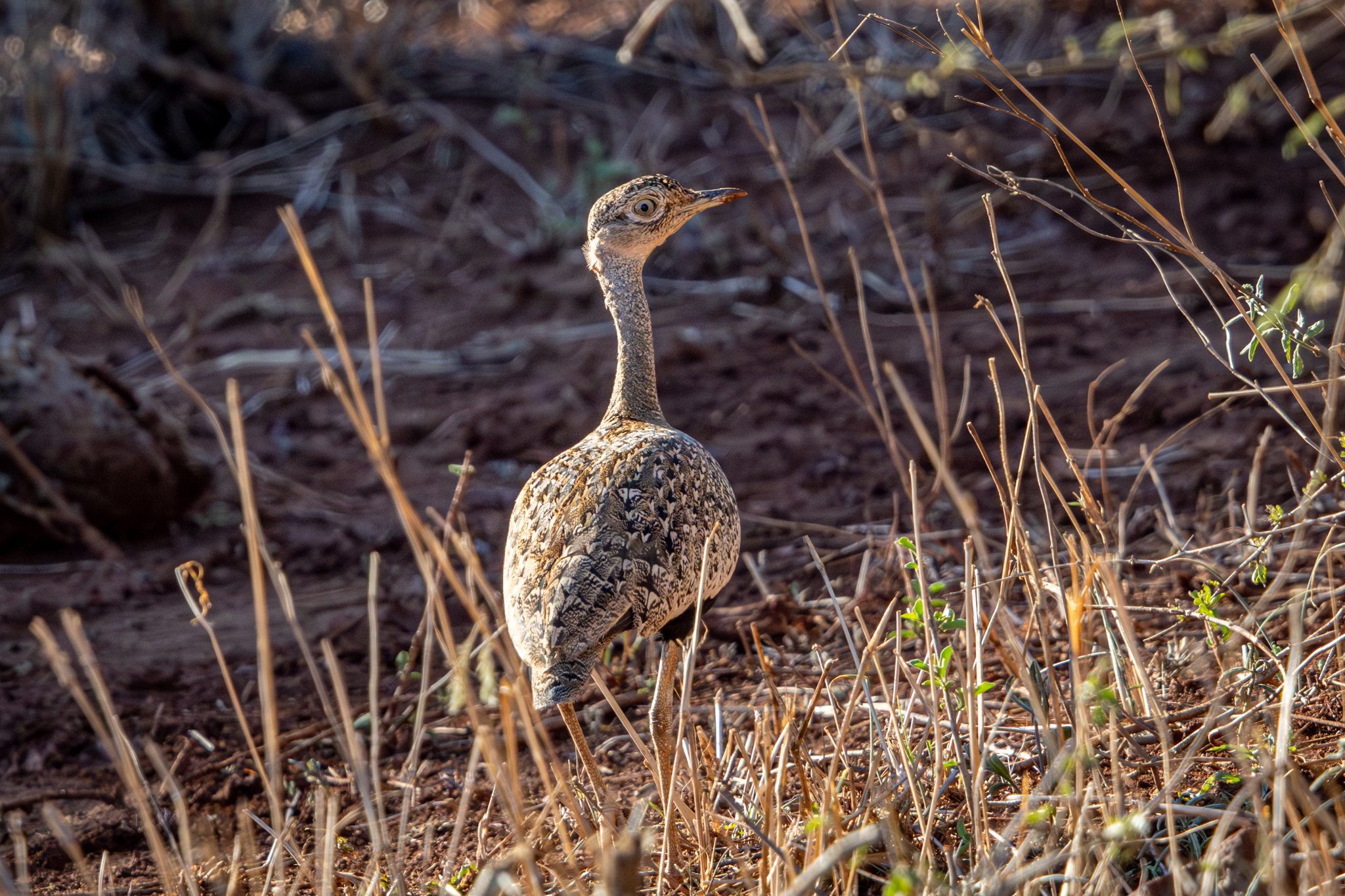
There were several species of bustards (not b*stards or Busters) seen on the ground as we drove around. This Red-crested Bustard gave us a side-long glance as it moseyed along. Look at the size of that eye.
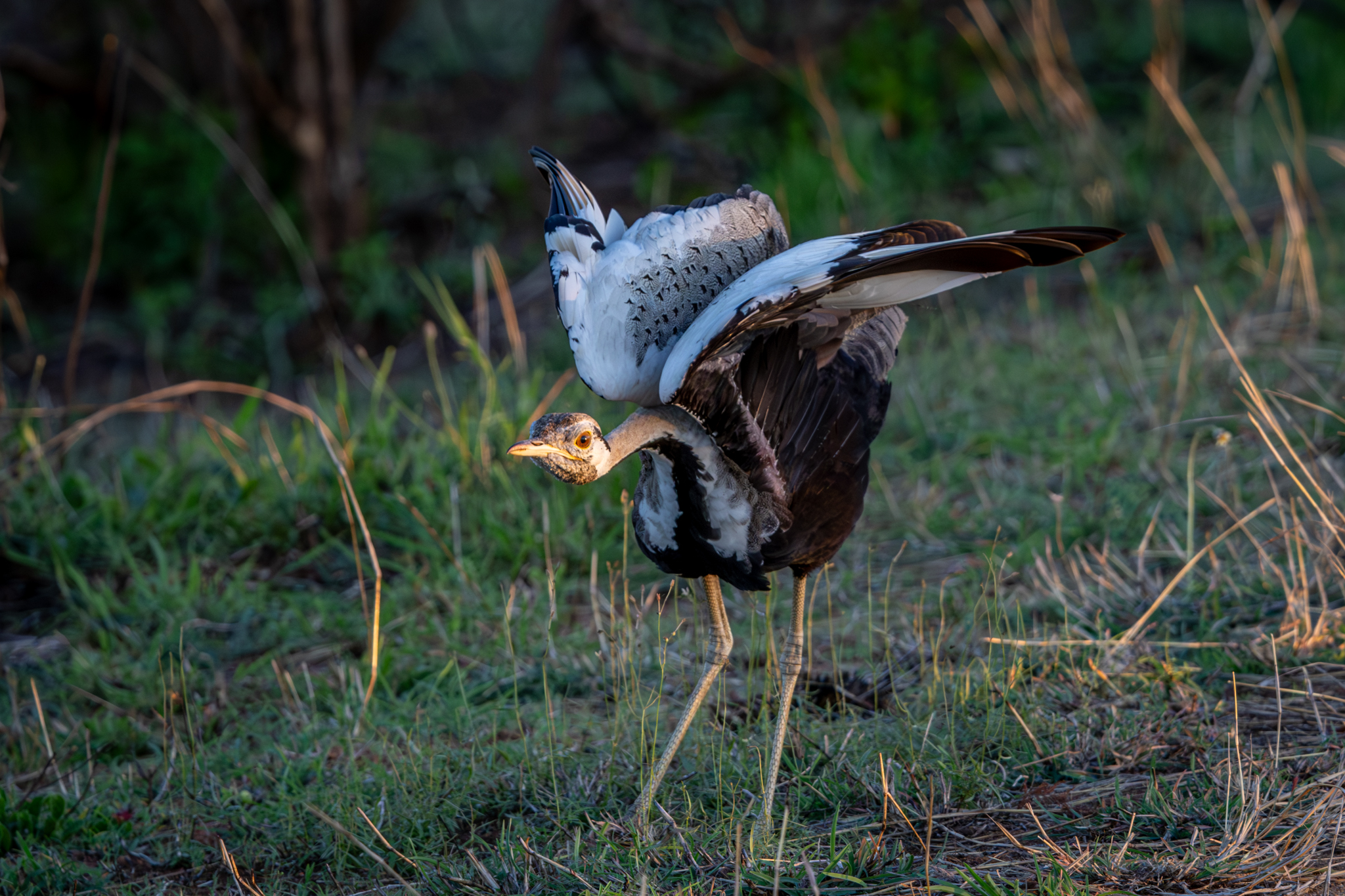
Then this Black-bellied Bustard stretched its wings as the last rays of the sun illuminated its head.
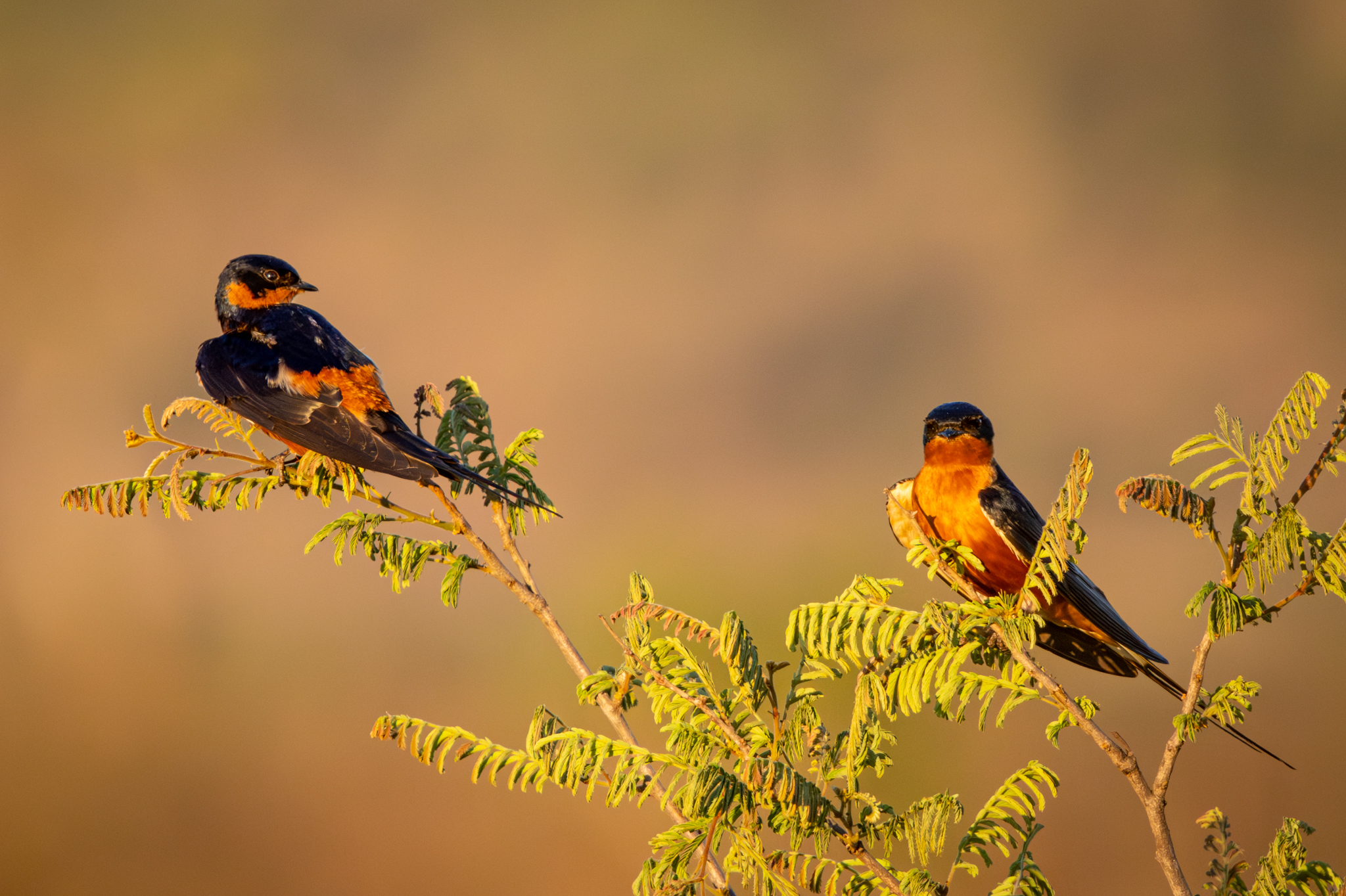
Speaking of last rays, these Rufous-chested Swallows perched nearby. You can see their long, thin tail-feathers extending behind them. When flying the tail feathers separate into a thin V shape.
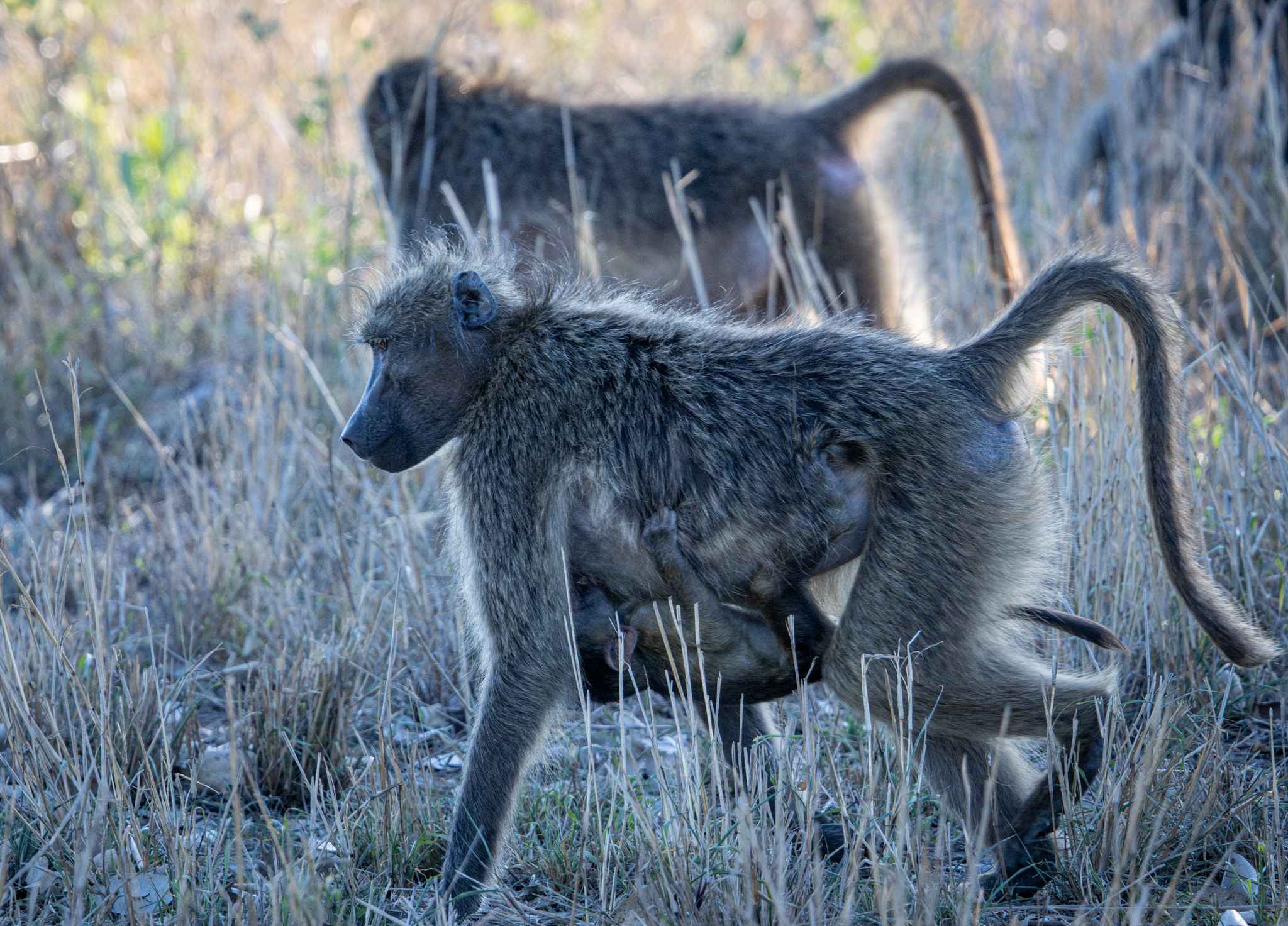
Up until this point we had run into baboons in dribs and drabs – a couple here, a couple there. This day we came across a troop of baboons in a field. There were at least 20 of them moving slowly. We saw several moms carrying their babies.
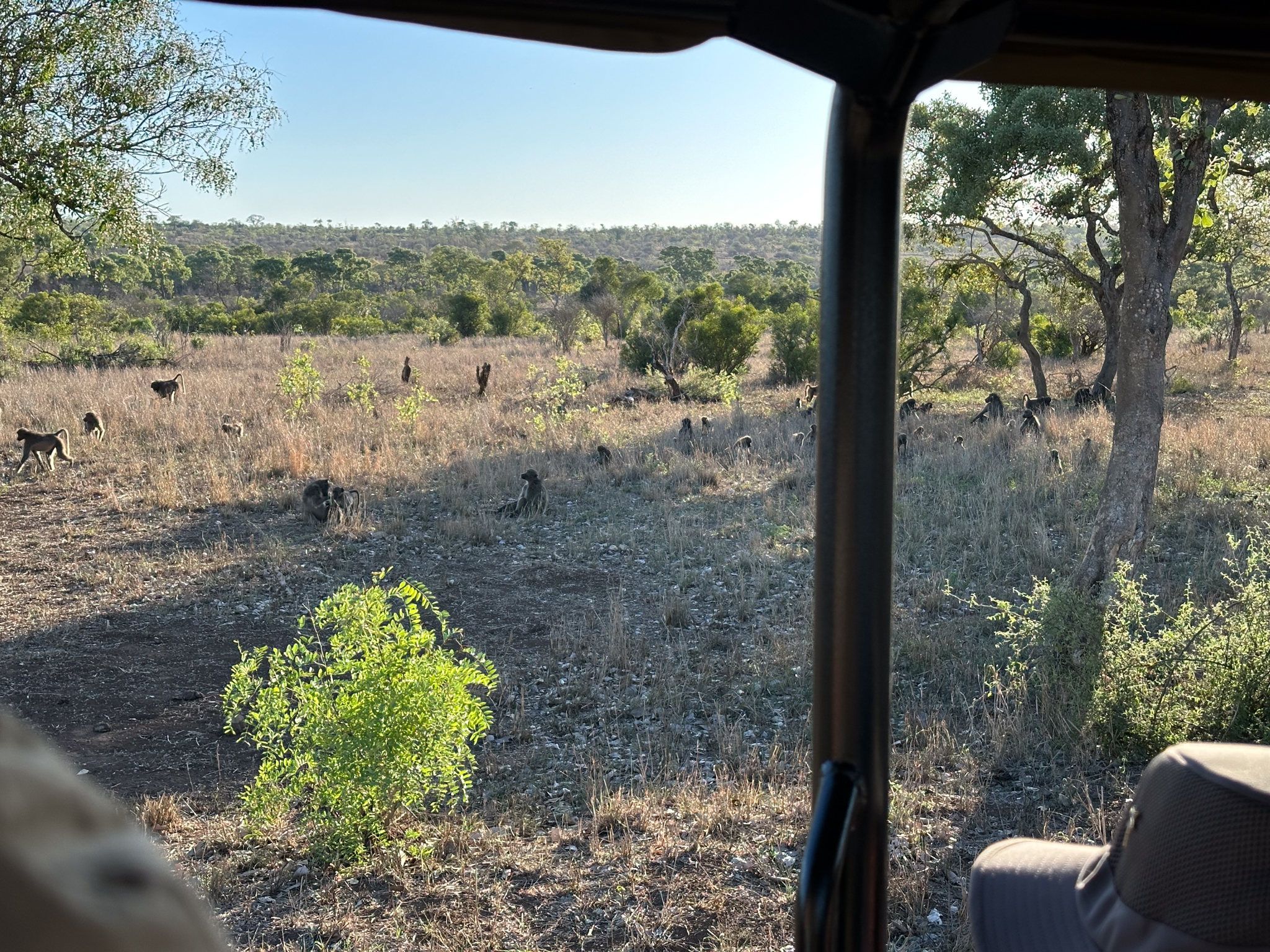
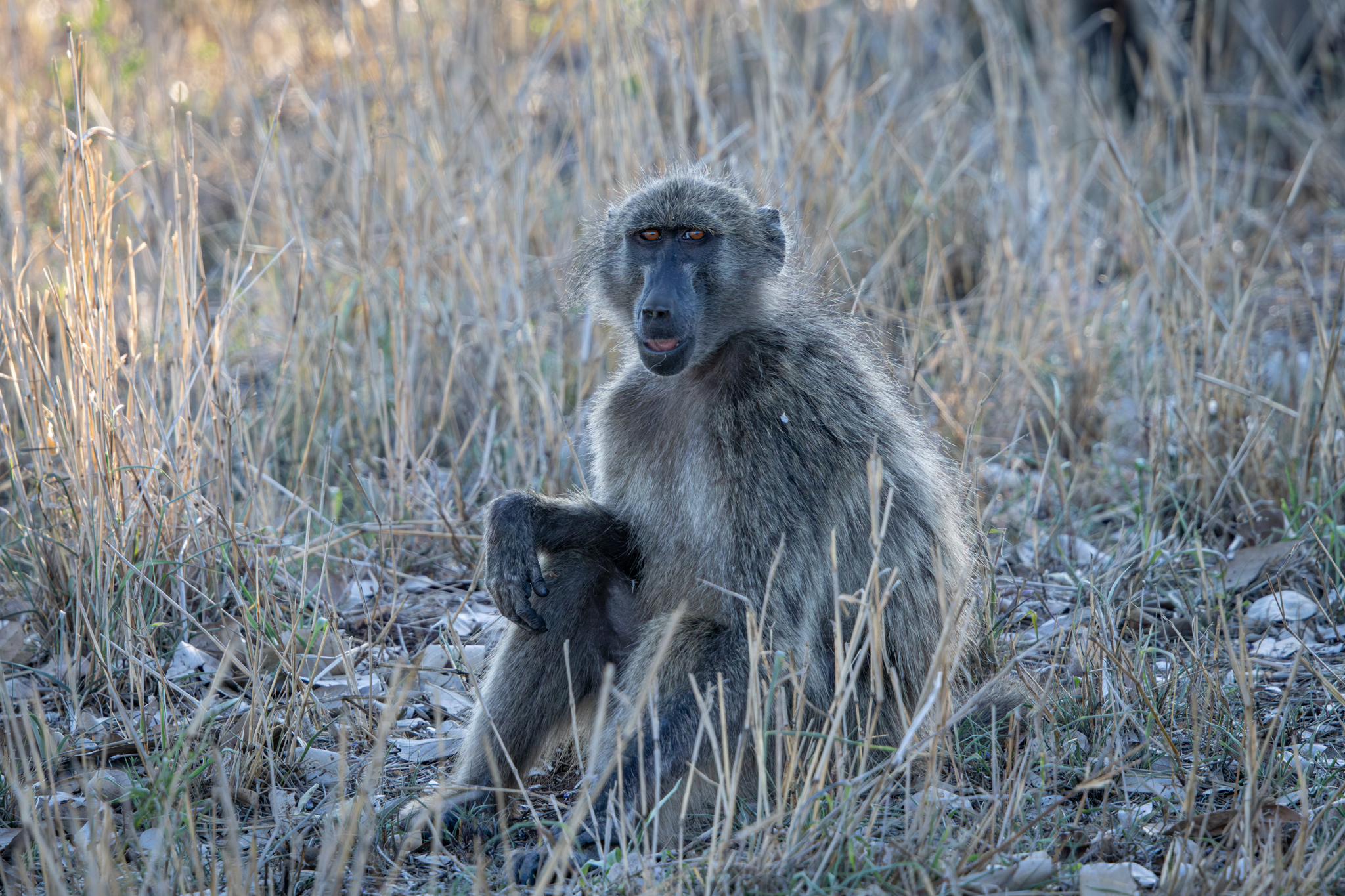
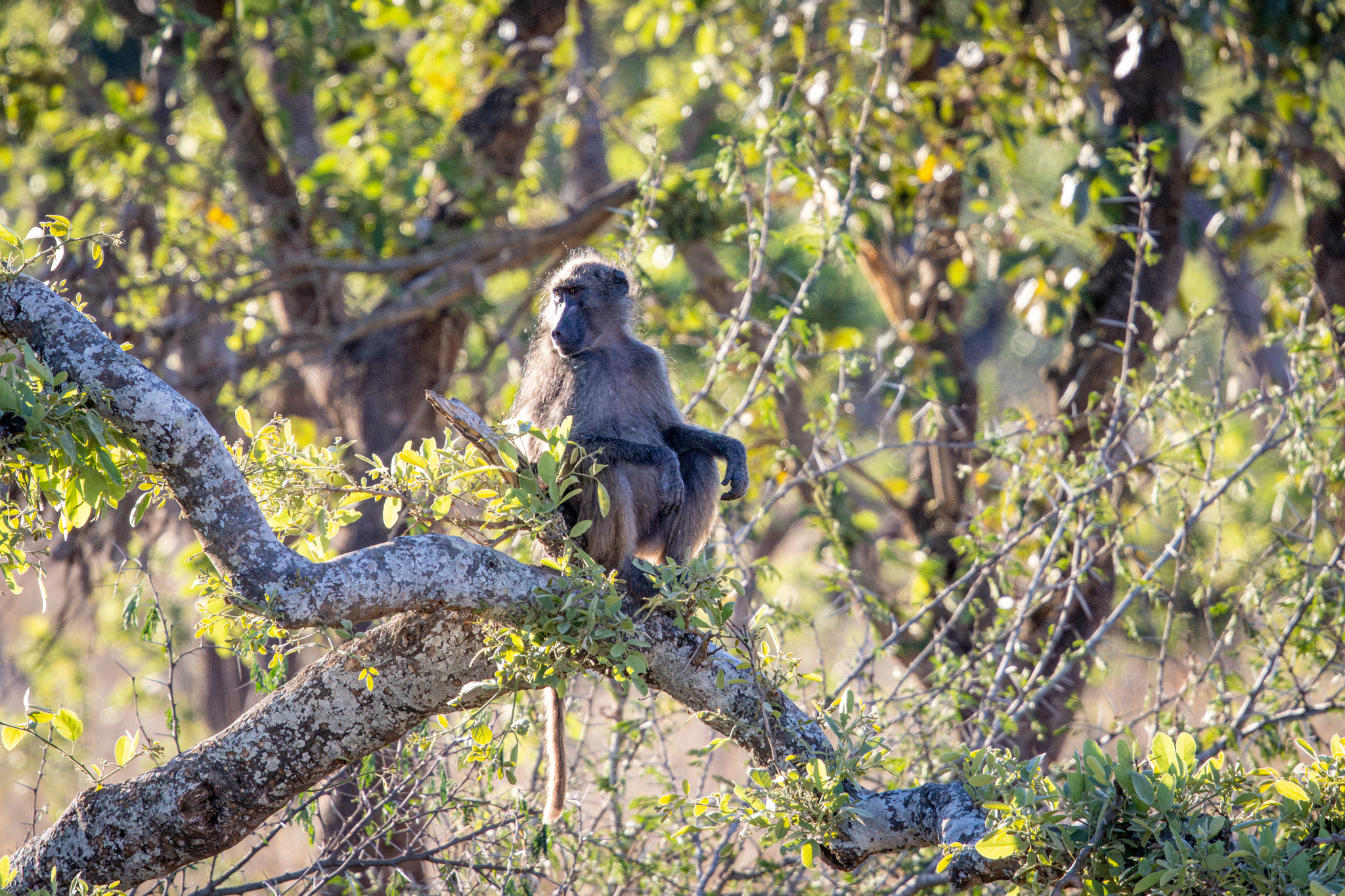
This one sat, scratched, and stared at us. The last one, according to Edward, was the “sentinel” – its job was to look around from a perch for danger. As the troop moved on, the sentinel followed.
You may have noticed that these posts from Kruger are longer than the other South African posts. In general I had 2-3 times more Keepers in Kruger because I was taking 2-3 times more pictures. There were a lot of birds there, but the proximity to all the mammals kept me busy taking pics on my camera. Well that’s it for today, Xwinger. Happy Belated Birthday! Does this count as a card?
CLICK HERE to see all the posts about our South Africa Bird Tour. Karen and I have had the opportunity to travel to many interesting places in search of birds. If you would like read about some of our other Bird Tours CLICK HERE.
If you enjoy seeing beautiful pictures of birds from around the world and reading about them CLICK HERE to sign up for our mailing list. Members can post their own GreatBirdPics and learn more about bird photography techniques.