All good things must come to an end and so it was time for our Alaskan birding tour to start winding down. After twelve days we had seen most of our target birds and got a feel for just how big the largest state in the union was. We did go out birding on our last morning before flying back to Anchorage (where we spent one more night before flying home).
Because we were in the “Land of the Midnight Sun” it wasn’t necessary to get up at the crack of dawn in Utqiagvik (formally Barrow) because there was no dawn (or sunset for that matter). The sun never sets this time of year above the Arctic Circle. Each morning we would go over to get a leisurely breakfast at the Top Of The World Hotel.

The hotel was perched on the shore of the (frozen) Arctic Ocean; after breakfast we would walk out to the shoreline and look for polar bears on the ice.

Alas we didn’t find any polar bears but we did see a Ringed Seal or two sunning themselves on the ice.

We then drove out of town in search of birds. Many of the homes we passed were like this one. It was raised above the ground level in case of flooding (which often happens in late summer) and had a pickup truck, snowmobile, boat, and a shipping container in the yard (along with other various and sundry items).

I mentioned before that we didn’t get a lot of Lifers while in Alaska because we had previously seen many of the same species in U.S. midwest. The Lapland Longspur was one of those species but note that the colors were brighter in Alaska (breeding season) than when we see them in January – March in the midwest.

The Snow Bunting is one of my favorite birds because it is so very cute! We saw them regularly in Utqiagvik but if Josh hadn’t told me what they were I don’t know if I know they were Snow Buntings – they looked so different from when we see them during the winter in the midwest. Here are a couple of pictures of a male Snow Bunting in breeding colors.


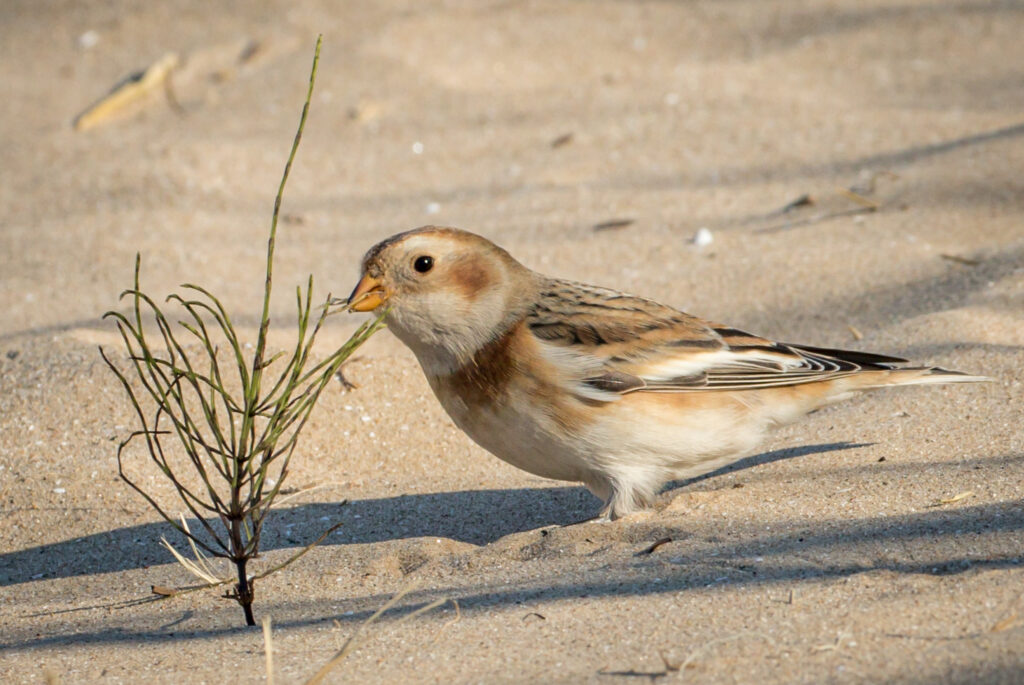
Below is a male Snow Bunting I took in Montrose Beach, Chicago one January. In this case the non-breeding plumage is more colorful than the breeding.
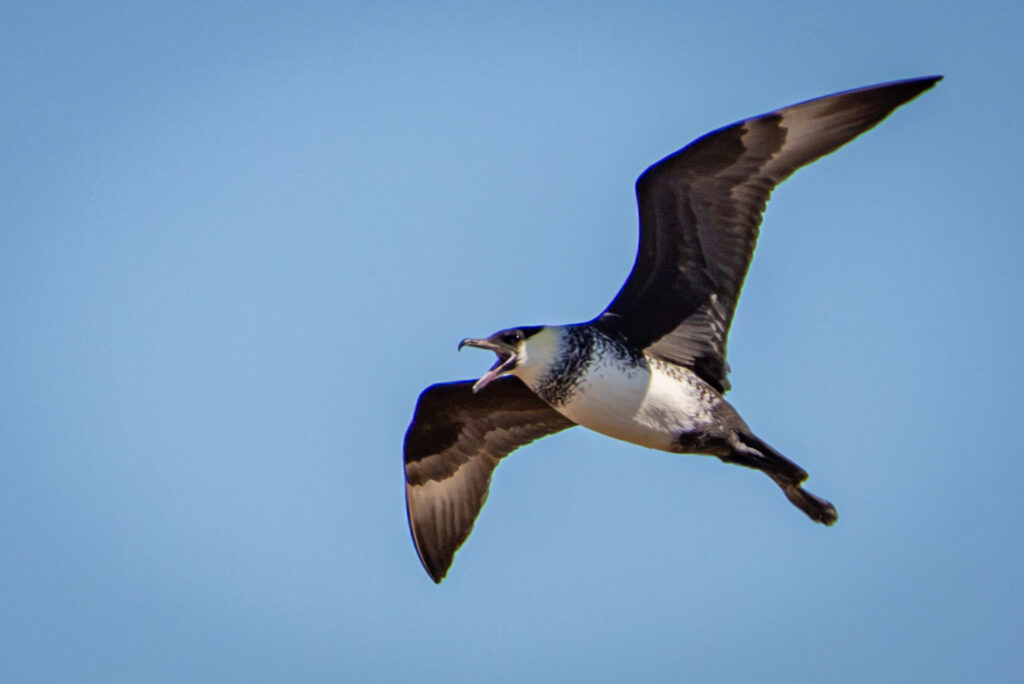
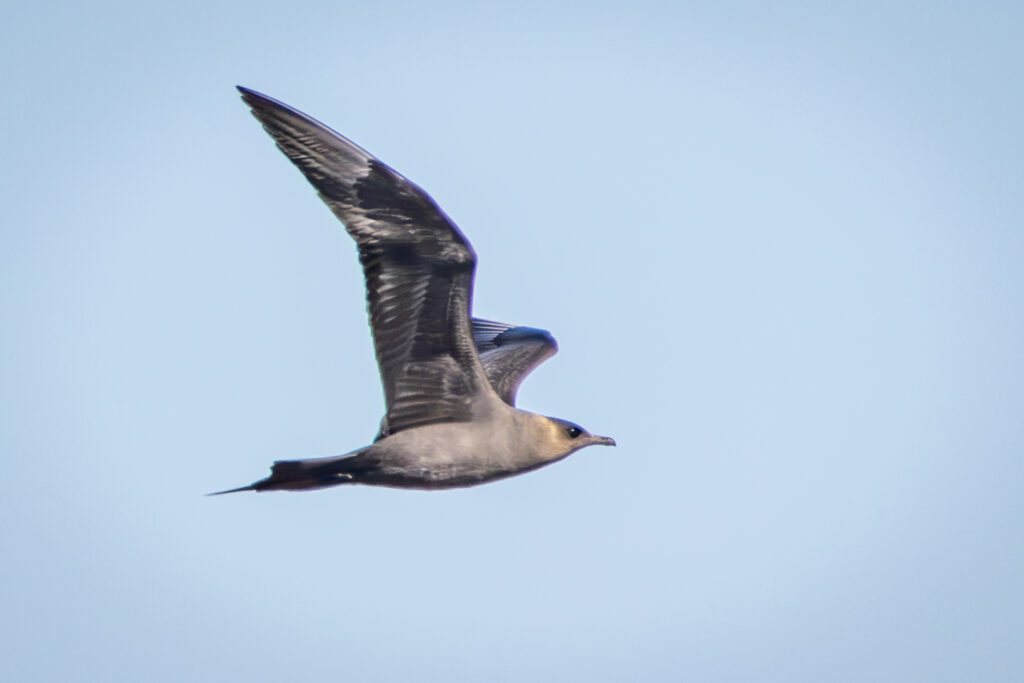
We did see Pomarine and Parasitic Jaegers in Nome but they were more numerous in Utqiagvik and we had much better looks.
One of the rarer birds we saw in Utqiagvik was a Sabine’s Gull. These birds breed on the tundra but once breeding season is over they head out to sea for the rest of the year. The black head on this one shows its breeding plumage (with a cute yellow splash on the tip of its bill).

So many species of birds fly up to the tundra to breed! Here is a Semi-palmated Sandpiper (often found along rocky shorelines in the U.S.) and a Baird’s Sandpiper (sometimes found on beaches).


Far less common, we saw Red Phalaropes in the wet fuddles that dot the tundra around Utqiagvik.

Great White-fronted Geese are regularly seen in the midwest during the late-fall through early spring. These stocky geese were seen in Utqiagvik in pairs or small groups, presumably near their nests.

I’ll wrap things up in my next post about our Alaskan bird tour (because Xwinger just can’t get enough of them) – I think it’s safe to say I’ll be giving it a a big thumbs up!
This is the twelfth post about my Alaskan bird tour. It started in Anchorage, then went to Seward, Nome, and Barrow; additional posts are being shared each Monday. CLICK HERE to see all the posts about our Alaskan Bird Tour.
Karen and I have had the opportunity to travel to many interesting places in search of birds. If you would like read about some of our other Bird Tours CLICK HERE.
If you enjoy seeing beautiful pictures of birds from around the world and reading about them CLICK HERE to sign up for our mailing list. Members can post their own Great Bird Pics and learn more about bird photography techniques.