Believe it or not I’m only on Day 4 of our 18 day tour of South Africa! As you might recall, we started this day at Kirstenbosch Botanical Gardens and saw some wonderful Lifers like the Common Waxbill and the African Paradise-Flycatcher. Then we drove off, driving south-east, leaving Cape Town behind us. We followed the Atlantic coastline as we traveled and got some great views of the beaches and ocean below us. Our primary target this afternoon eluded us (more on that in the next post) but our last stop of the day was fascinating.

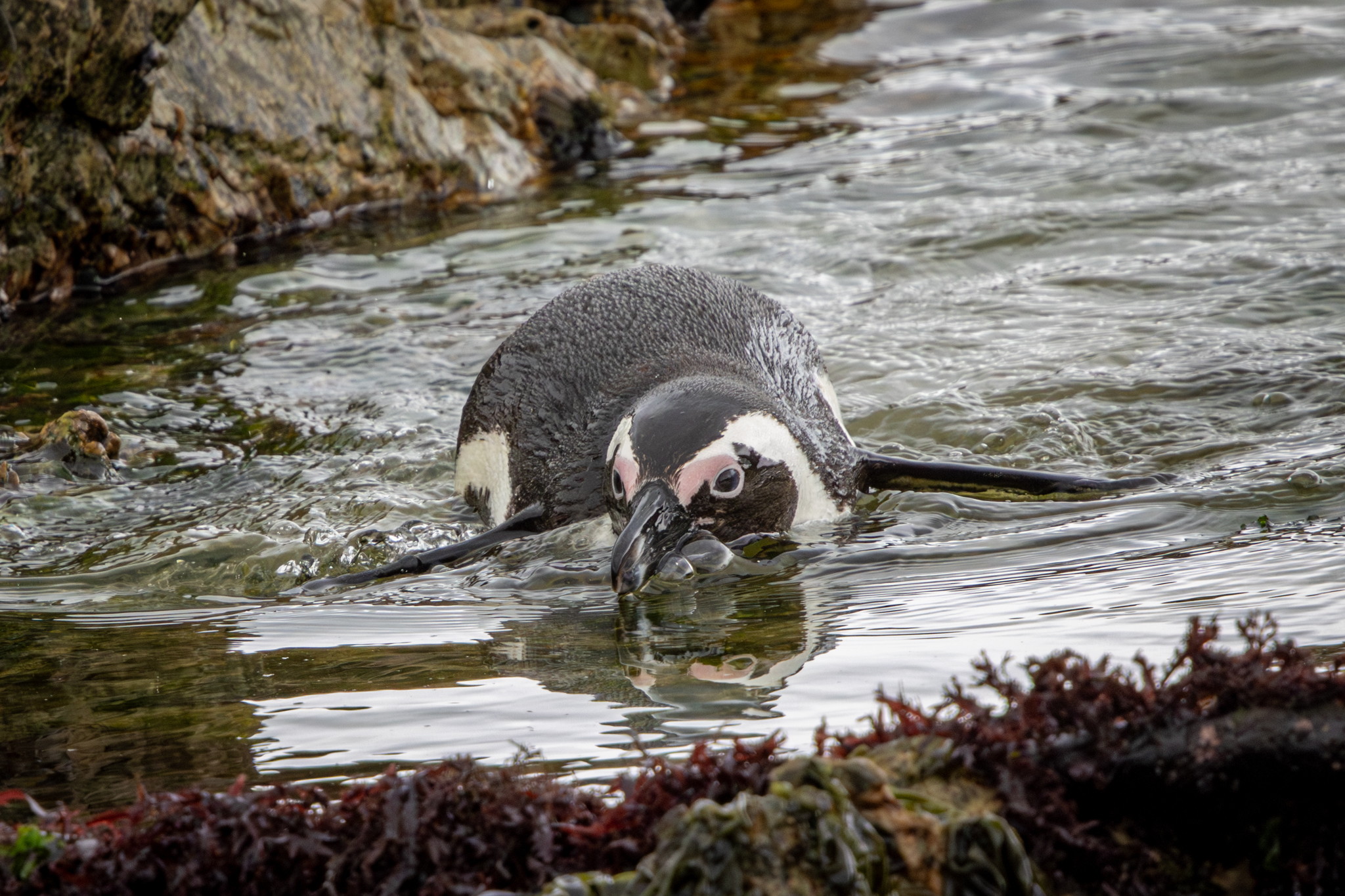
We arrived in the afternoon at Stony Point, which houses a colony of African Penguins! There are several of these colonies in South Africa (we saw a small one on Robbin Island, off the coast from Cape Town, where Nelson Mandela was imprisoned for 18 years) and this one afforded close views of these flightless birds. The one below enjoyed surfing in with the waves through an opening between the rocks.
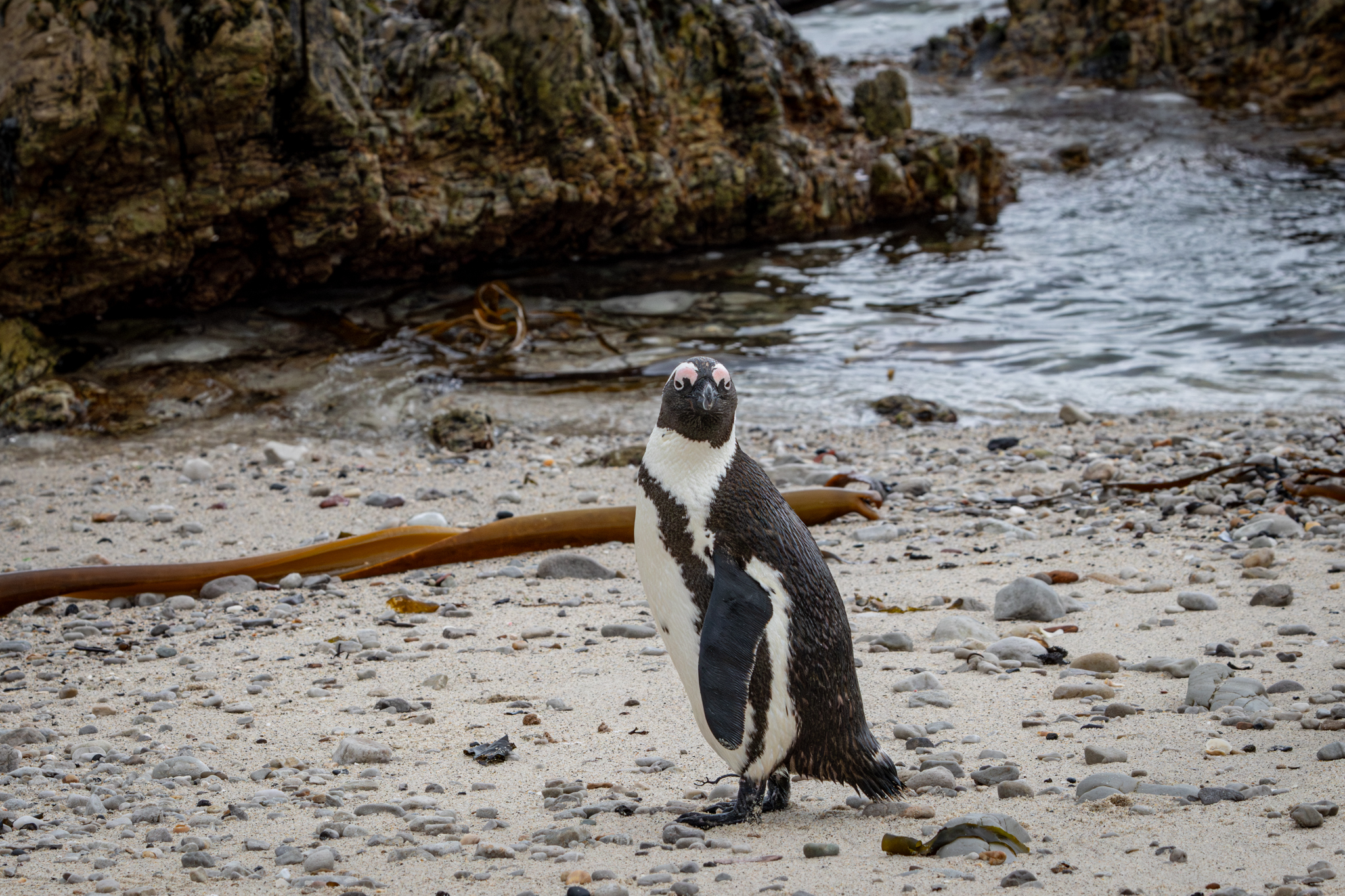
Others were content to stand nearby on the beach after a day out to sea looking for food.
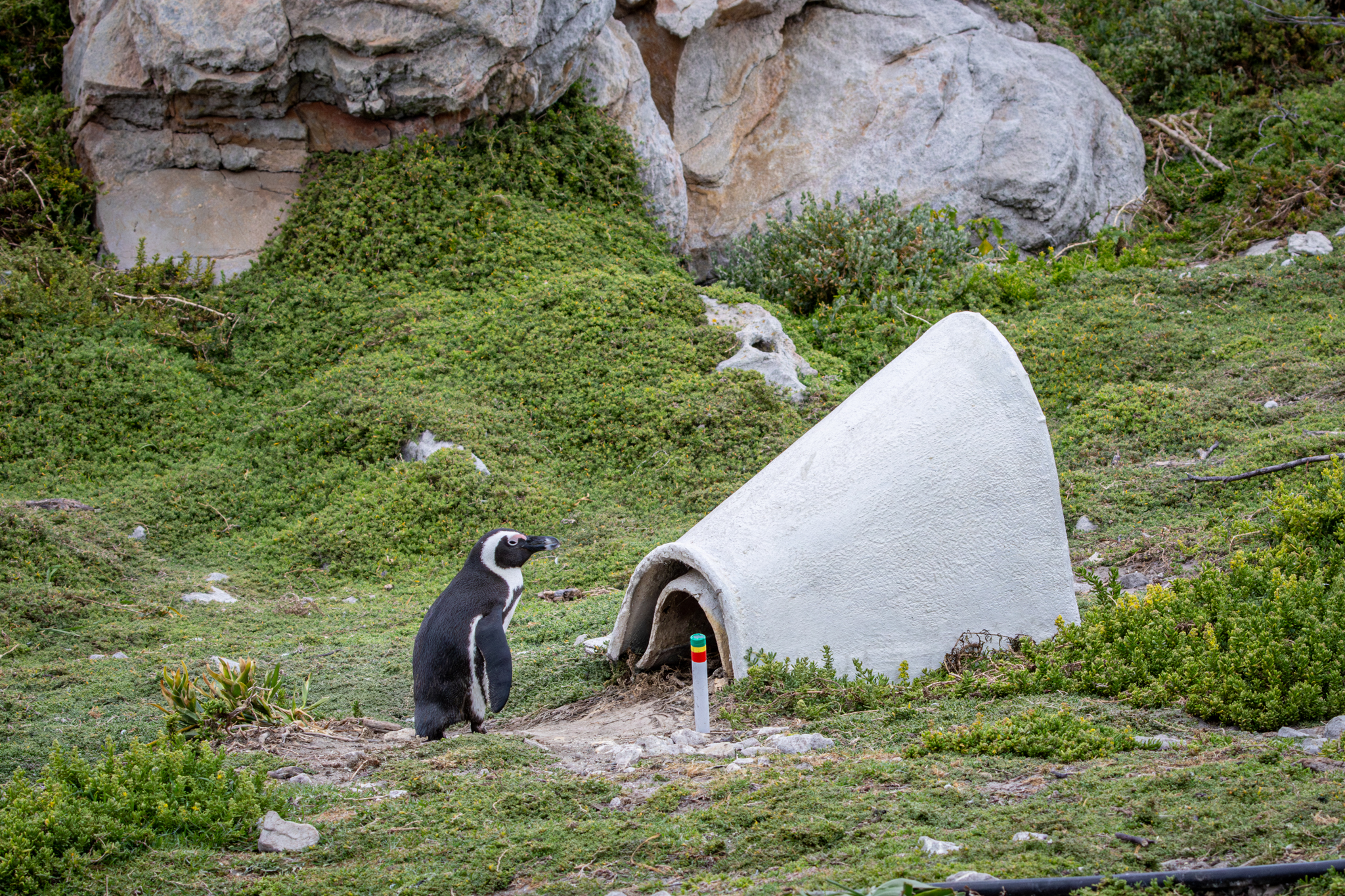
The ground at Stony Point is quite rocky, making it difficult for the penguins to dig a home for themselves, so artificial homes were setup for them. The artificial homes protect the penguins during bad weather.
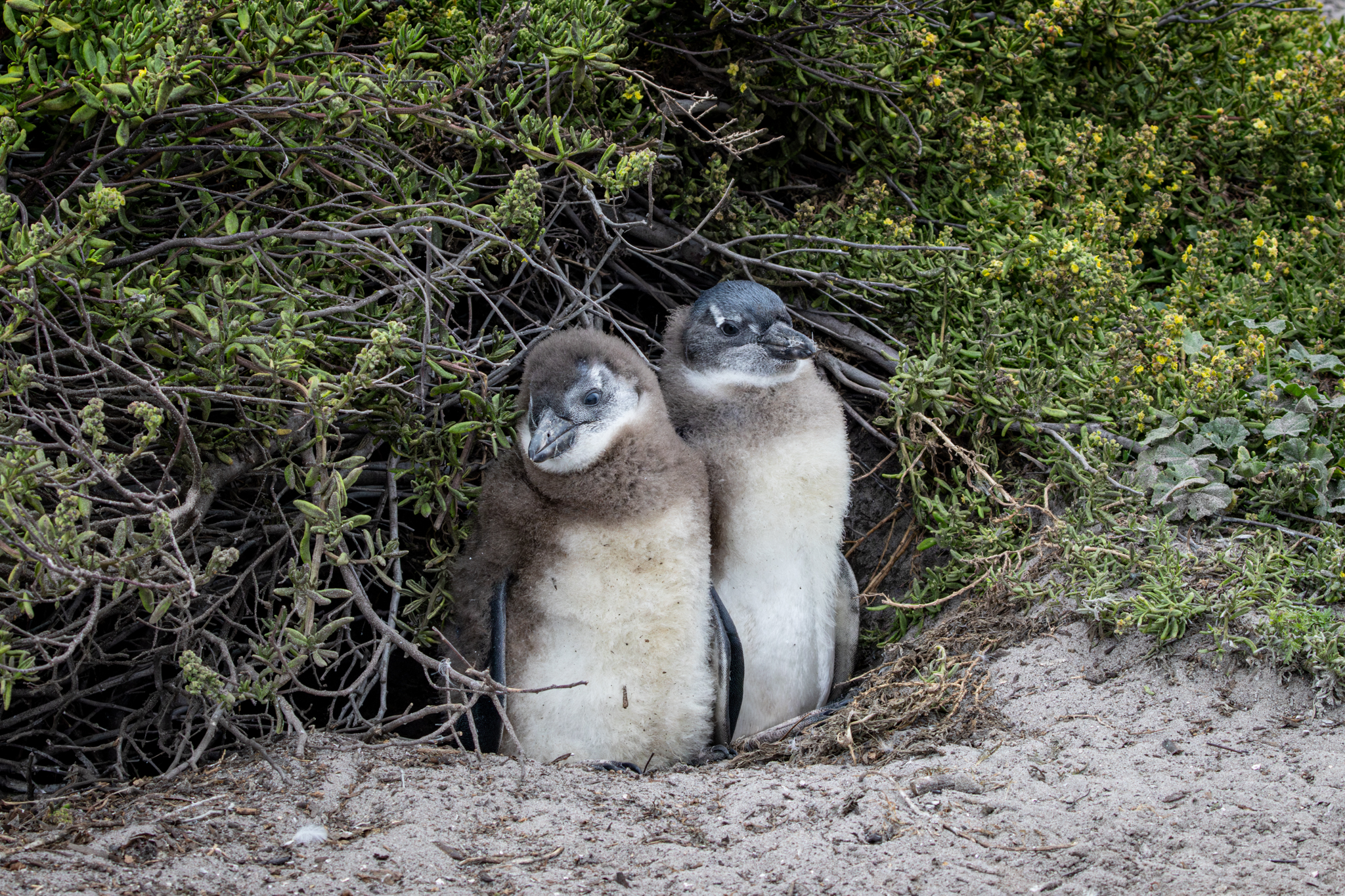
We spotted a pair of adolescent penguins peering out of their hutch at us.
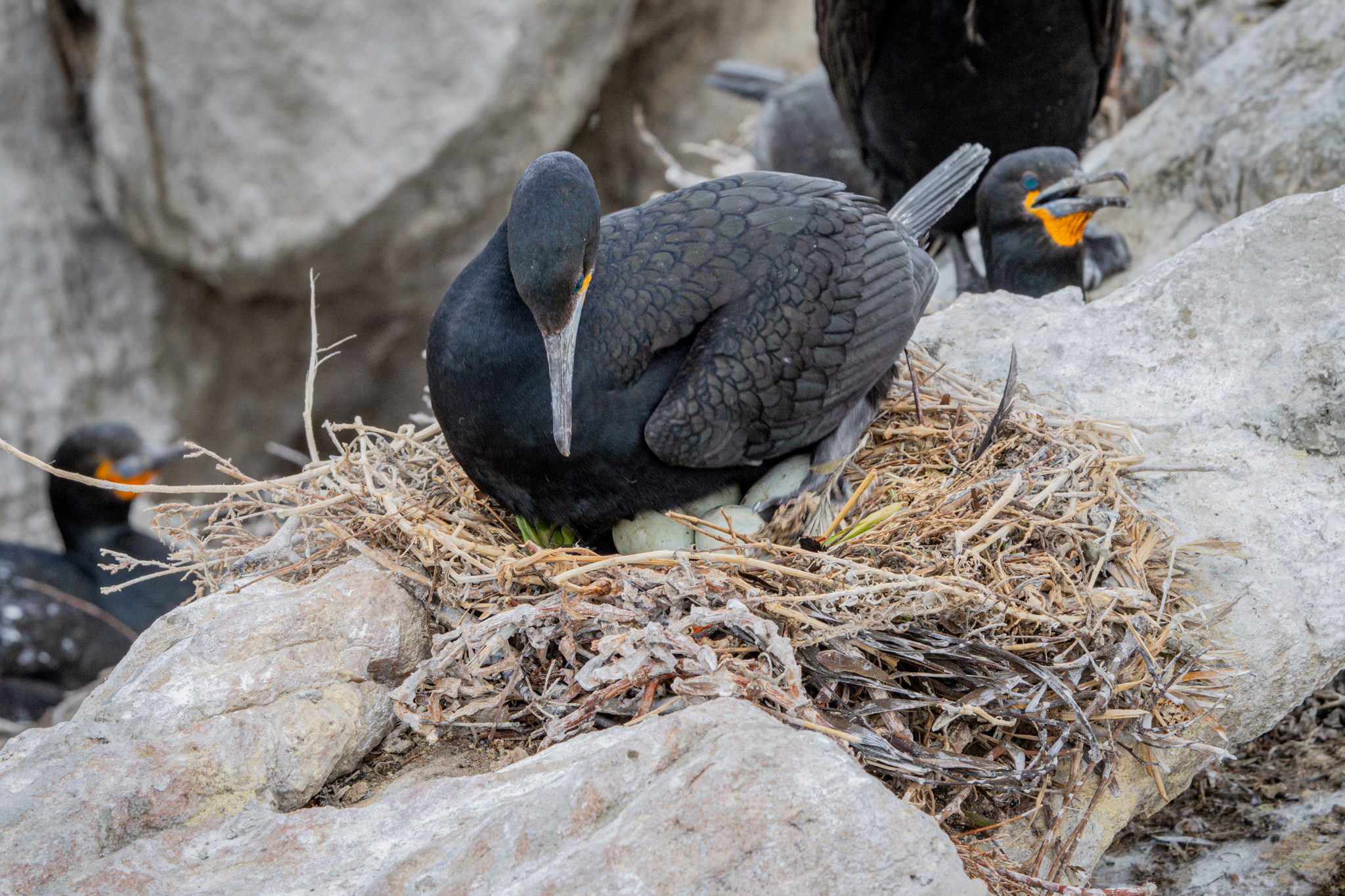
Around from the beach from the penguin colony was a rocky outcropping which was an ideal nesting place for several types of cormorants. Here you see a Cape Cormorant sitting on a nest of eggs.
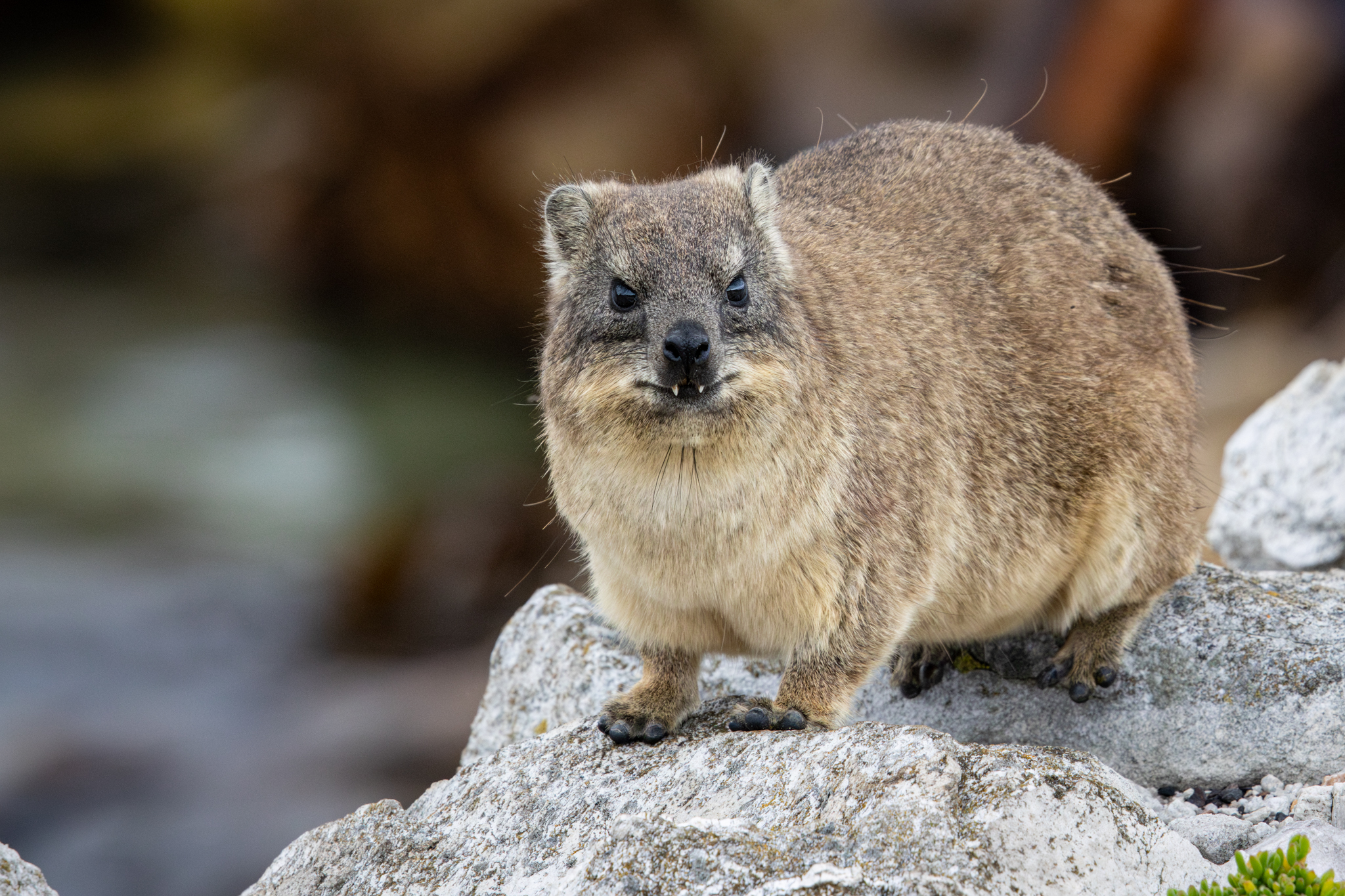
Also found running around on the rocks were Cape Rock Hyrax, a big rodent with small fangs. Personally, I’m not wild about any rodents, particularly ones that are bigger than some lap dogs!
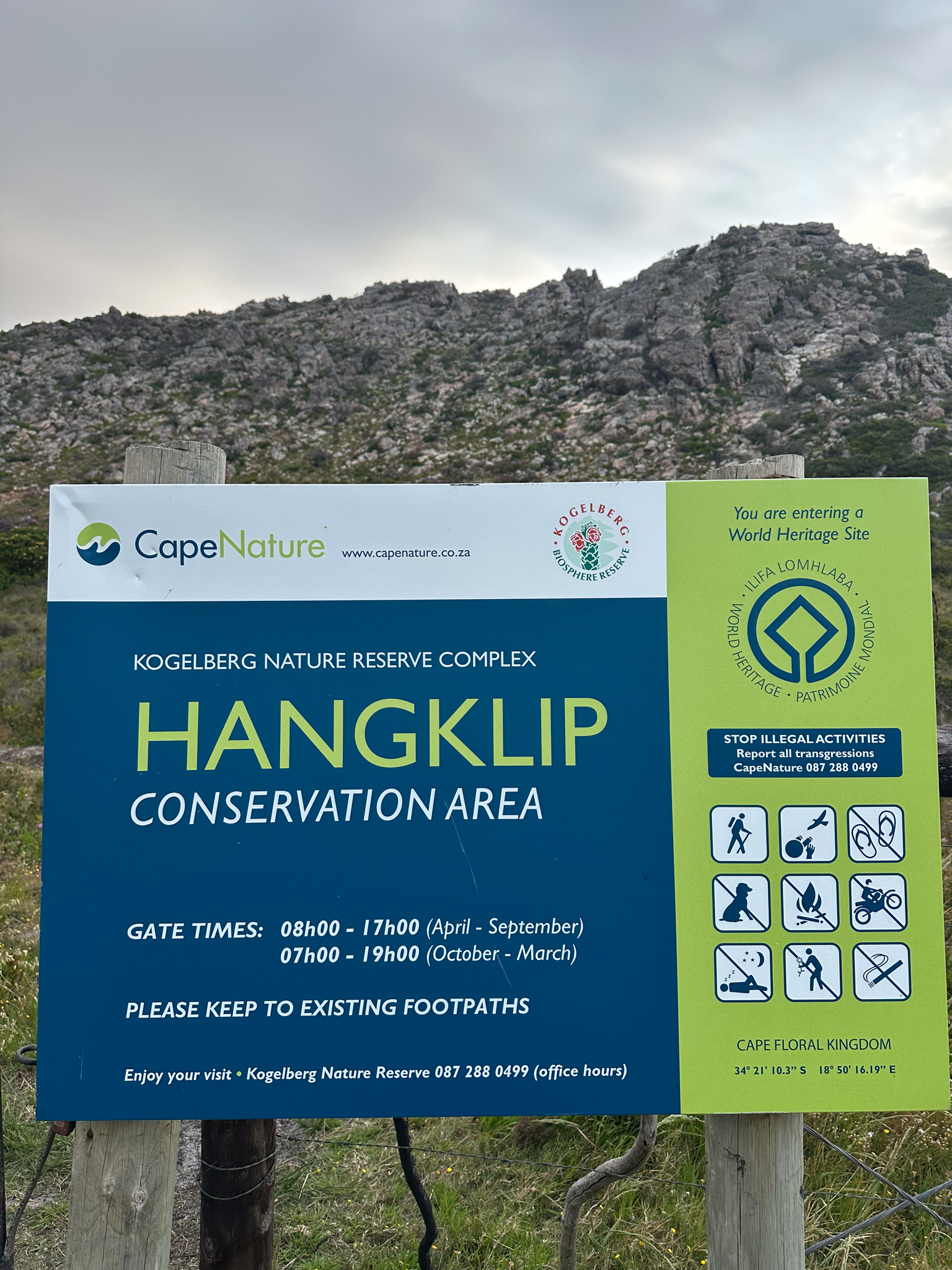
After leaving the penguin colony we had a few minutes before checking into our hotel to take a beautiful little trail up into the Hangklip Conservation area.
There were wildflowers lining the path on either side of us and we had great views of the valley below. As you might recall, we were traveling in October – so why were there so many wildflowers there?
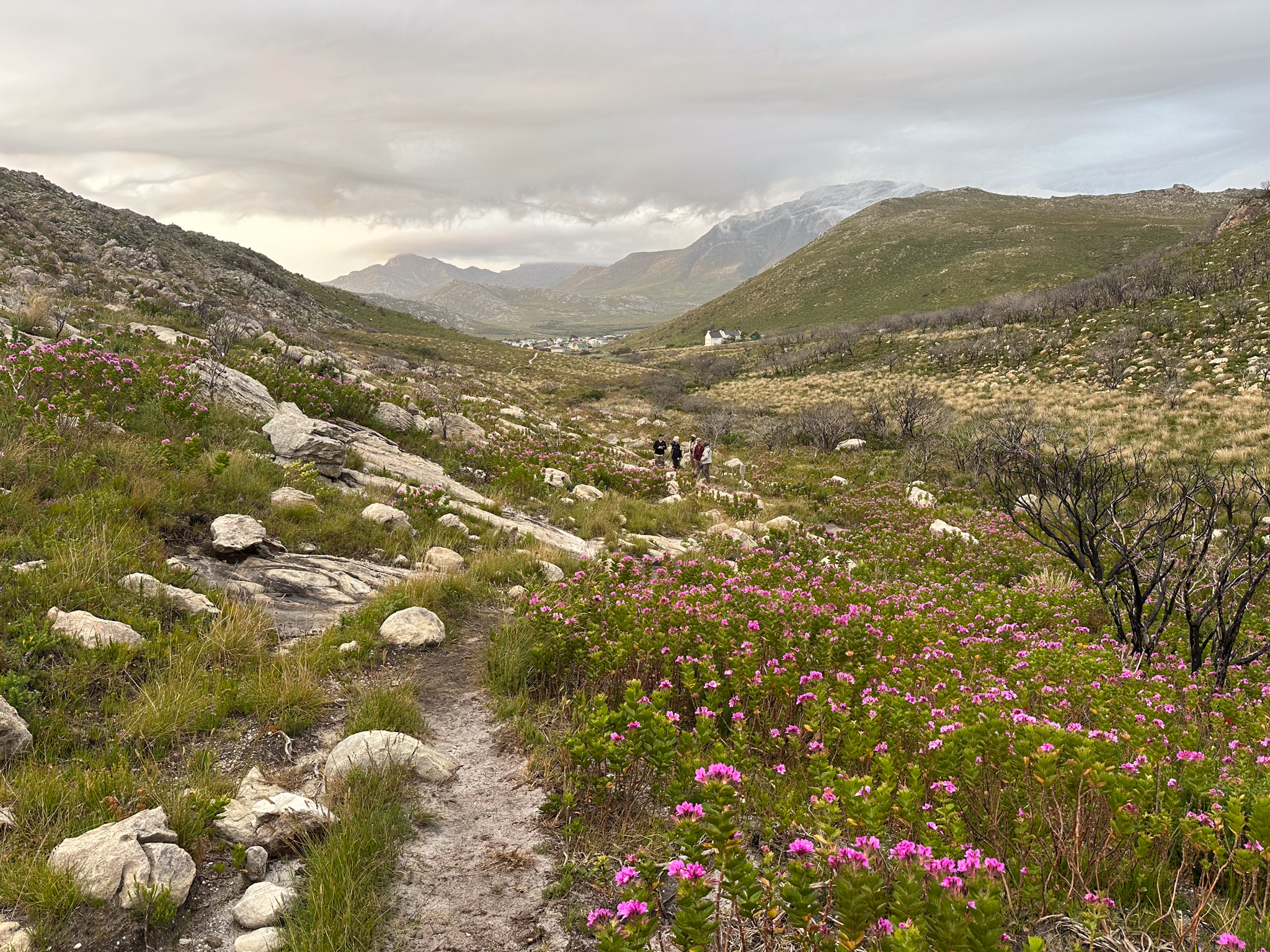
The wildflowers were growing there in October because that’s their springtime! The southern hemisphere’s seasons are opposite the northern hemisphere’s seasons (I bet Rebecca Bowater got that answer right!)
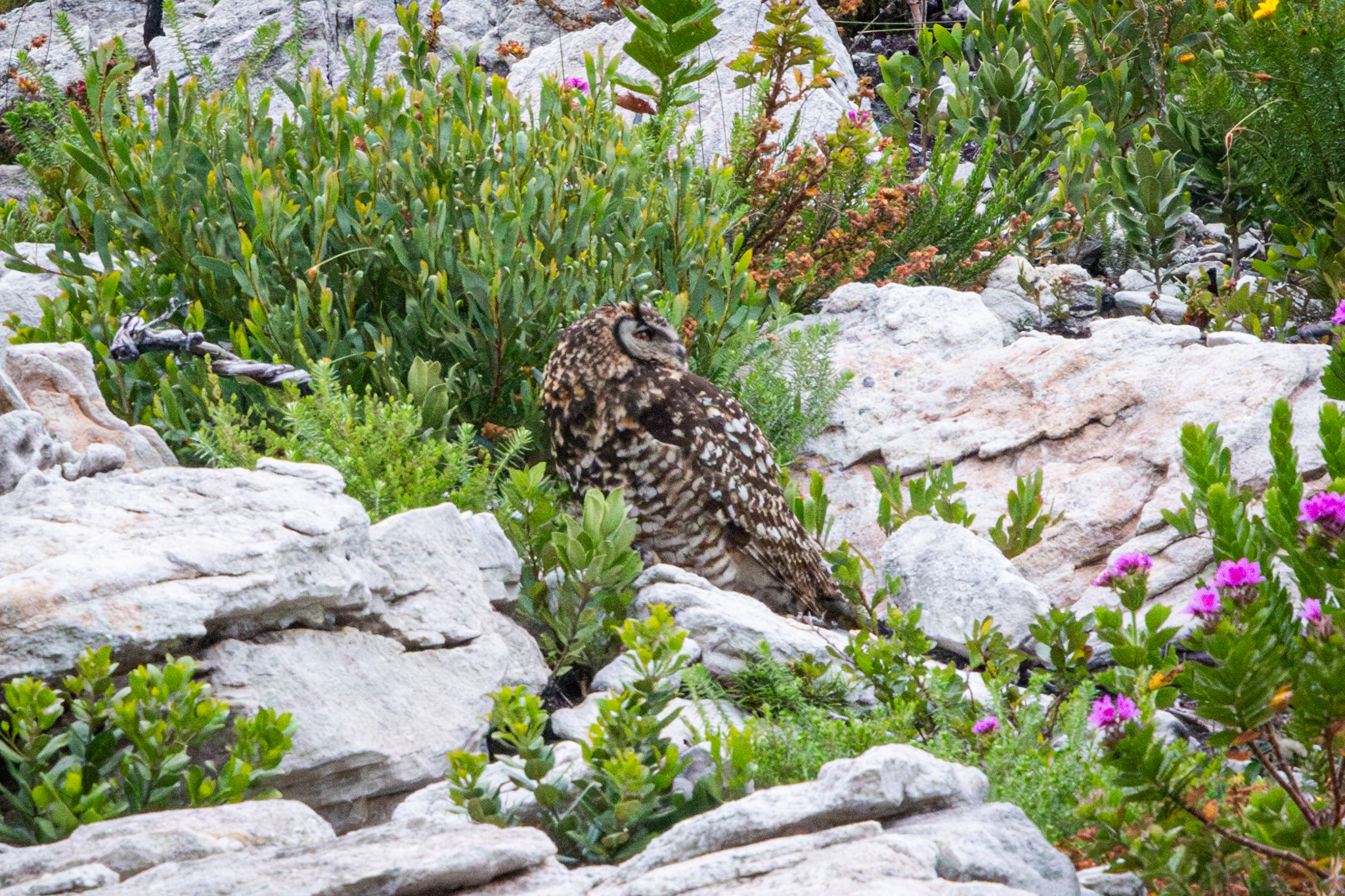
One big reason we were making the trek up Hangklip was to fine an elusive Cape Eagle-Owl. Our guide Josh heard it as we approached but it was almost impossible to spot it on the mountainside. Can you see it below?
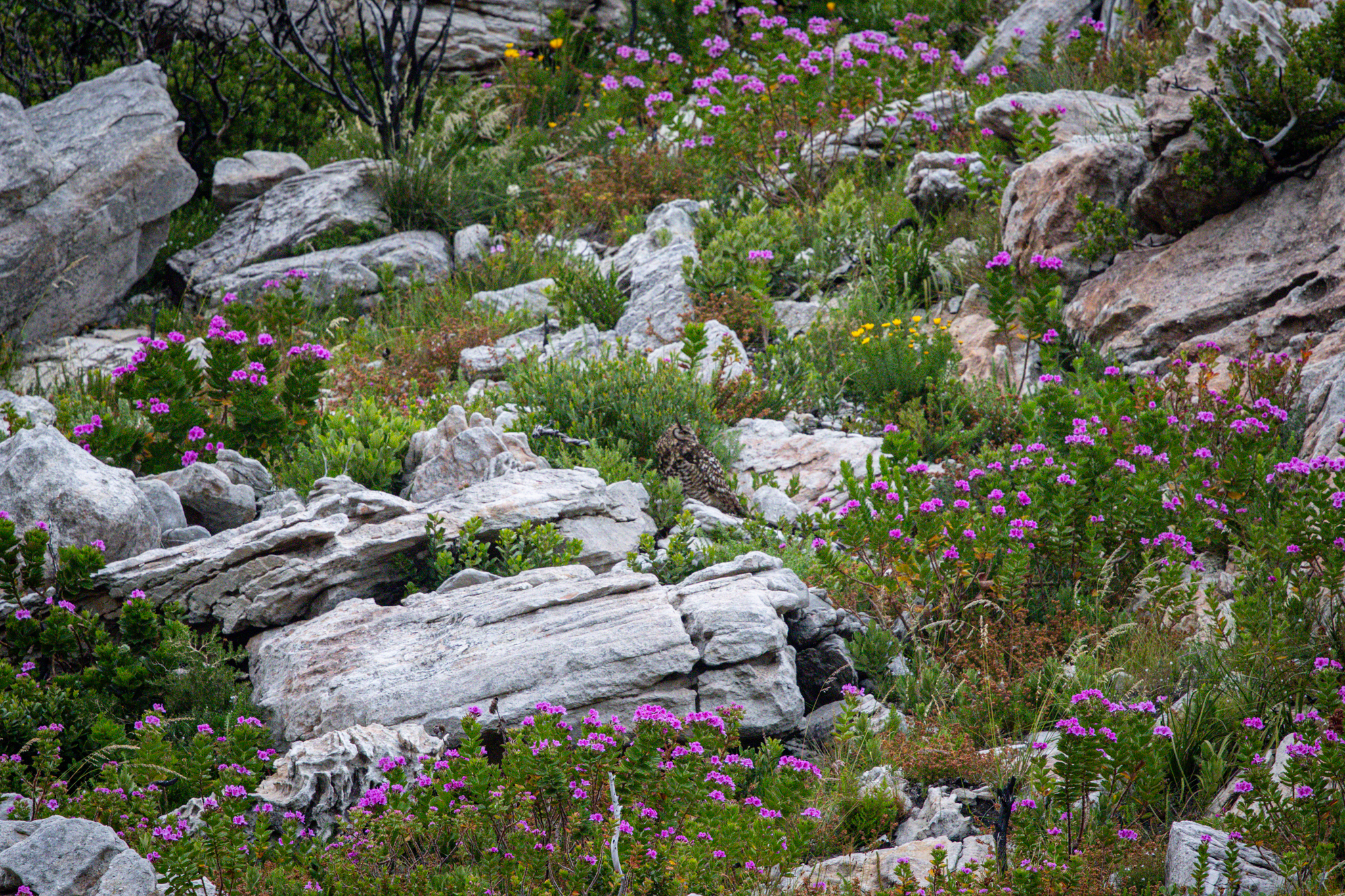
By slowly scanning the area above us with my binoculars I was able to spot the Cape Eagle-Owl and I cried out, “I got it”! Everyone wanted to know where, but I was afraid to lower my binoculars for fear of never finding it again (you couldn’t see it with the naked eye). I slowly scanned the area directly around the Eagle-Owl until I felt confident enough to describe what to look for so others could find it, too.
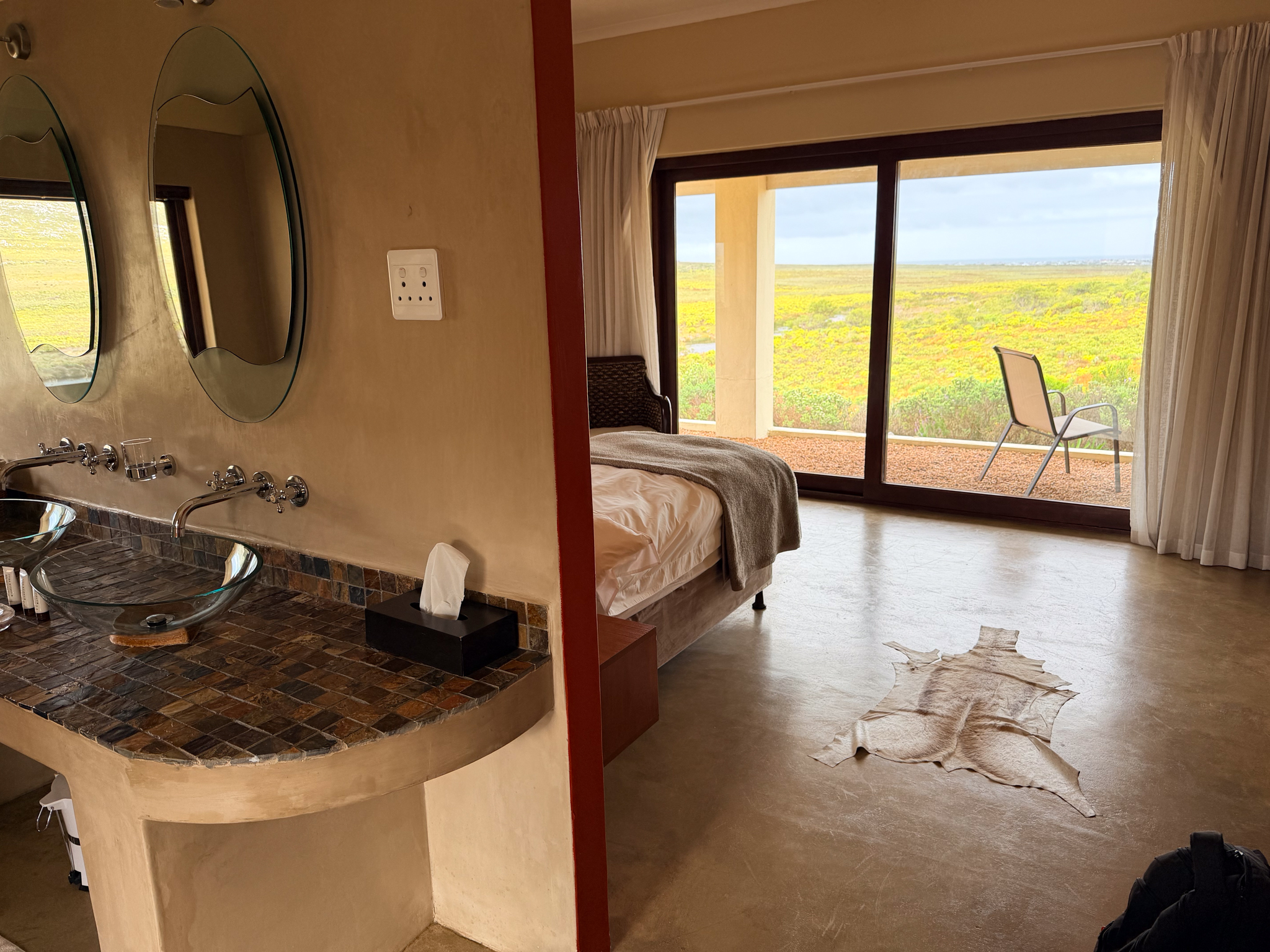
As the sun set, we checked into the San de Oever Guest House and found a very pleasant room looking out over fields of wild grasses all around us. A wonderful dinner was prepared for us by a local chef.
Next, searching for a rare and elusive bird before moving out into the countryside.
CLICK HERE to see all the posts about our South Africa Bird Tour. Karen and I have had the opportunity to travel to many interesting places in search of birds. If you would like read about some of our other Bird Tours CLICK HERE.
If you enjoy seeing beautiful pictures of birds from around the world and reading about them CLICK HERE to sign up for our mailing list. Members can post their own GreatBirdPics and learn more about bird photography techniques.
Wow what an experience you two lovebirds had!