What comes to mind when I tell you that we were surrounded by tundra in Nome? How do you envision tundra? I had a vague notion that tundra was a flat and lifeless expanse in frozen areas of the north. When we began looking for birds in the Nome area I found out I was only partially right about my concept of tundra – it was flat.
According to Wikipedia, “In physical geography, a tundra (/ˈtʌndrə) is a type of biome where tree growth is hindered by frigid temperatures and short growing seasons…. The word “tundra” usually refers only to the areas where the subsoil is permafrost, or permanently frozen soil. (It may also refer to the treeless plain in general…). ” Treeless was my first impression of the tundra – endless miles without any vegetation taller than your waist. The permafrost beneath the surface prevents trees from sinking their roots in the soil.
One question I had is why do millions of birds come here every summer to breed. If the tundra was so bleak, what are the advantages of nesting on the tundra? There are three good reasons to do so. First, when the tundra defrosts in the summer (tundra really has two seasons – summer and winter) it produces a burst of vegetation (see below) and insects. Secondly, the birds have many hours of daylight to find food for their young. Thirdly, there are very few predators in the tundra and, because it is relatively, flat they can be seen from far away.
Here’s a picture of Karen and I at the edge of the tundra and then a couple more to give you and idea of what I’m talking about.
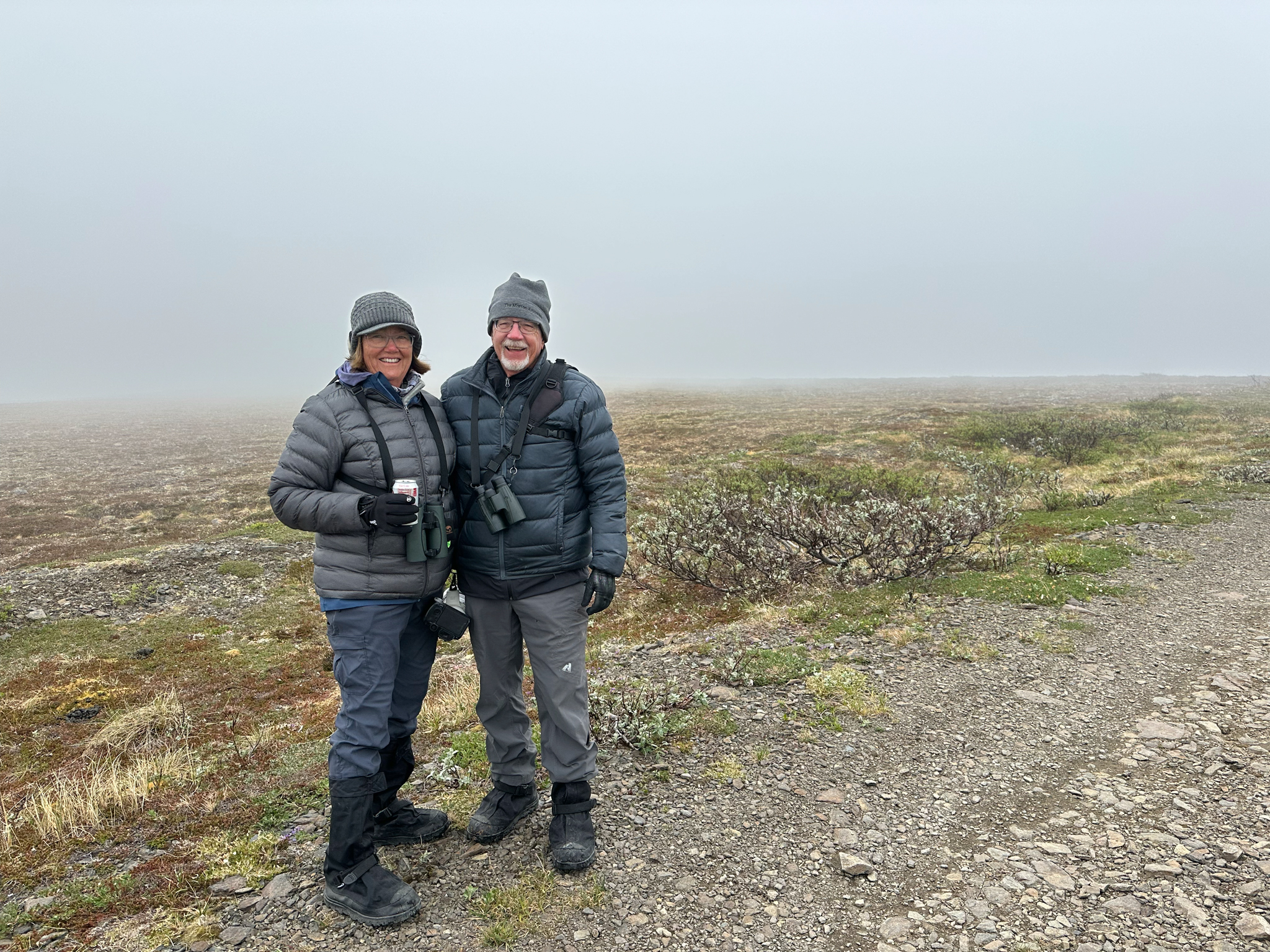


As you can see, it’s not particularly inviting. Much of our birding in the Nome area was done from the road but we did venture out into the tundra a couple of times in search of birds. As an aside, as we walked over the tundra it felt like we were walking on a sponge – every step we softly sunk down an inch or two.

One such foray into the tundra was in search of the Bristle-thighed Curlew. We got up very early to drive to the spot where these rare birds had been reported. In fact you can only see these birds here and on some Hawaiian islands so this was the best spot for this particular Lifer. The trail from the road was marked with a glove on a stick.

When we arrived at the trailhead there was a thick, chilly fog covering the ground – we probably had visibility of only 30 yards. We wandered about in search of the Bristle-thighed Curlew; after an hour I started to get bored and began noticing the tundra. As I looked down I saw I was standing on millions of tiny flowers! I couldn’t believe the shapes and colors of these plants that look so plain from afar, but closeup they were delicate works of art! Here are a few pictures of the tundra flowers – just remember that most of them are very small.
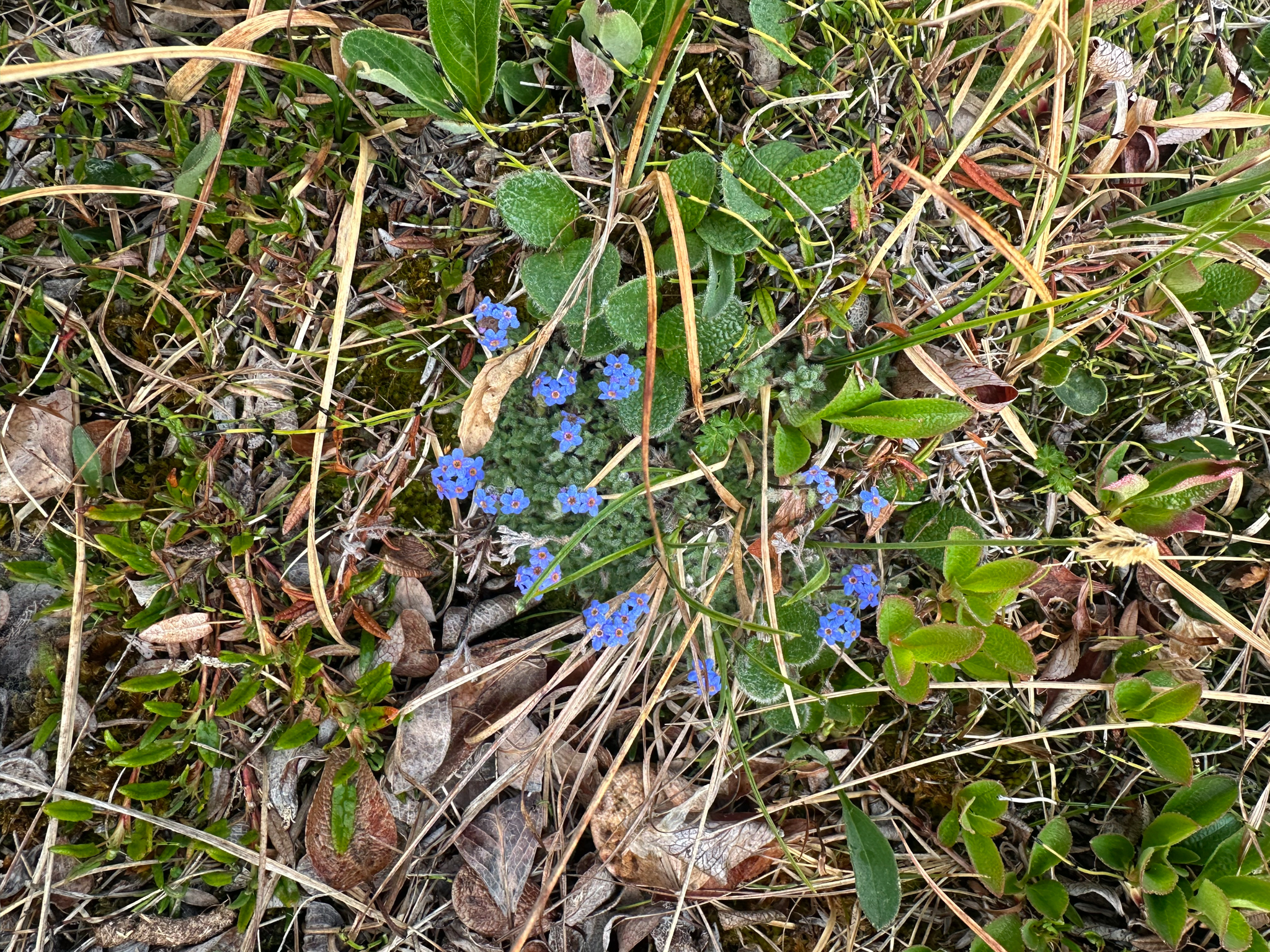
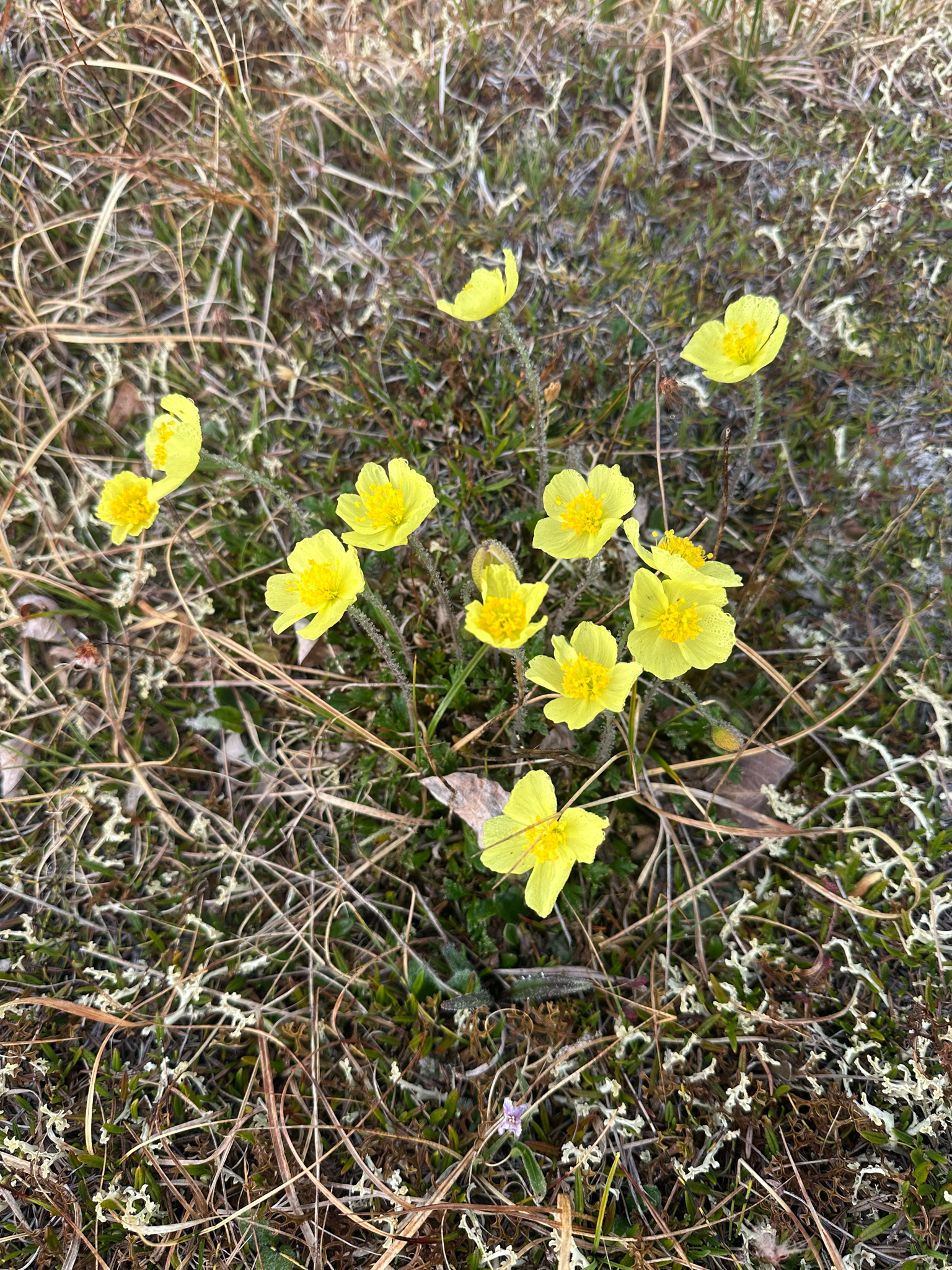


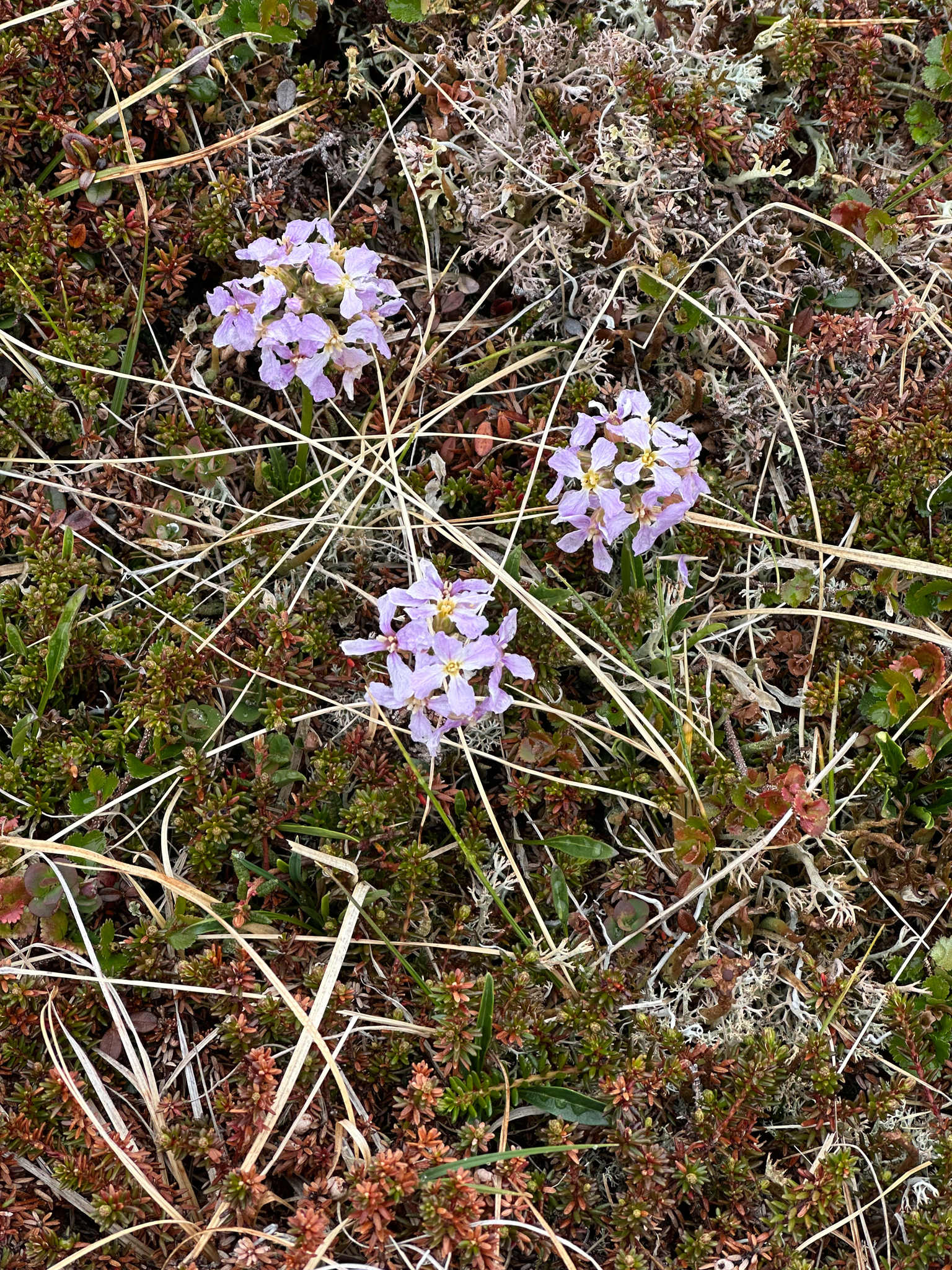
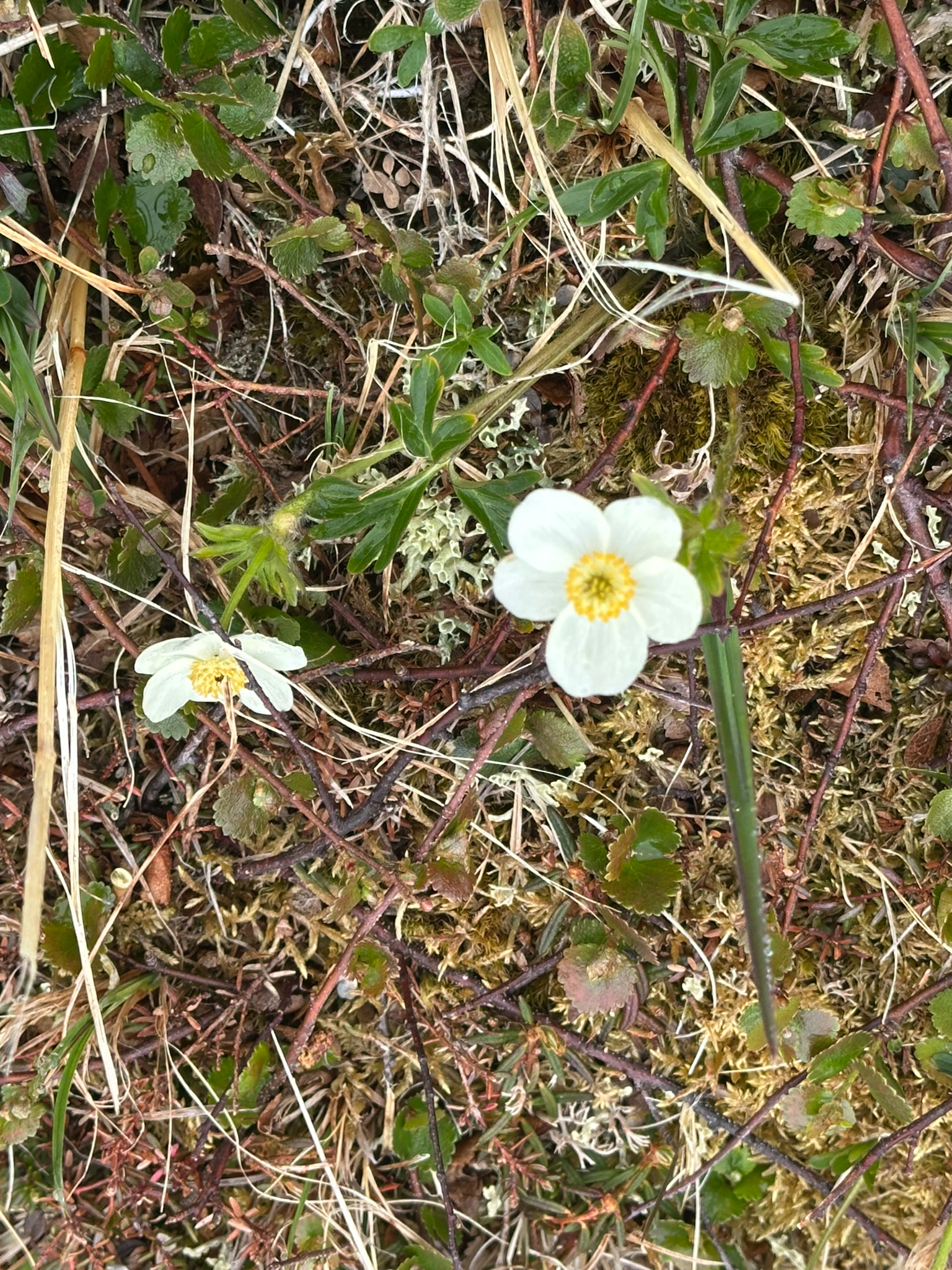
I was amazed at the biodiversity I had overlooked – by just looking closely to what we were walking on I saw a diverse flora in full bloom. You might remember that we were there around June 20th, the longest day of the year. so the plants had plenty of sunlight to blossom and attract pollinators with their colorful petals.
We gave up looking for the Bristle-thighed Curlew after three hours and headed back toward the vans when we saw this bush (the only one around) with some strange hair on it. What was it from? The answer may surprise you, and I’ll share in my next post.

This is the fifth post about my Alaskan bird tour. It started in Anchorage, then went to Seward, Nome, and Barrow; additional posts will be shared each Monday. CLICK HERE to see all the posts about our Alaskan Bird Tour.
Karen and I have had the opportunity to travel to many interesting places in search of birds. If you would like read about some of our other Bird Tours CLICK HERE.