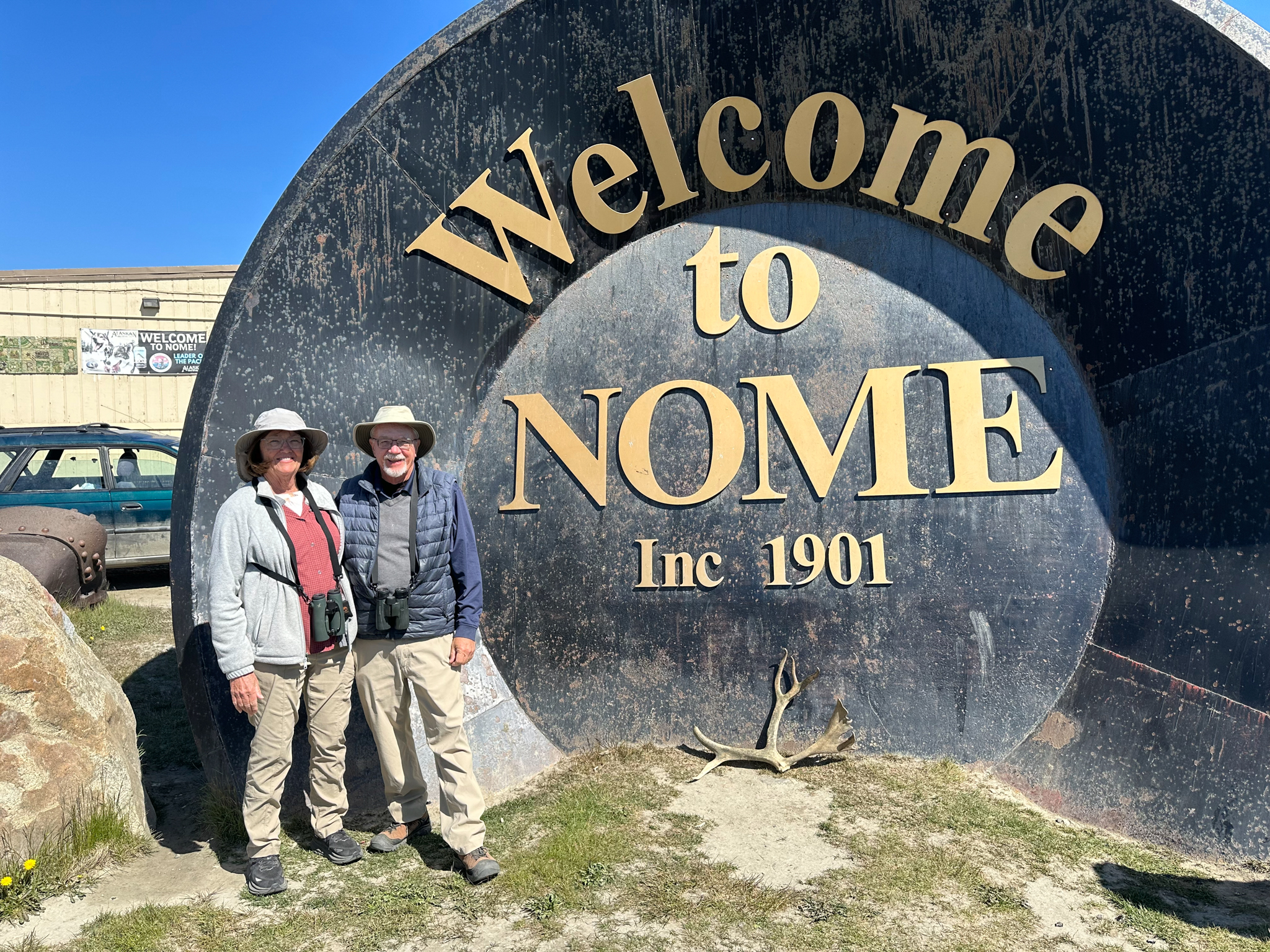
Welcome To Nome!
First off, a Happy 52nd Anniversary to my lovely wife and birding companion Karen. Hopefully we’ll have many more years together!
Secondly, I want to thank all our members who entered our Birds of Prey With Prey Contest. I haven’t counted how many Great Bird Pics were entered yet but it may be the most we’ve ever had! Xwinger and I will be Zooming to select a winner before the end of the month.
Today’s post, as well as the next two posts, are different than any other posts I’ve shared before. Why? Because there are no bird pics in them! When we returned from our trip and started to share about our adventures in Alaska our friends were as interested in places like Nome and Barrow as the birds we saw there. Today I’ll share some pics and information about Nome and the region around it. The landscape surrounding Nome is dominated by tundra so next week’s post will focus on what it’s like to be in the tundra. The following week I will share some pics of the mammals we saw around Nome and after that I’ll finally get around to sharing pics of the birds we saw there. And Xwinger didn’t think I could drag this out any longer than the South African Trip Reports! Ha! Take that!
A Brief History of Nome
The following information is taken largely from Wikipedia. If you’d like to read more about Nome CLICK HERE.
The Nome area was inhabited primarily by the Inupiat Eskimos for many years before Westerns arrived. Three westerners of Swedish descent were visiting Nome in 1898 and discovered gold – and the rush was on! At the time only a couple thousand people lived in Nome but the gold miners seeking their fortune soon ballooned the population up to close 20,000. When the gold rush ended most of the miners went back south. As of the 2020 census the population was 3,699.
As we’ll see below, remnants of the gold rush can be found everywhere in and out of town. In fact, gold mining continues in the area – but out at sea! Brother Xwinger is well-aware of this fact because he has been watching the show “Bering Sea Gold” on the Discover Channel for many years. The show is filmed in Nome and shows how they extract gold from the ocean floor – even when thick ice covers the Bering Sea!
Nome’s other claim to fame is that it is the ending point for the Iditarod Dog Sled Race. The race itself celebrates how dog sleds were able to deliver dypyheria antitoxin serum to Nome during the epidemic of 1925 (planes were unable to get there in winter). Now, on with our experiences there.
Our Nome Experience
We arrived at the Nome airport from Anchorage at about 9 AM on Day 5 of our trip. The Arrivals/Departures/Baggage Claim area was about the size the waiting area in a Claim Jumpers restaurant.

It was a short ride from the airport to our hotel the Aurora Inn. It had nice and clean rooms with blackout curtains. Why? Here’s a screenshot of my phone’s sunrise/sunset times for when we were there, which was right at the Summer Solstice:

That’s right – sunset at 1:40 AM and sunrise 2 1/2 hours later at 4:20 AM! So yes, blackout curtains were important if you wanted to get the room dark (the first night I couldn’t get the two curtain halves to close tightly and the crack let a lot of light through so I went to see if they had anything at the front desk to secure them together – they gave me four paperclips! They worked like a charm). Here’s the Aurora Inn.

Right next to the stairway was this solid-metal gizmo. I sent Xwinger this picture and he knew right away (from watching “Bering Sea Gold”) that is was a Chain-Line Dredge Bucket. These were seen all over town as lawn ornaments!
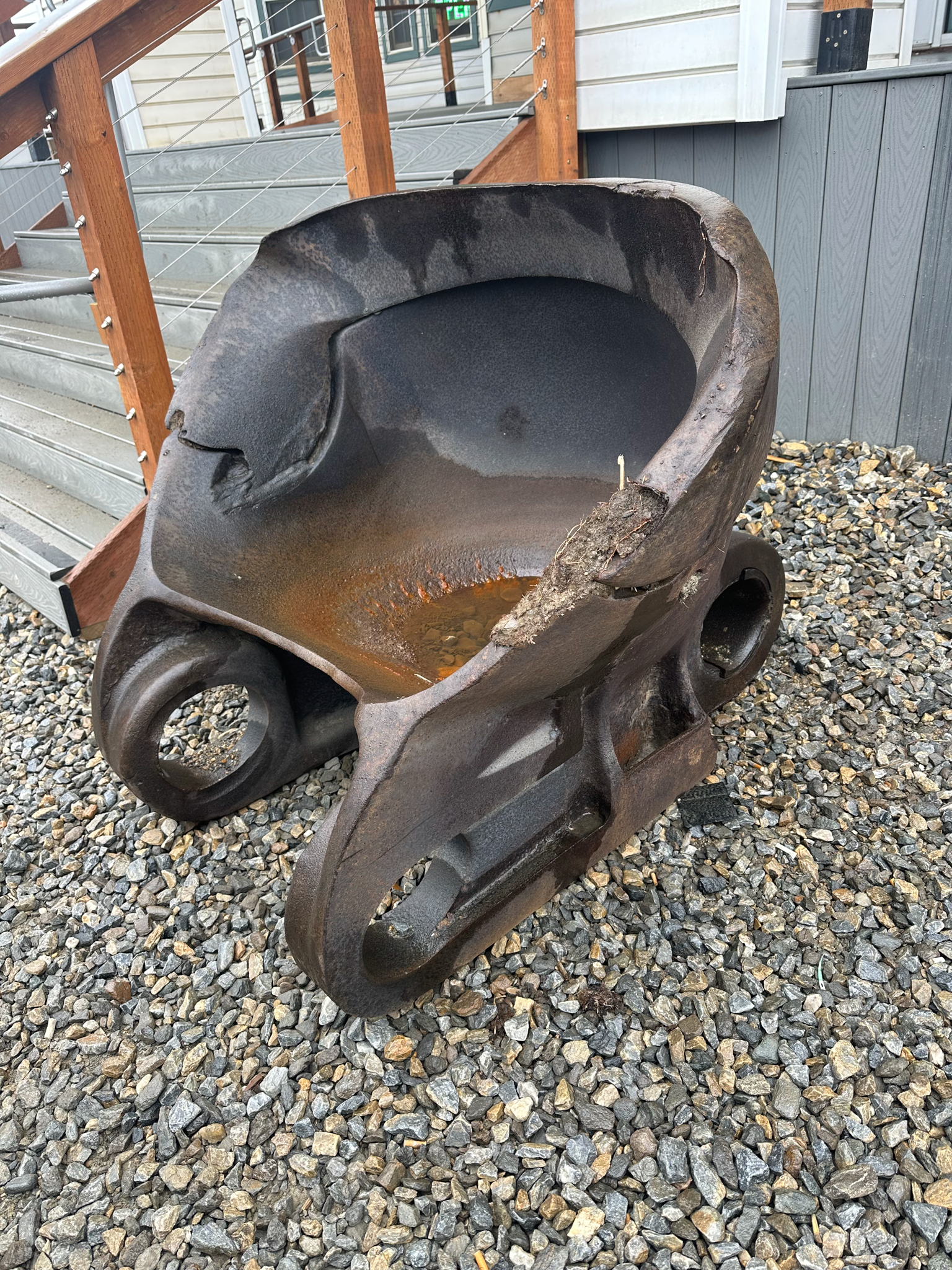
There was a machine that these dredge buckets were still attached to just out of town (but no longer in use). The continuous chain of buckets on the left scraped up the soil (or ocean bottom) and dumped the sludge on a platform where it could be washed in search of gold.

Downtown Nome reminded me of an old west town – clapboard buildings lining a dirty street.

It seemed like every other establishment was a bar. Can you read the smaller sign below the word SALOON? The second pic is a bar outside of town which is the last checkpoint of the Iditarod.


The Iditarod had to have a finish line and it was by this picturesque church in the center of town.

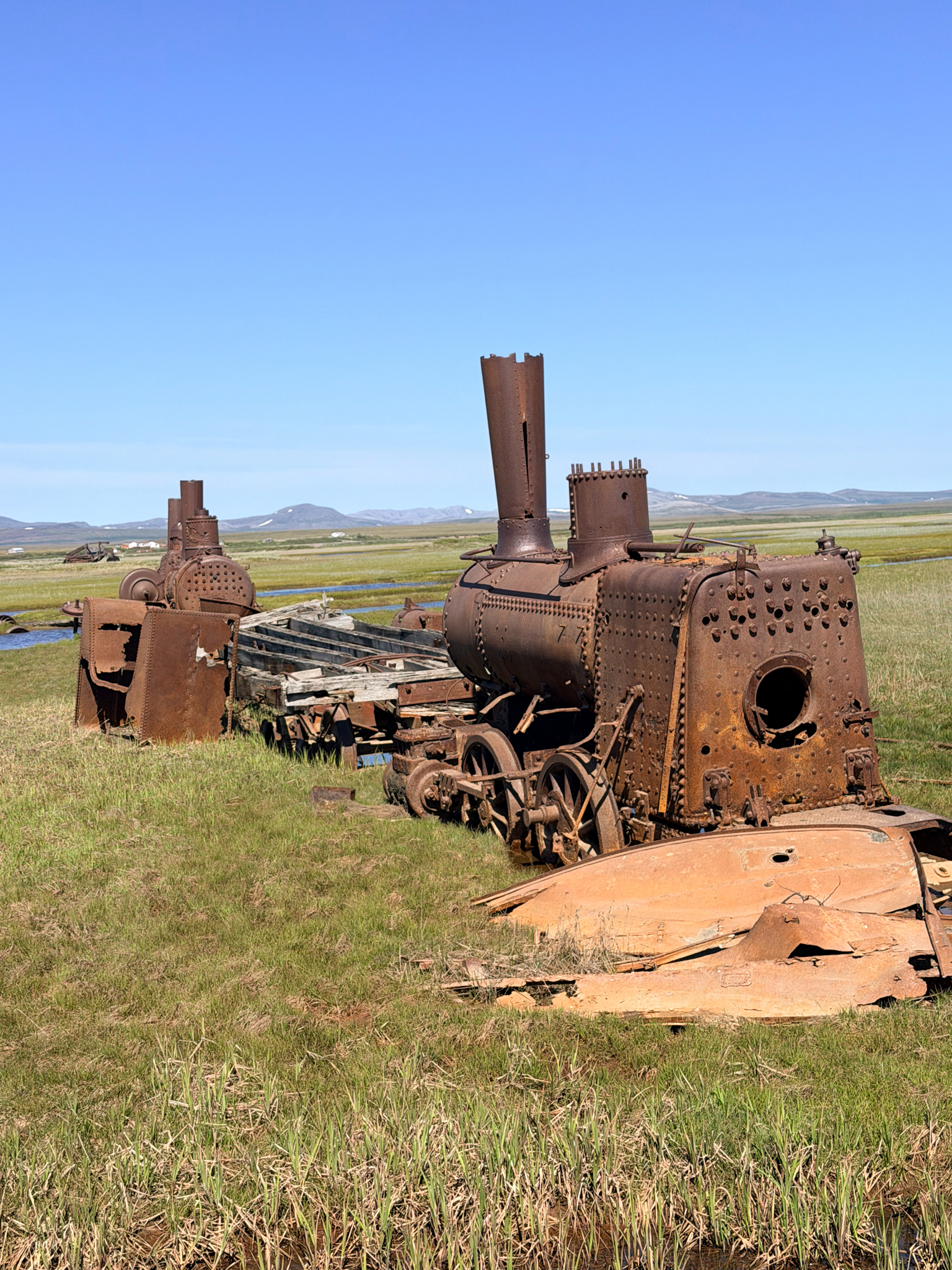
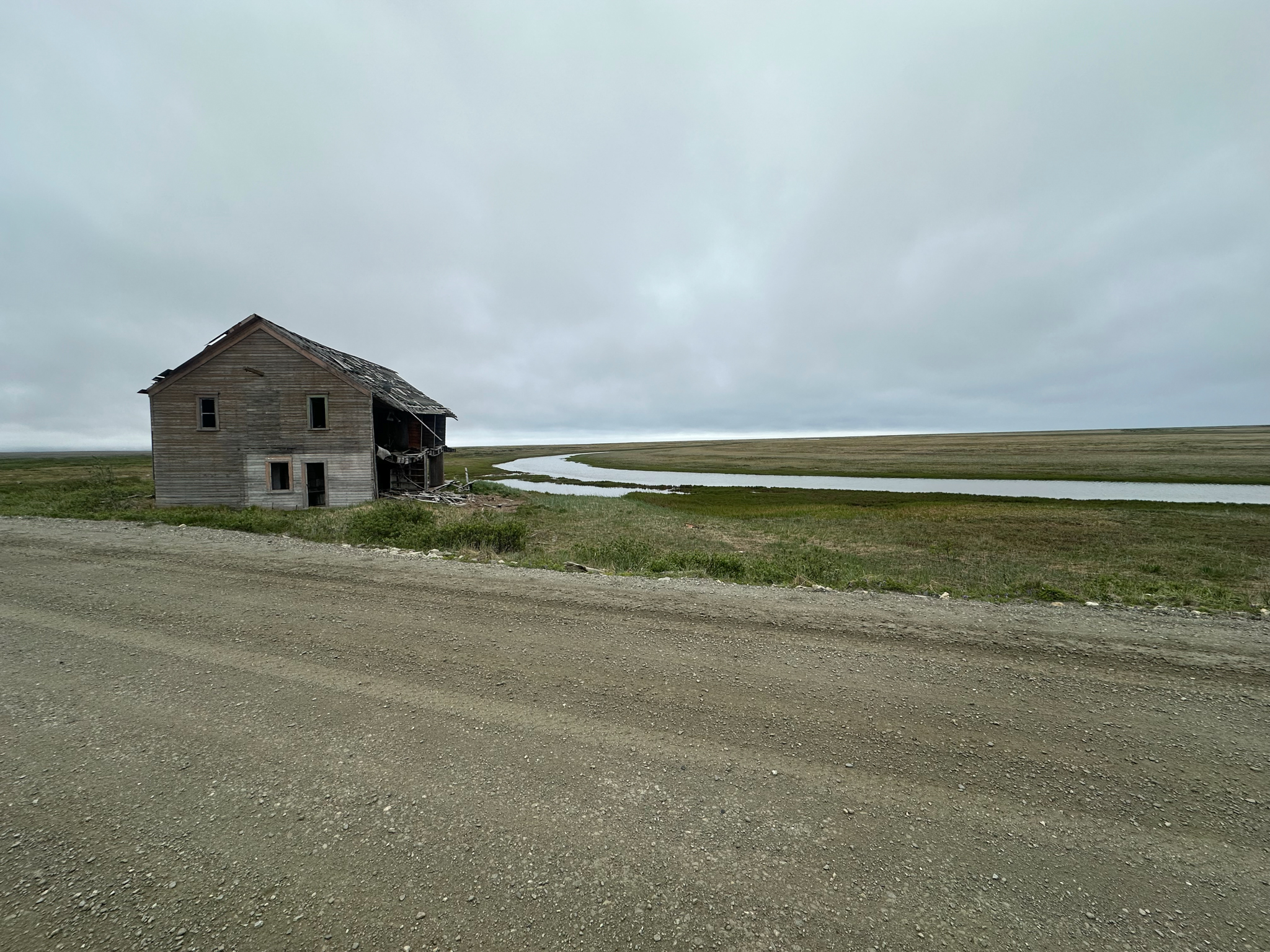
Once we got outside of town we were essentially in the tundra, which I’ll cover next week. On the tundra we found a bleak landscape with abandoned mining machines and houses scattered around.

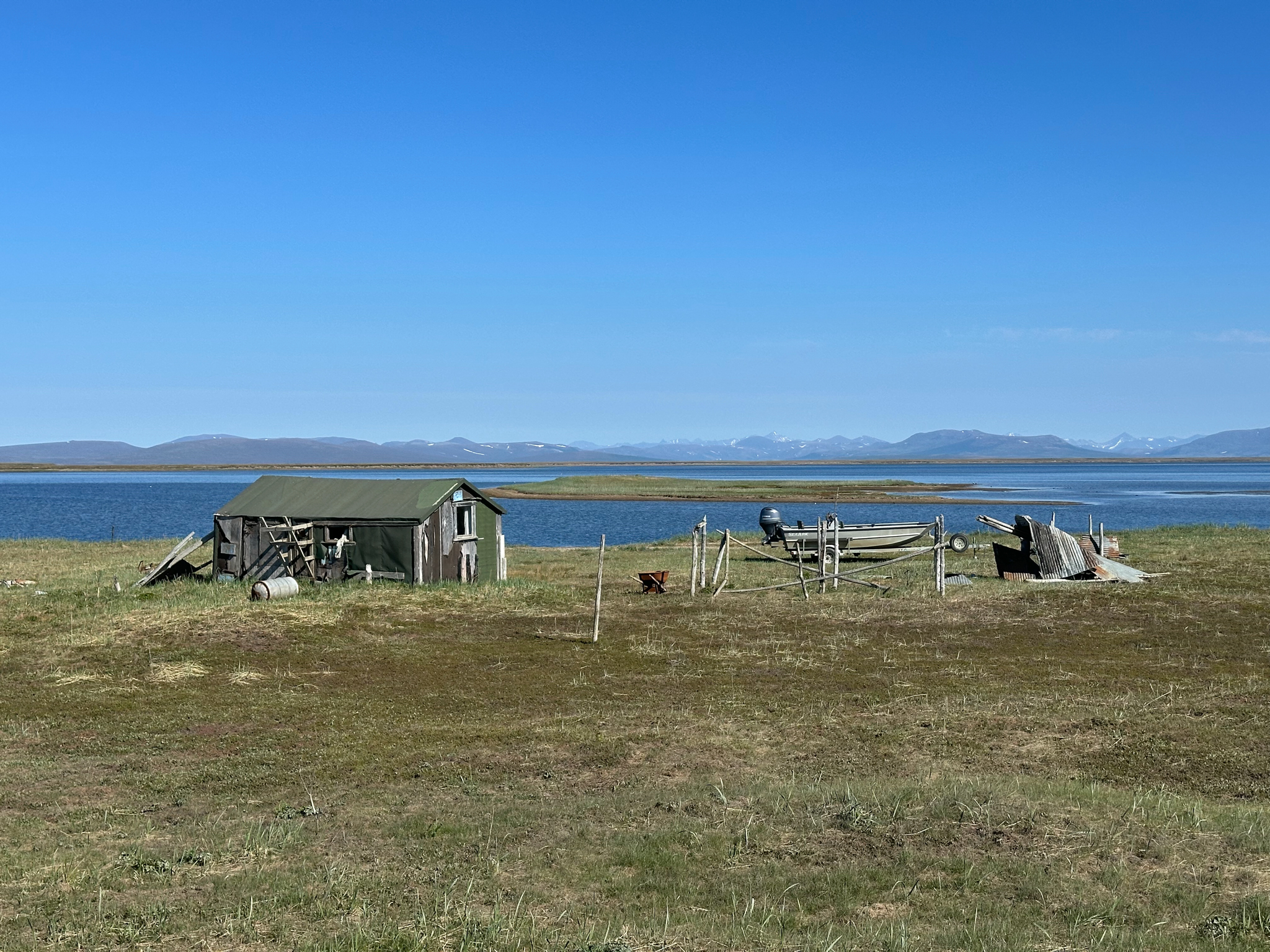

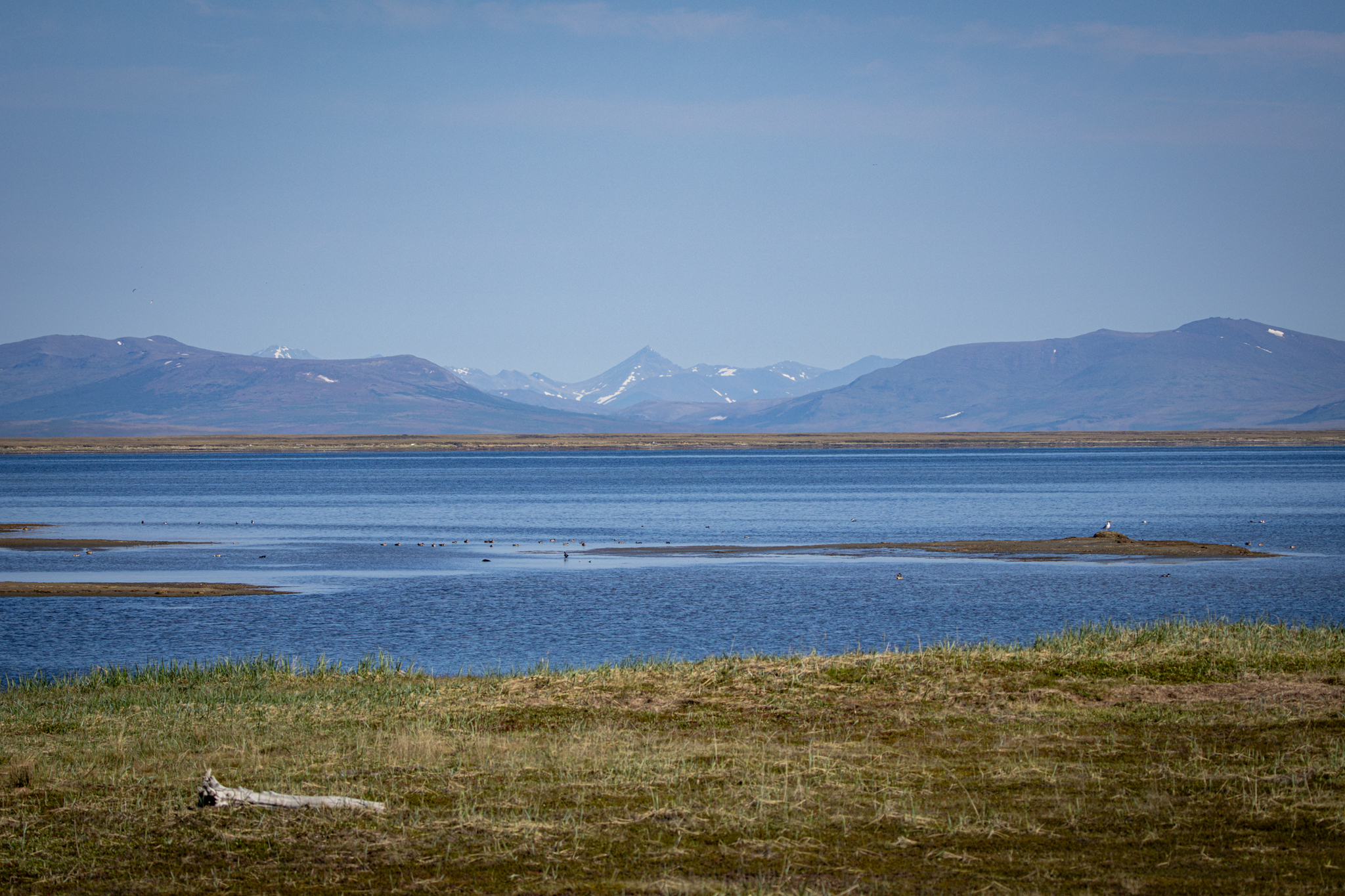
Of course not all was bleak – beautiful views of the distant mountains and the Bering Sea were all around us.
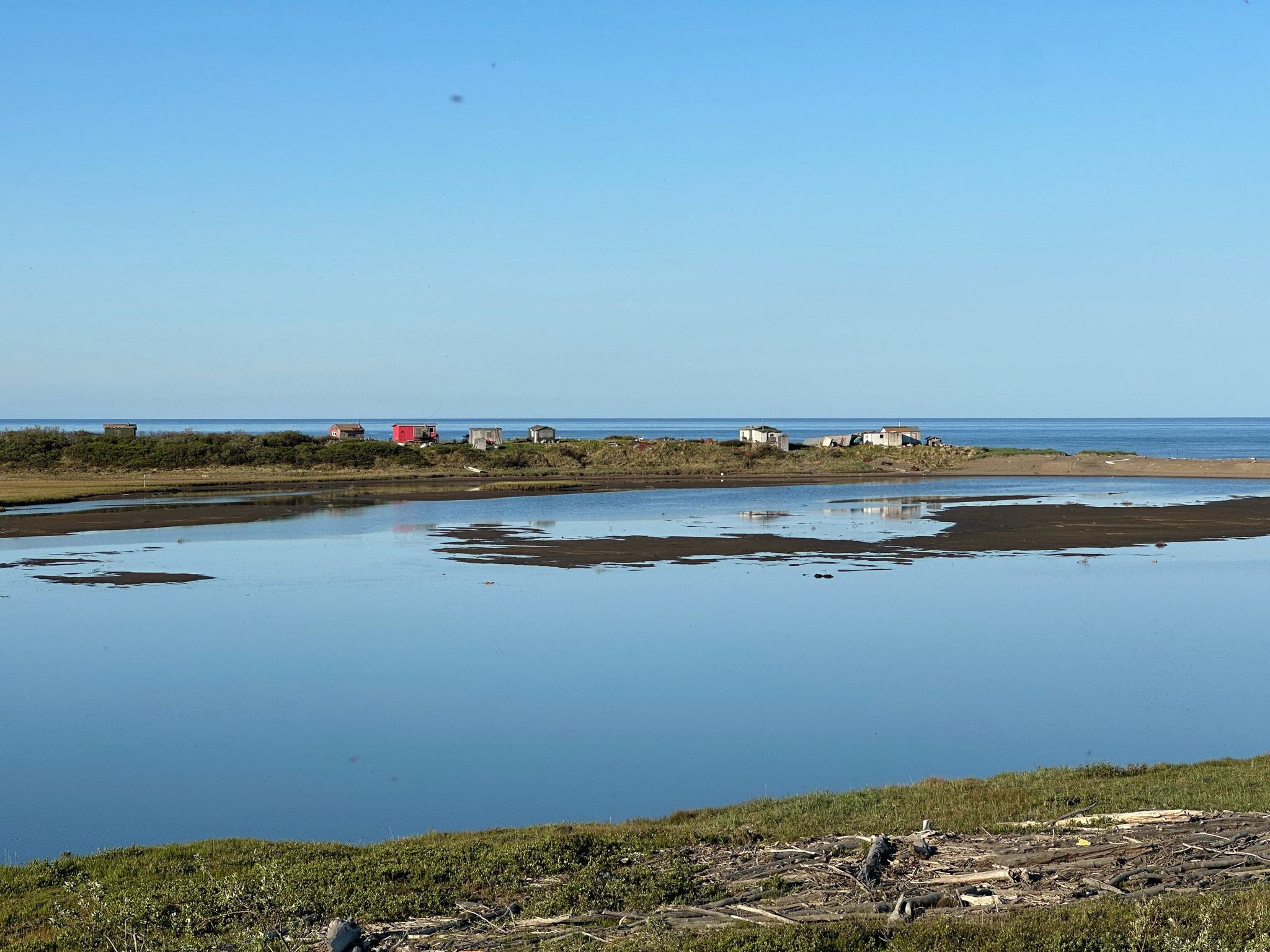
One of the mysteries of the coastline were all the driftwood sitting on the beach. I don’t believe we saw a decent sized living tree the four days we were in Nome so where did they come from? Some speculated that they came in from the south while others thought they may have floated over from Russia.

I’d be remiss if I didn’t mention the friendliness of the people living in Nome. We would walk down the street or entering a restaurant and someone would call out, “Welcome to Nome!” Another time I was walking by a couple of ladies sitting on a park bench and they wished me “Happy Father’s Day!” This didn’t occur in Anchorage or Barrow so it must be unique to Nome.
So that’s Nome in a few pictures. Next week more about the tundra surrounding Nome and what it’s like. Do you like these non-bird posts about the trip? Let me know either way. Mike.
This is the fourth post about my Alaskan bird tour. It started in Anchorage, then went to Seward, Nome, and Barrow; additional posts will be shared each Monday. CLICK HERE to see all the posts about our Alaskan Bird Tour.
Karen and I have had the opportunity to travel to many interesting places in search of birds. If you would like read about some of our other Bird Tours CLICK HERE.
If you enjoy seeing beautiful pictures of birds from around the world and reading about them CLICK HERE to sign up for our mailing list. Members can post their own GreatBirdPics and learn more about bird photography techniques.