Only ONE MORE DAY to enter GreatBirdPics.com’s latest Bird Photography Contest! Win $100 for the best photograph using the theme In or By Water. Click the following link – In Or By Water Contest Rules – for important details. Deadline for submission is May 12, 2026.
Some of you got excited that my previous article, Last Full day in South Africa, was the end of these interminable posts (I know Xwinger did). But no! If you read the previous post’s title carefully it was the Last FULL Day. This post is about the very last day in Kruger National Park and South Africa, which was a HALF day. You can get excited that this one might be the last, but I’ll probably have one more to wrap things up.
Our local guide Edward was disappointed that we did not see a hyena while in Kruger and he was determined that we should. So he had us get up at 5 AM on our last day. We had to pack the trailer with our luggage, have breakfast, and then be in our safari vehicle at 5:45 AM so we could zoom out of Lower Sabie Rest Camp when they opened the gates at 6 AM. I mentioned previously that driving through Kruger at night is prohibited (the evening before Edward drove us at high speeds back to the Rest Camp or he would have been fined if he arrived after the gates closed).
So off we went in search of hyenas at 6 AM. Did we find any? No. But we did see some birds and animals.
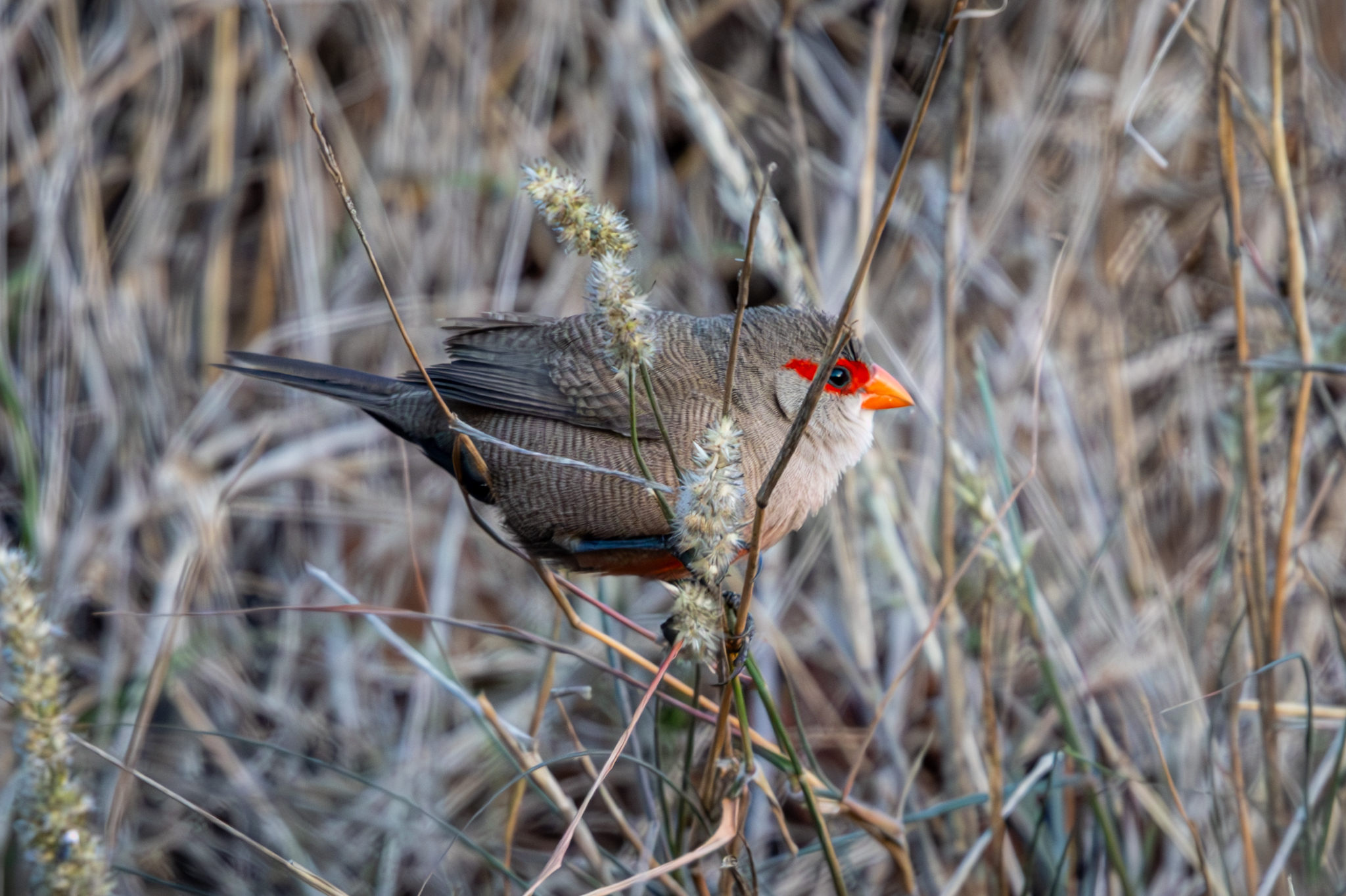
We saw a Common Waxbill on one of the first days were were in Cape Town, and now on our last day in South Africa we saw another one. Nice bookends for our trip.
We saw several species of cuckoo while we were in South Africa. This Levaillant’s Cuckoo was the last one we saw on the last day in South Africa.
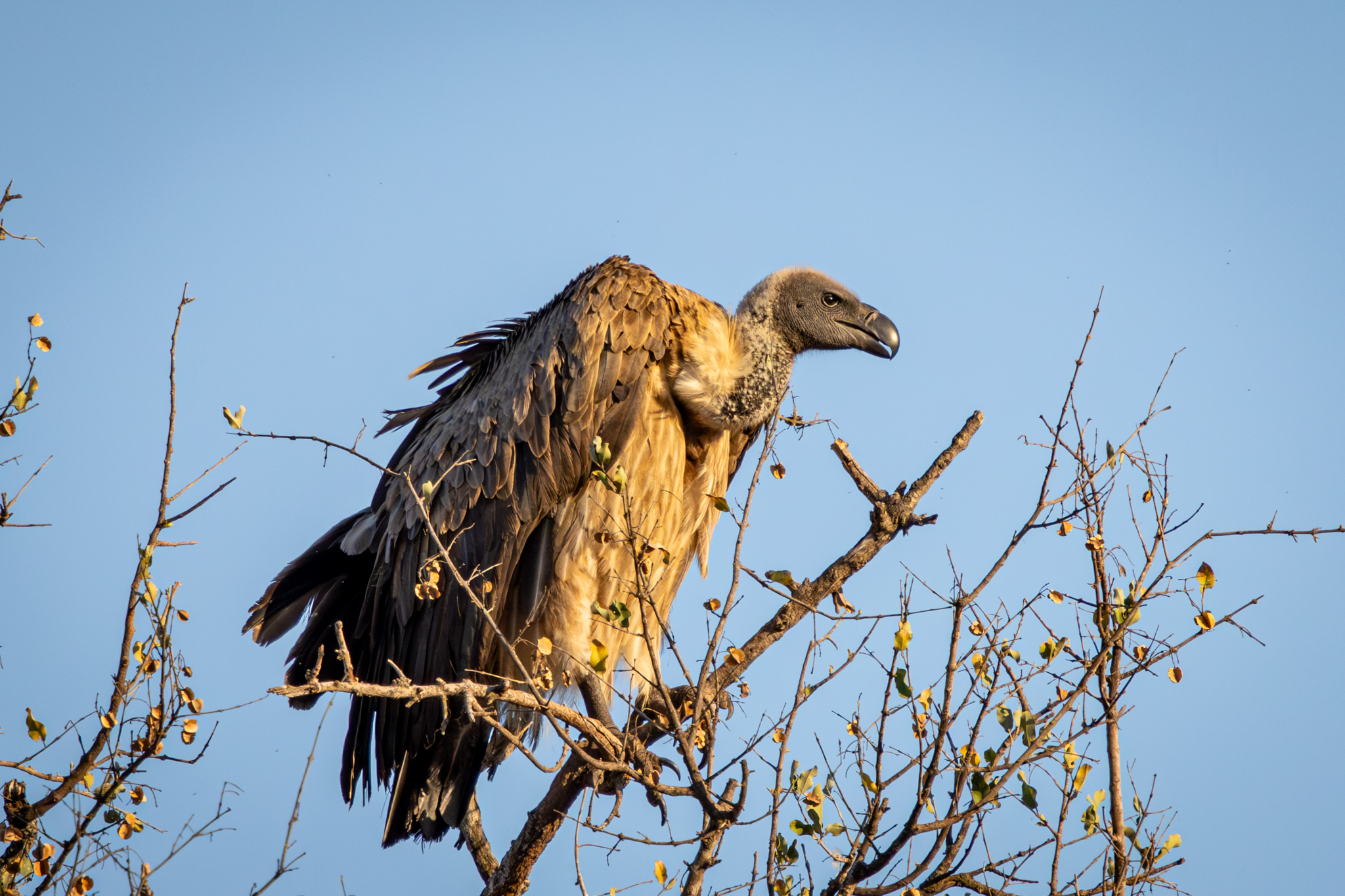
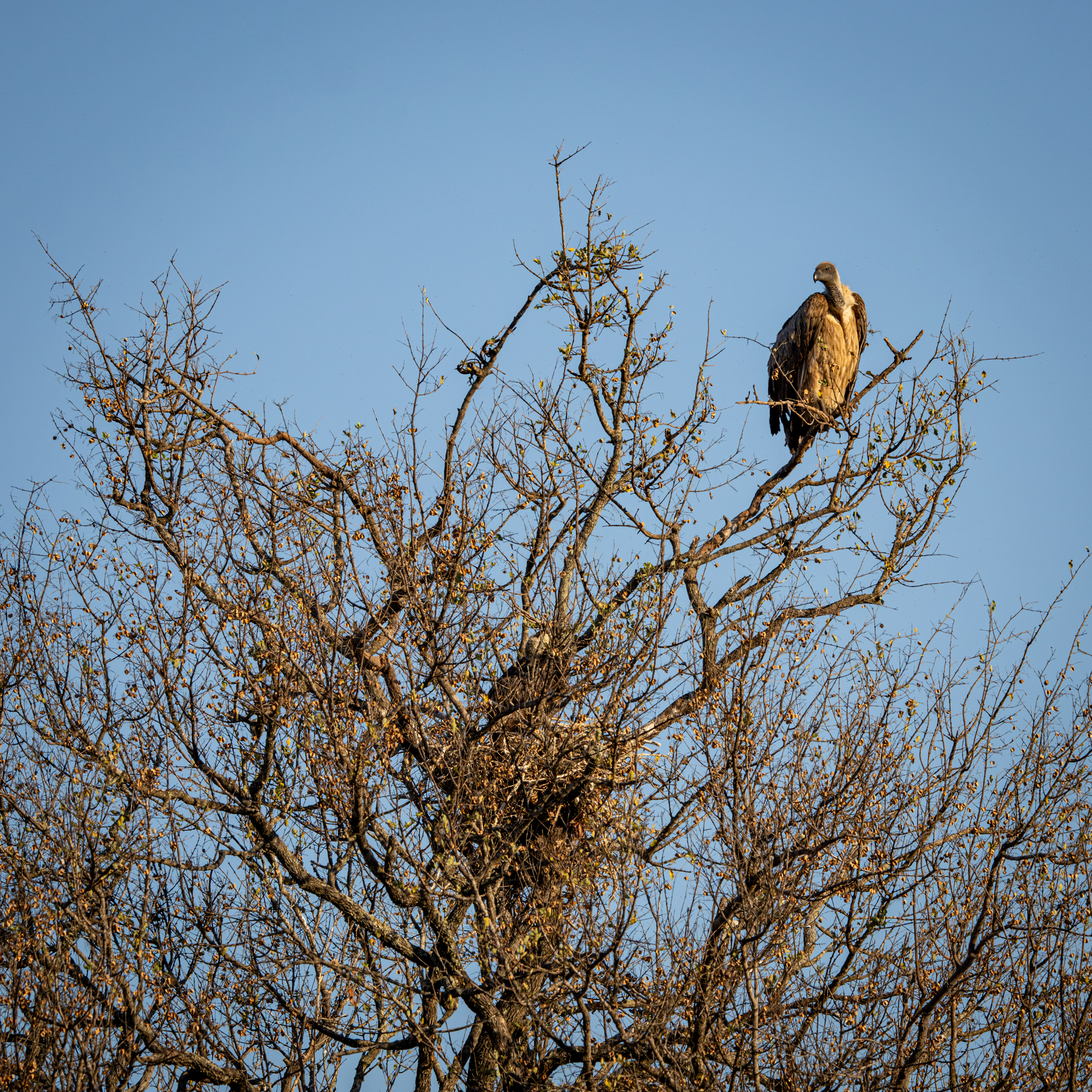
This White-backed Vulture was perched just above its nest. If you look closely you can see its mate on the nest.
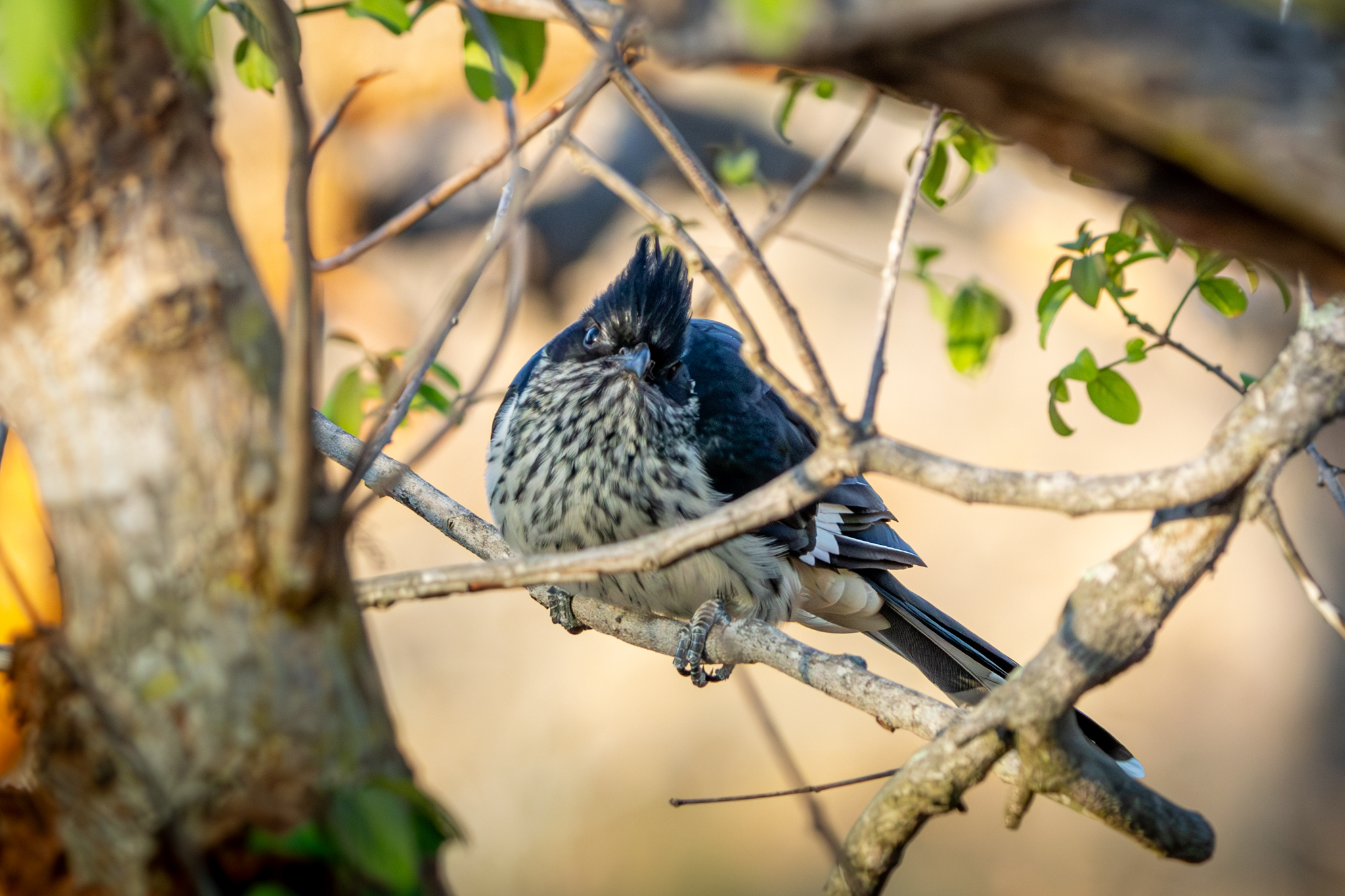
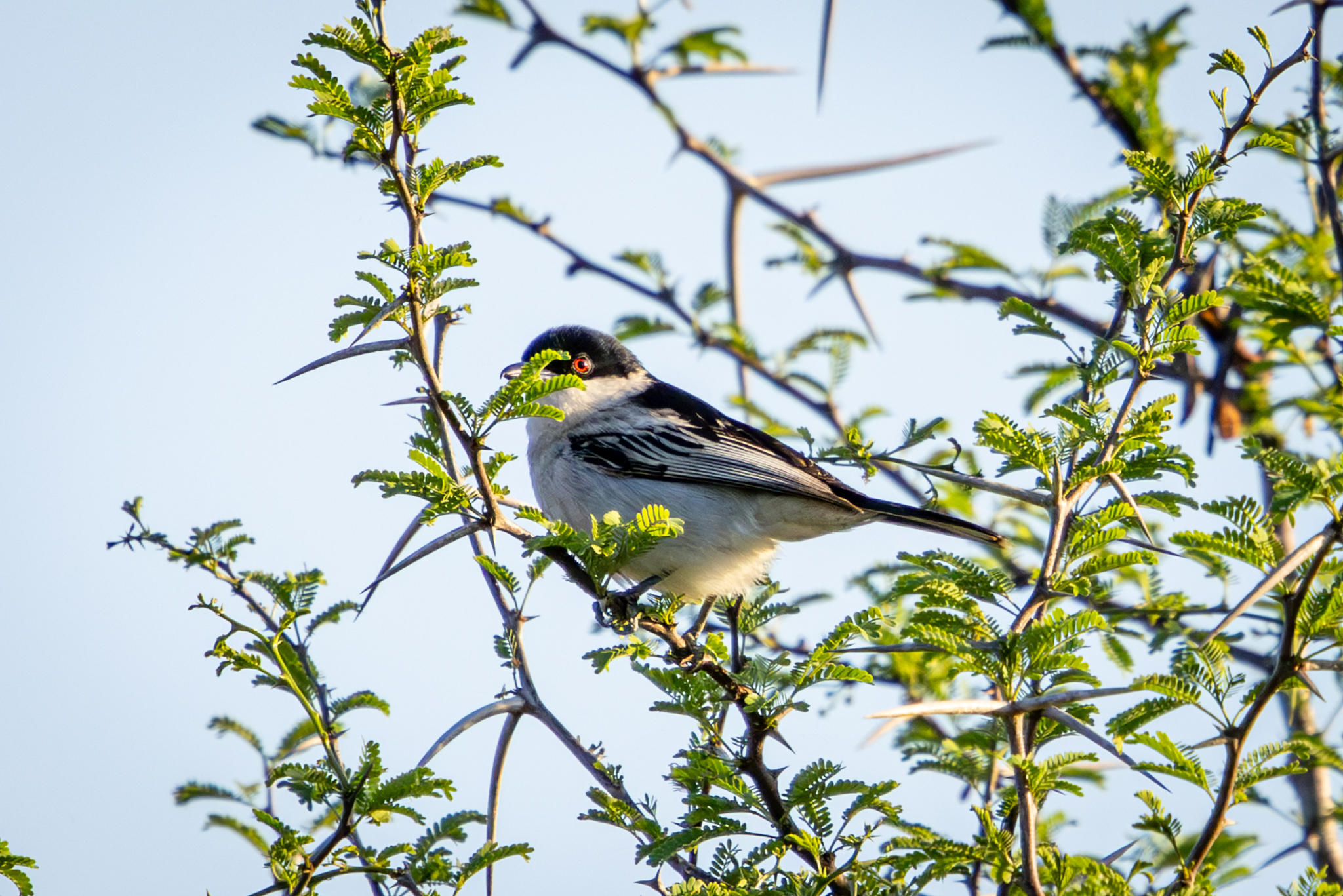
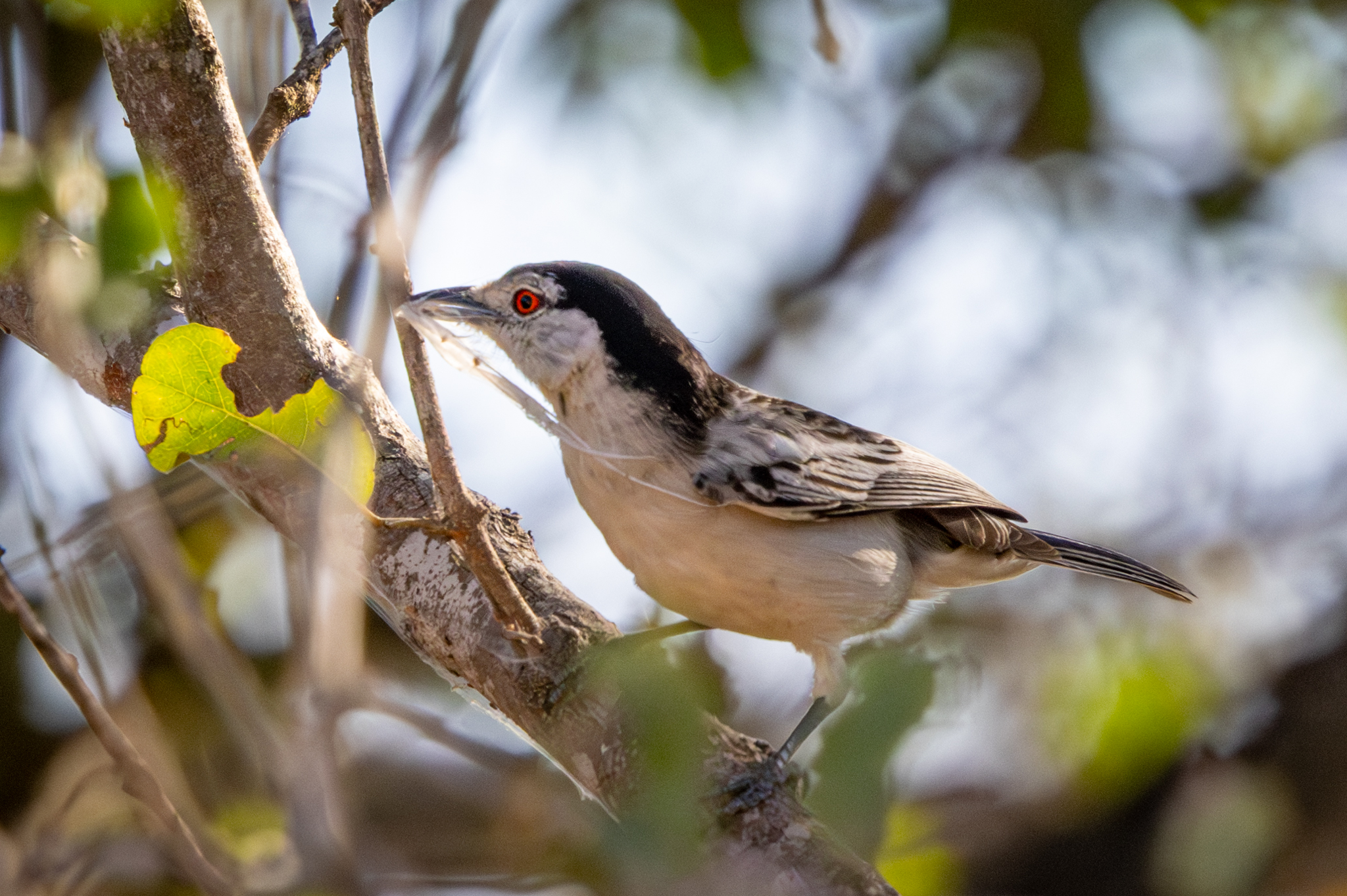
Although there are many species of Puffback, we only saw two Black-backed Puffbacks while in South Africa.
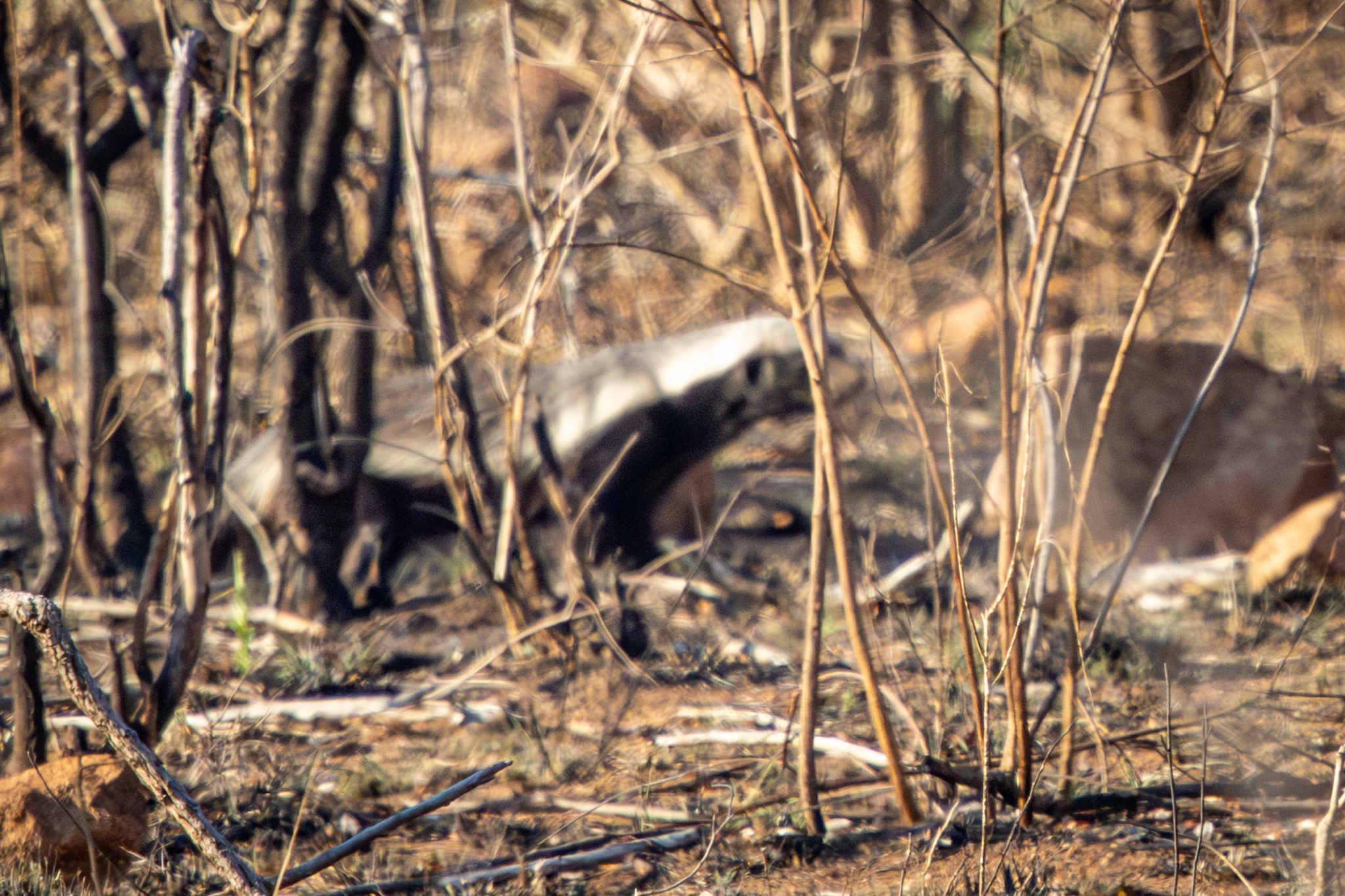
While driving around Kruger Josh and/or Edward spotted some movement. Although it was quite far away they quickly realized we were observing a very rarely seen honey badger. Although we could barely find it, we knew of its reputation as a fearless and sometimes aggressive predator. They have been known to attack a much larger animal such as a lion or leopard when backed into a corner, giving the impression that they have little regard for their own safety. This was the first time Edward had ever seen a Honey Badger in Kruger!
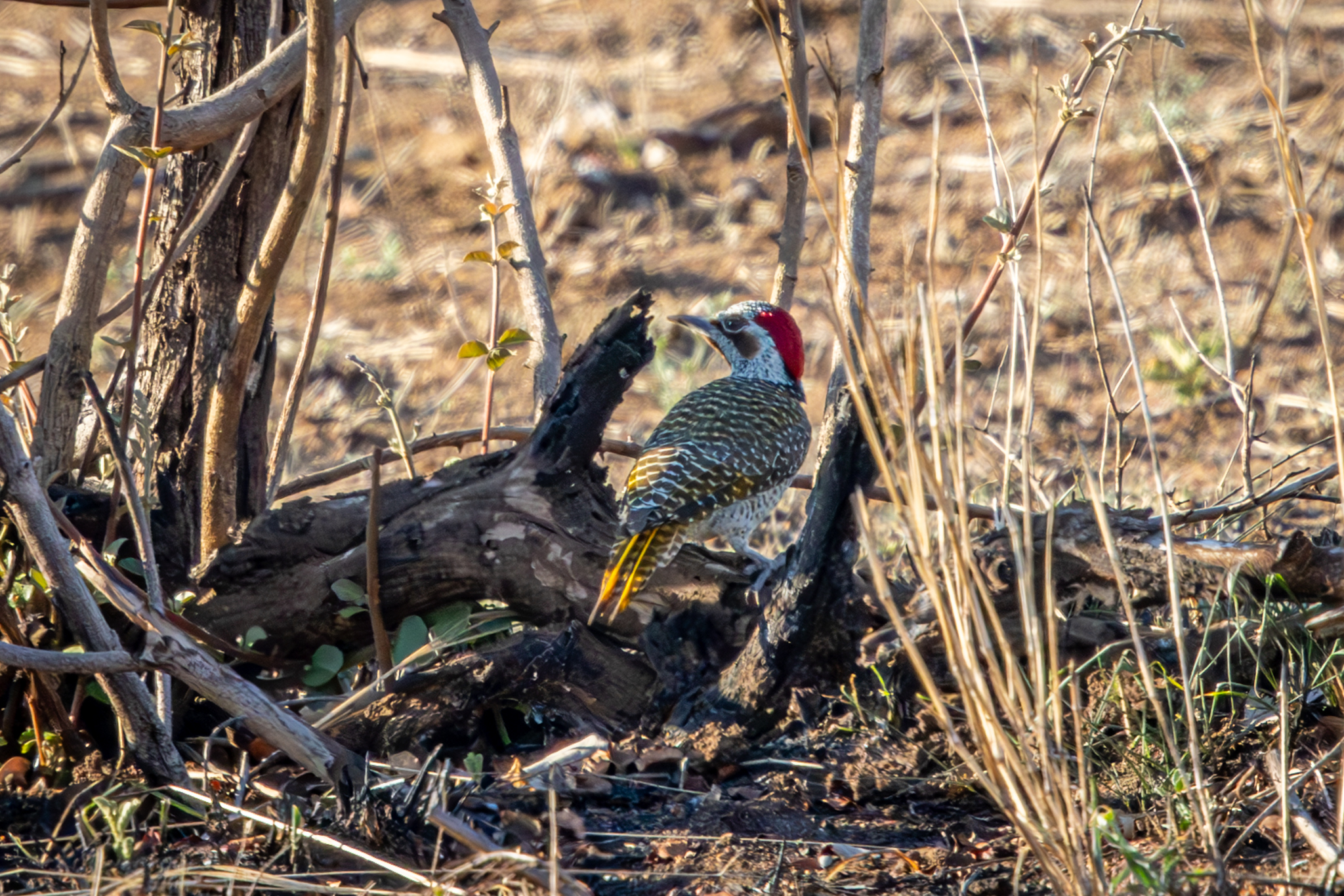
One doesn’t see woodpeckers on the ground very often but this Bennett’s Woodpecker was looking for food on this dead branch.
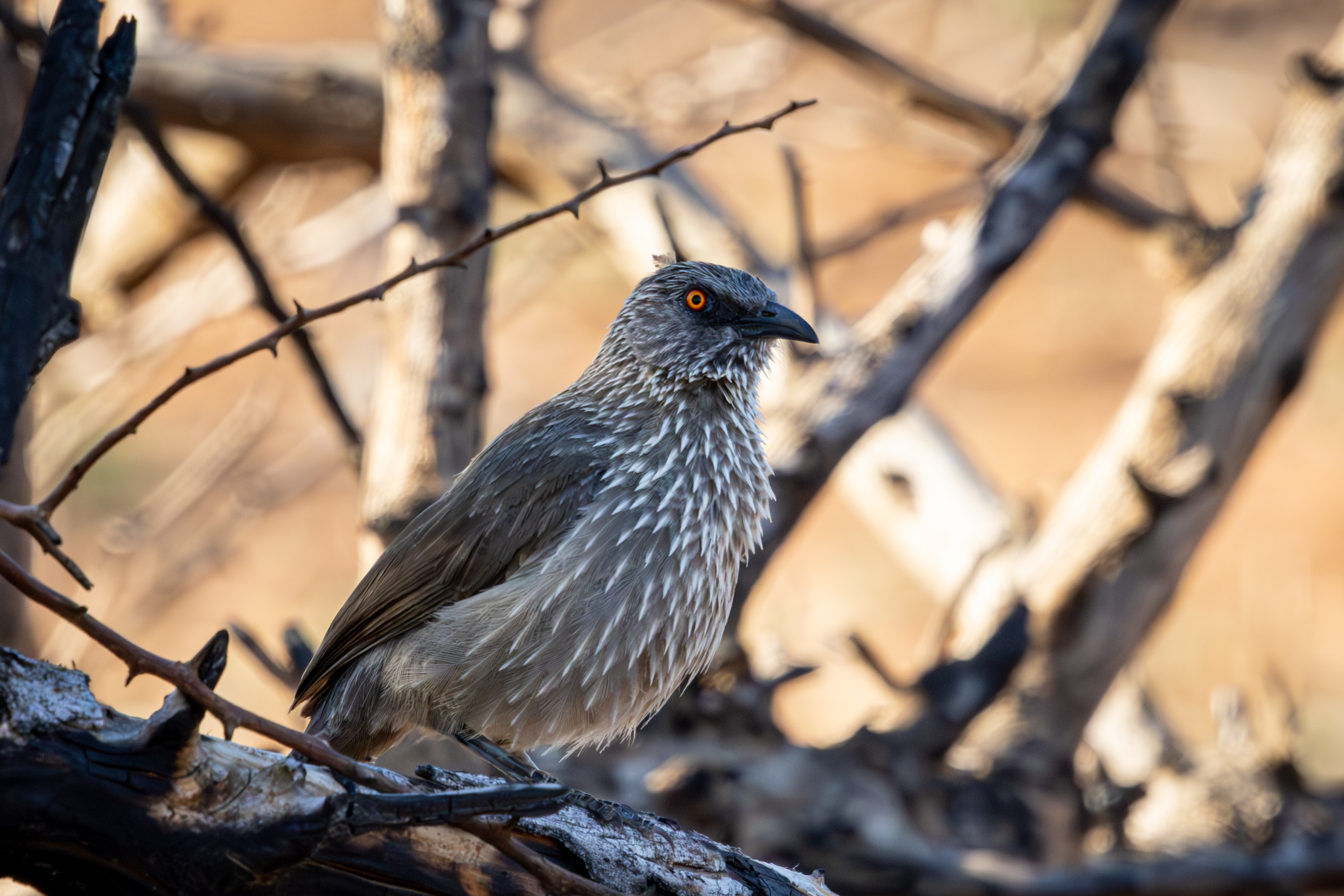
This Arrow-marked Babbler is well named as the tightly-patterned v-shaped arrows cover its breast.
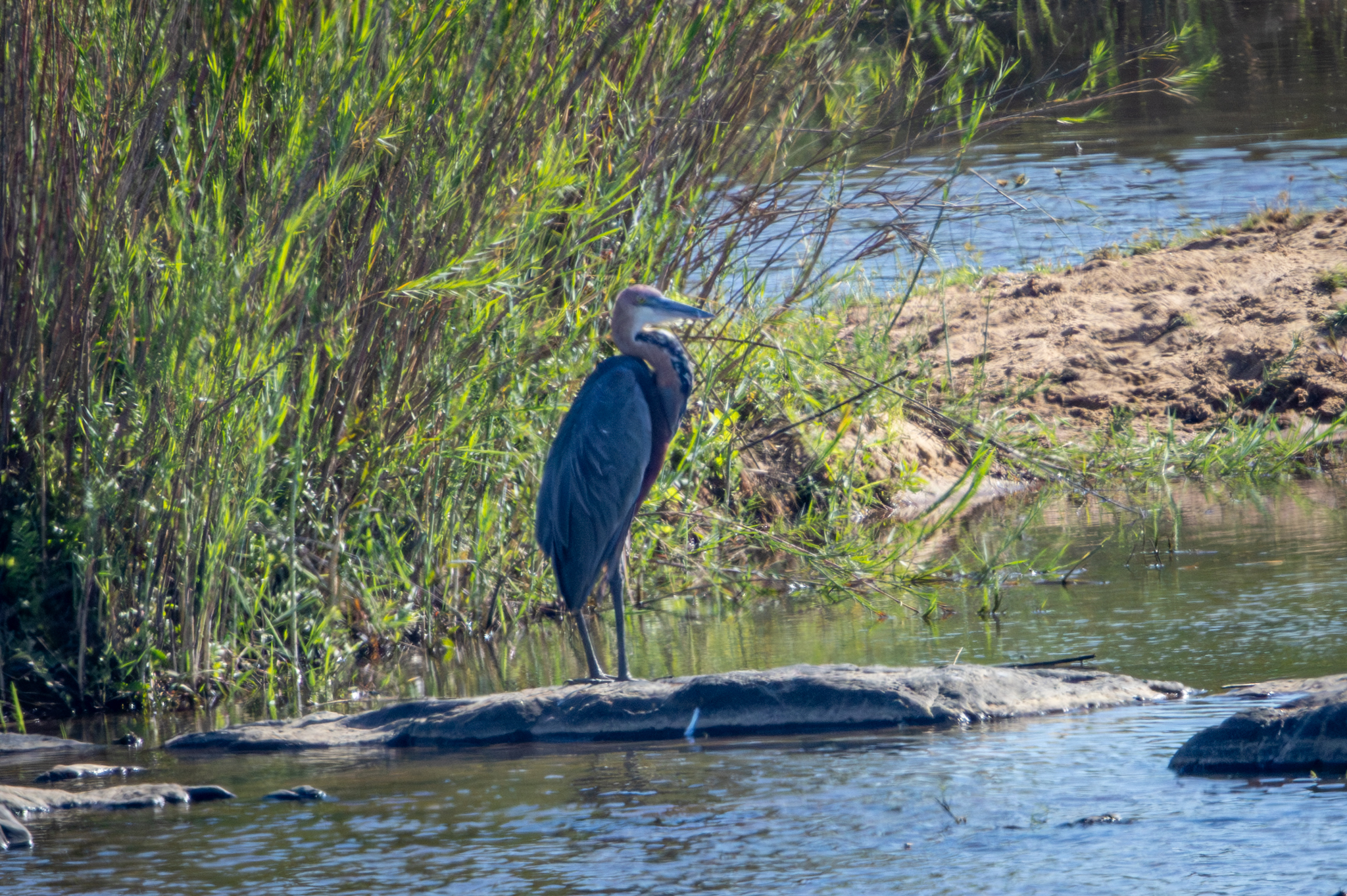
In the distance, through the heat waves coming up from the ground and water, a Goliath Heron stands in the shade. Yes, it is much bigger than most other herons – in fact it is the world’s largest standing at over 1.5 meters (almost 5 feet tall).
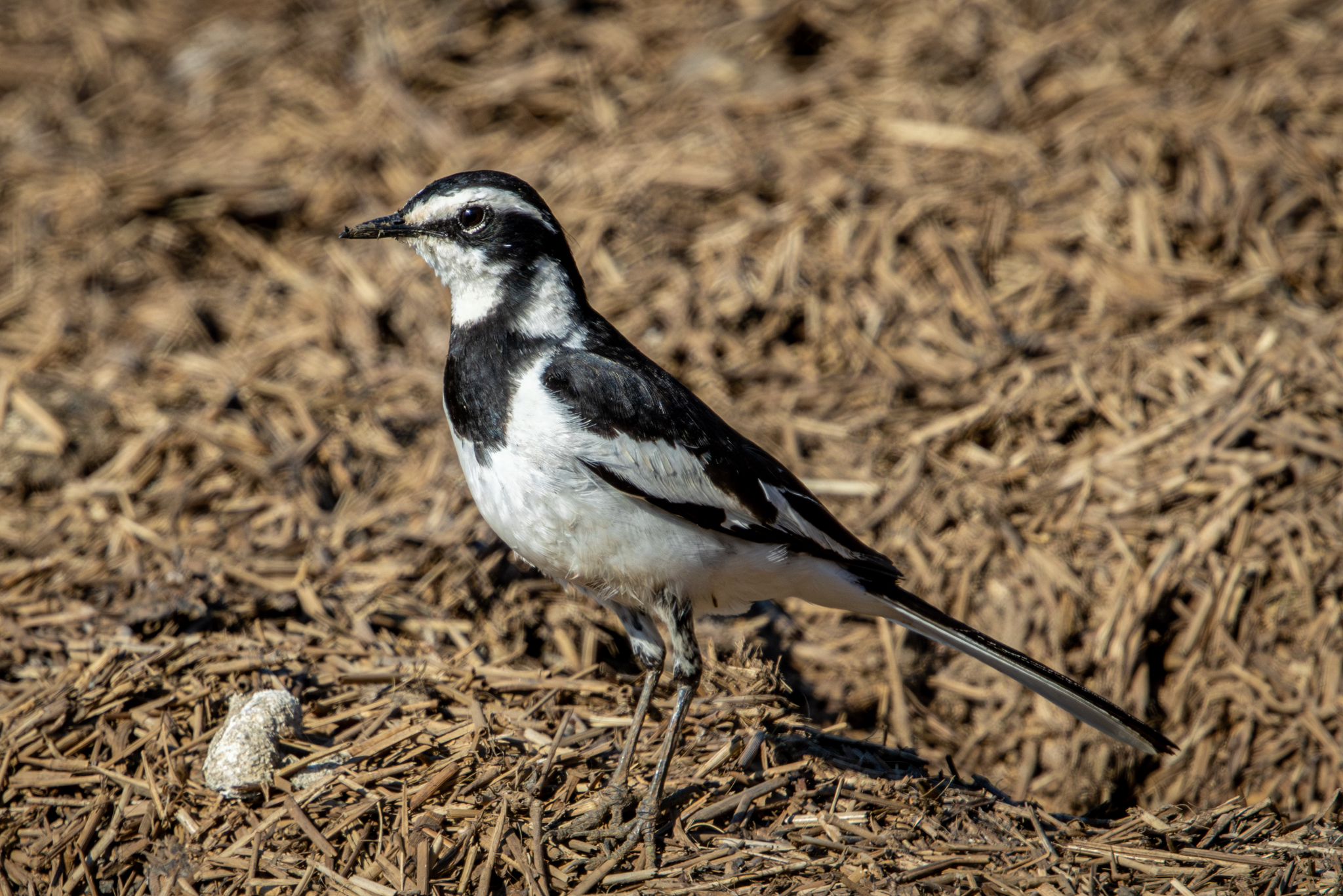
Pied means two-colored (black and white) and wagtail means it moves its tail around a lot. The Pied Wagtail is aptly named.
We made a brief stop back at the reservoir. Remember that hawk trying to get at the weavers in their nest? Here’s a shot of their large nests, surrounded by something in the water.
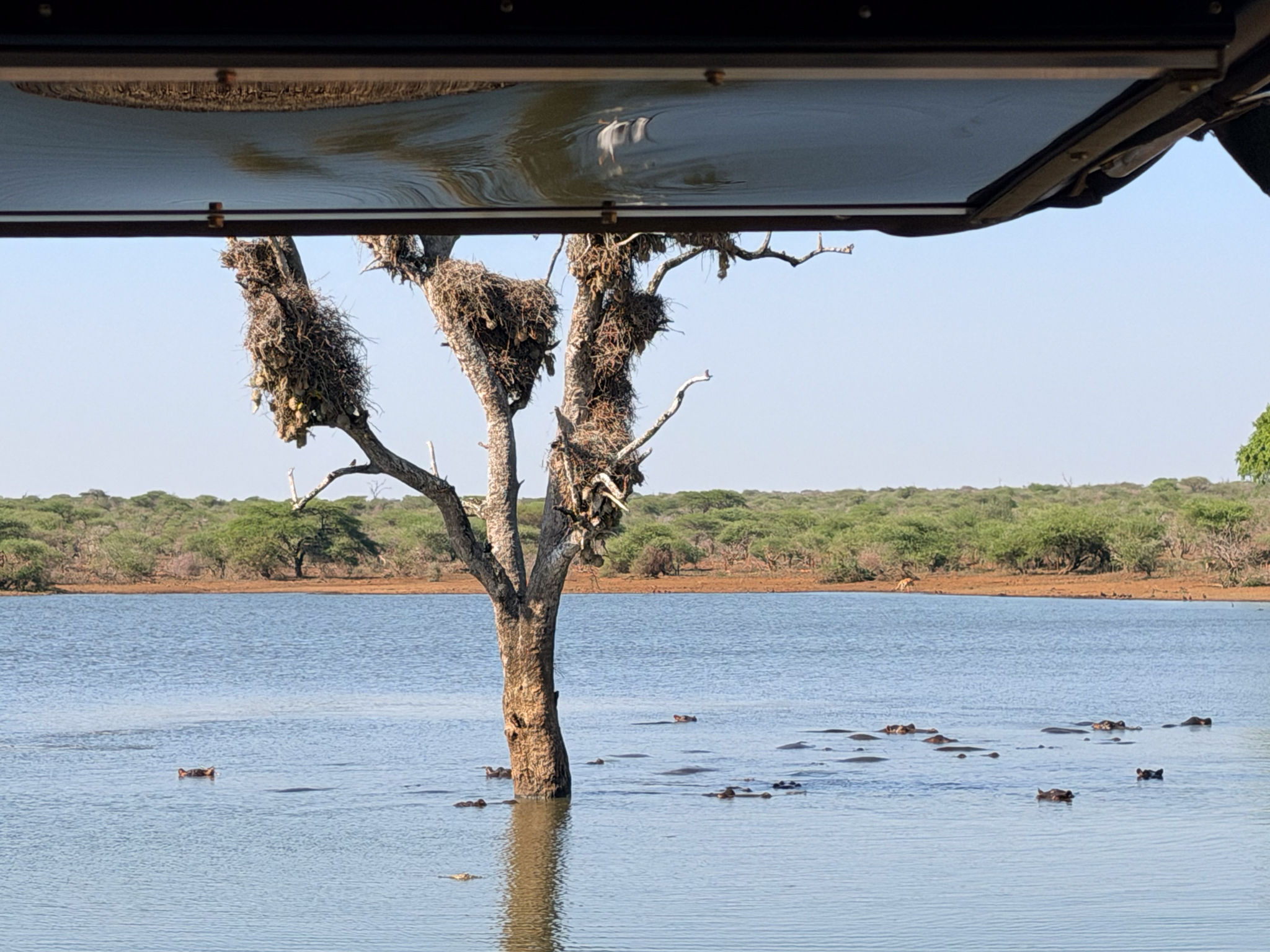
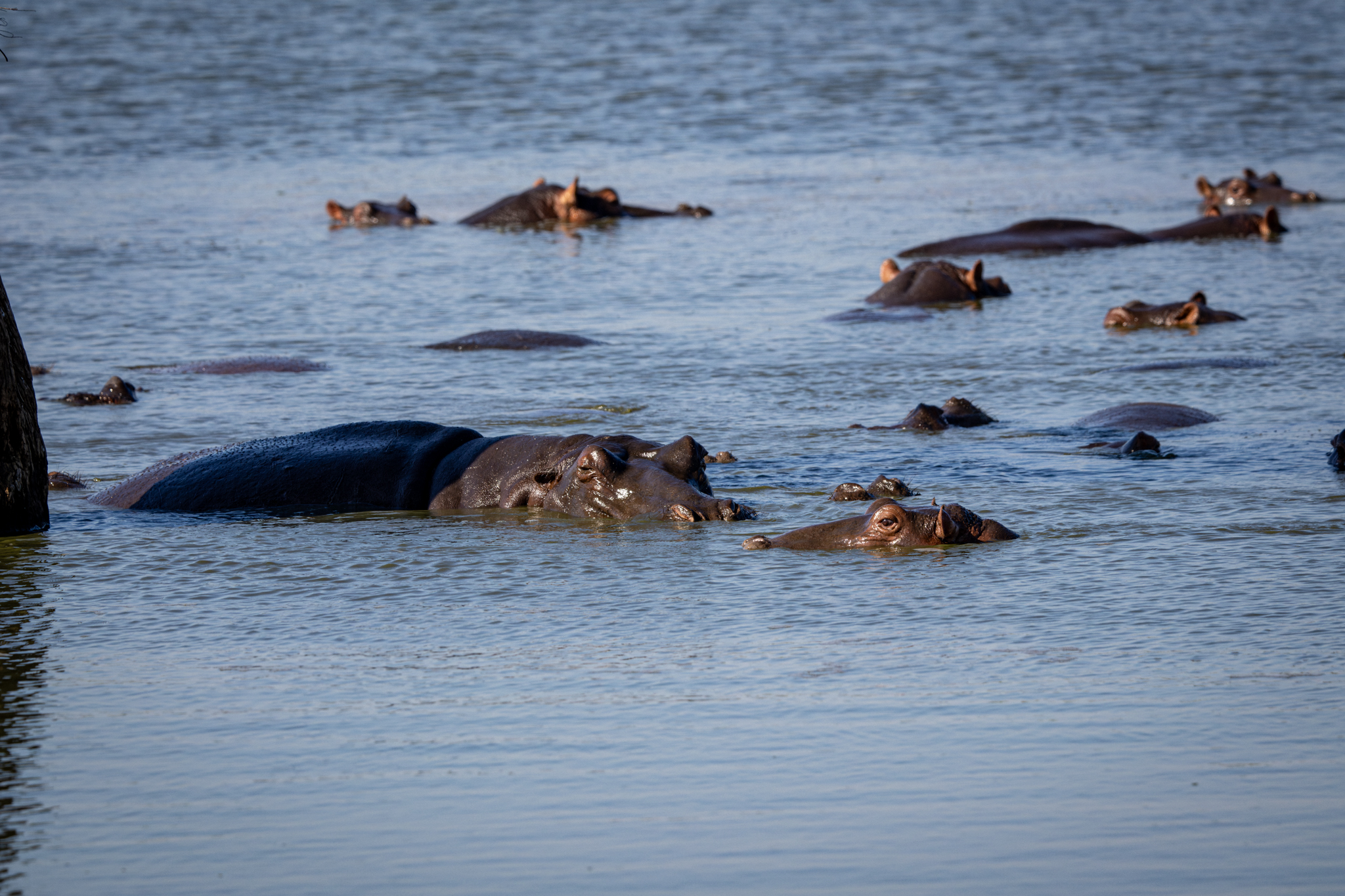
Hippos were in the water! They were quite docile when we were there, perhaps not their breeding season.
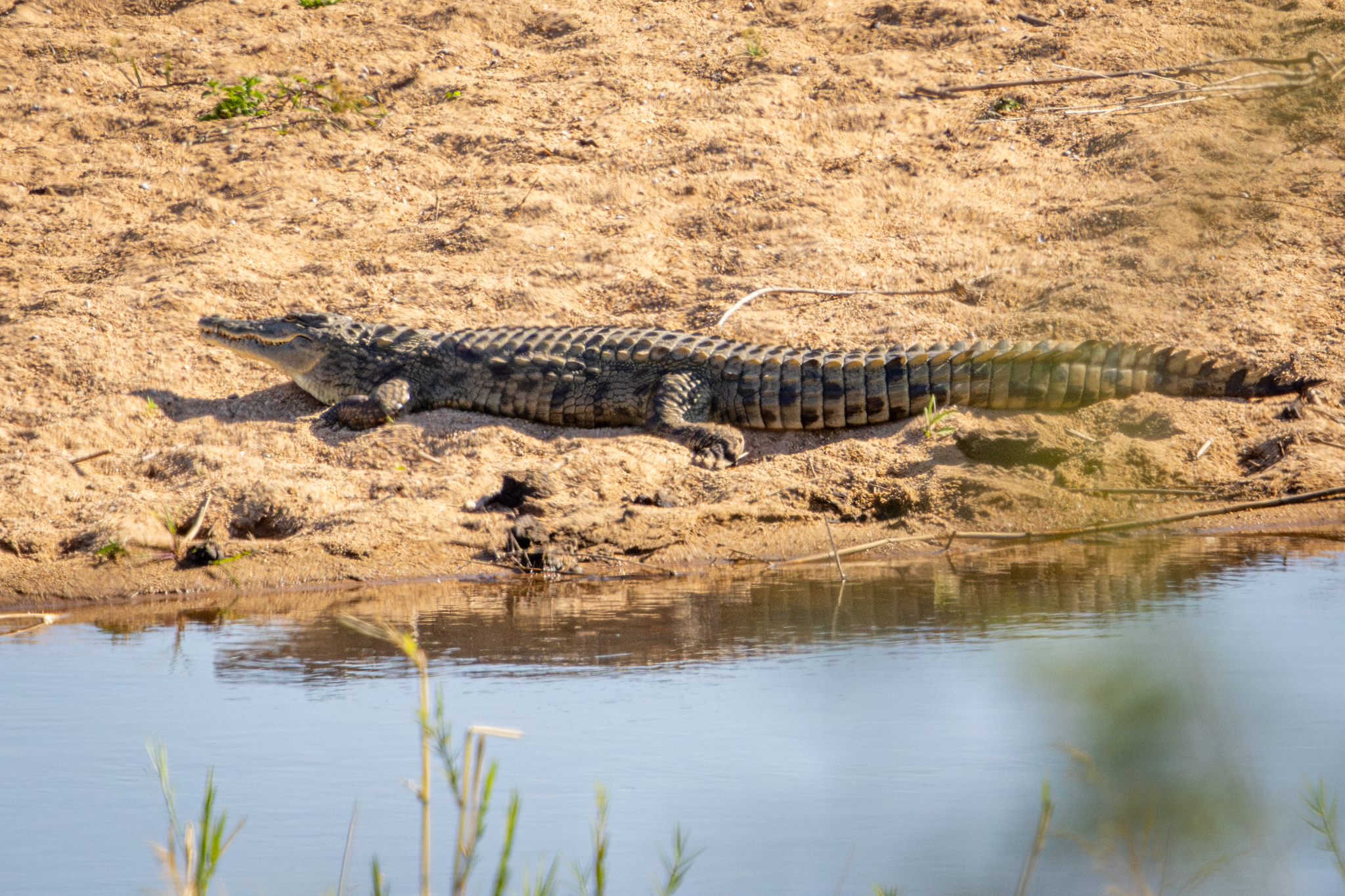
Of course we had to see just one more crocodile on our last day.
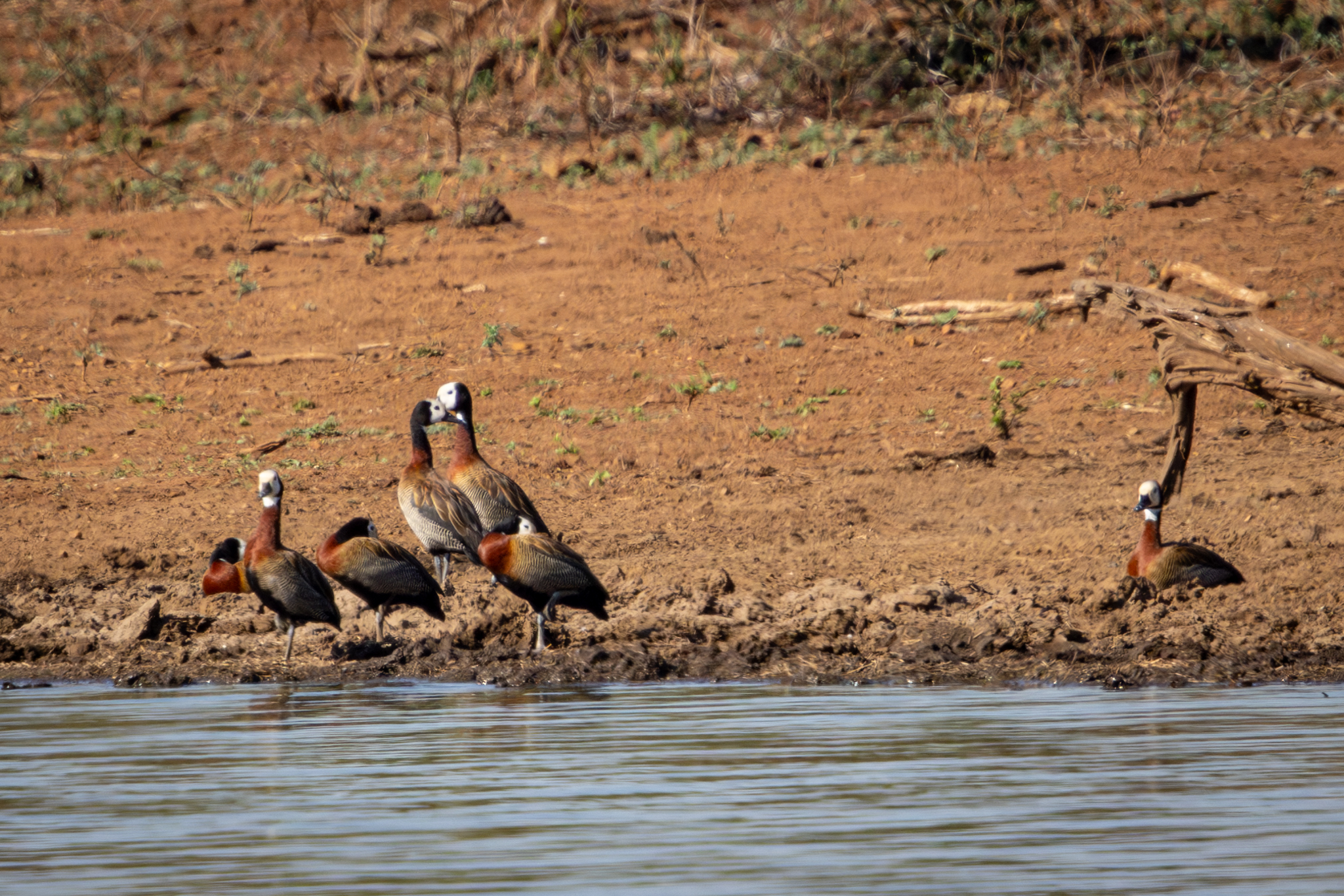
From across the retention pond, this group of White-faced Whistling Ducks enjoyed the water and each other.
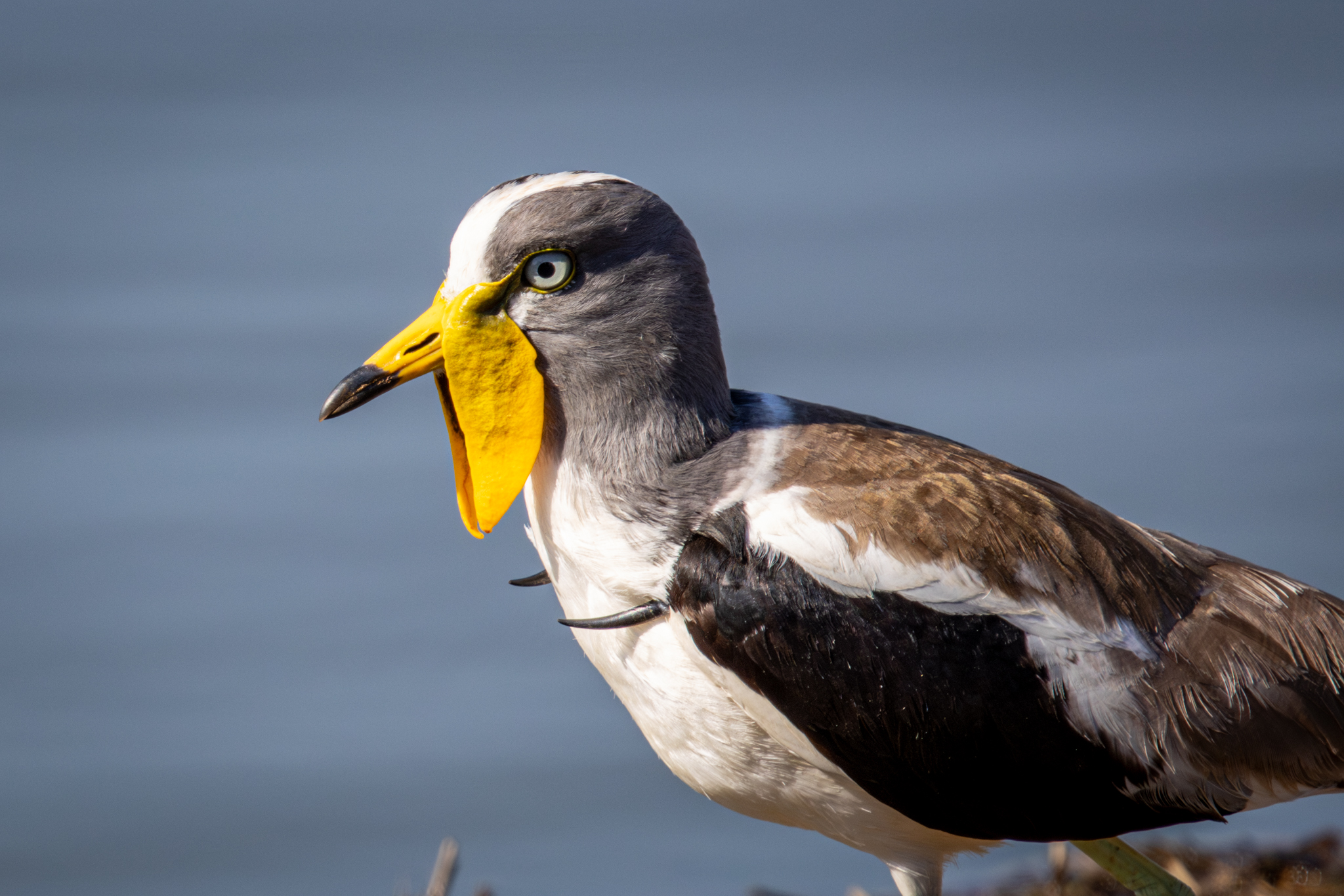
Take a close look at this White-crowned (or White-headed) Lapwing. It’s hard to miss the yellow wattles hanging down from its beak, but did you see the two sharp spurs poking out of its breast? These spurs are part of the bird’s “wrist” portion of its wings. Birds actually use these spikes to defend their territory by giving a chest-bump to an intruder.
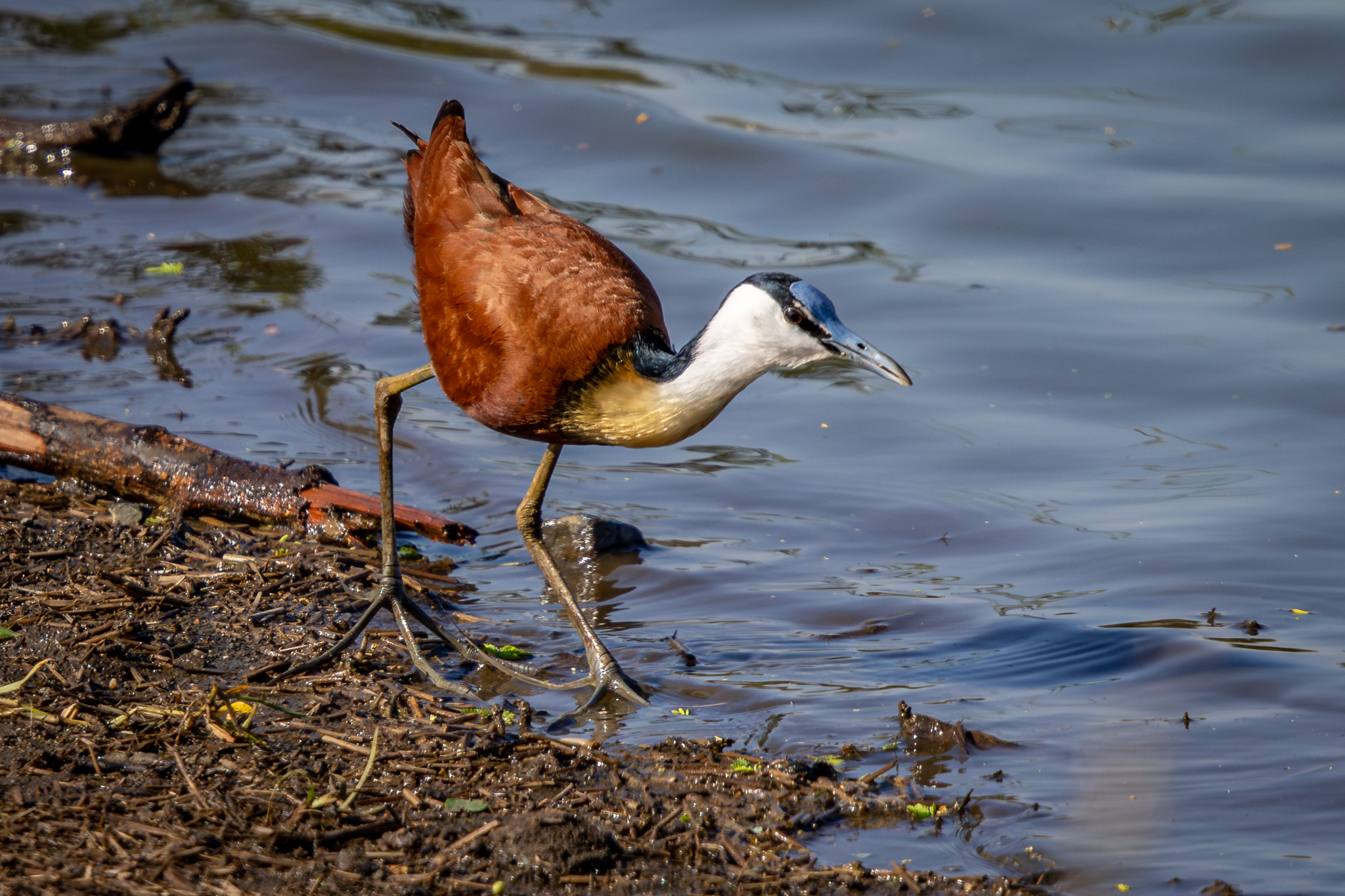
Although we saw this same African Jacana the day before, I thought this image showed its huge feet and the blue skin on its forehead better.
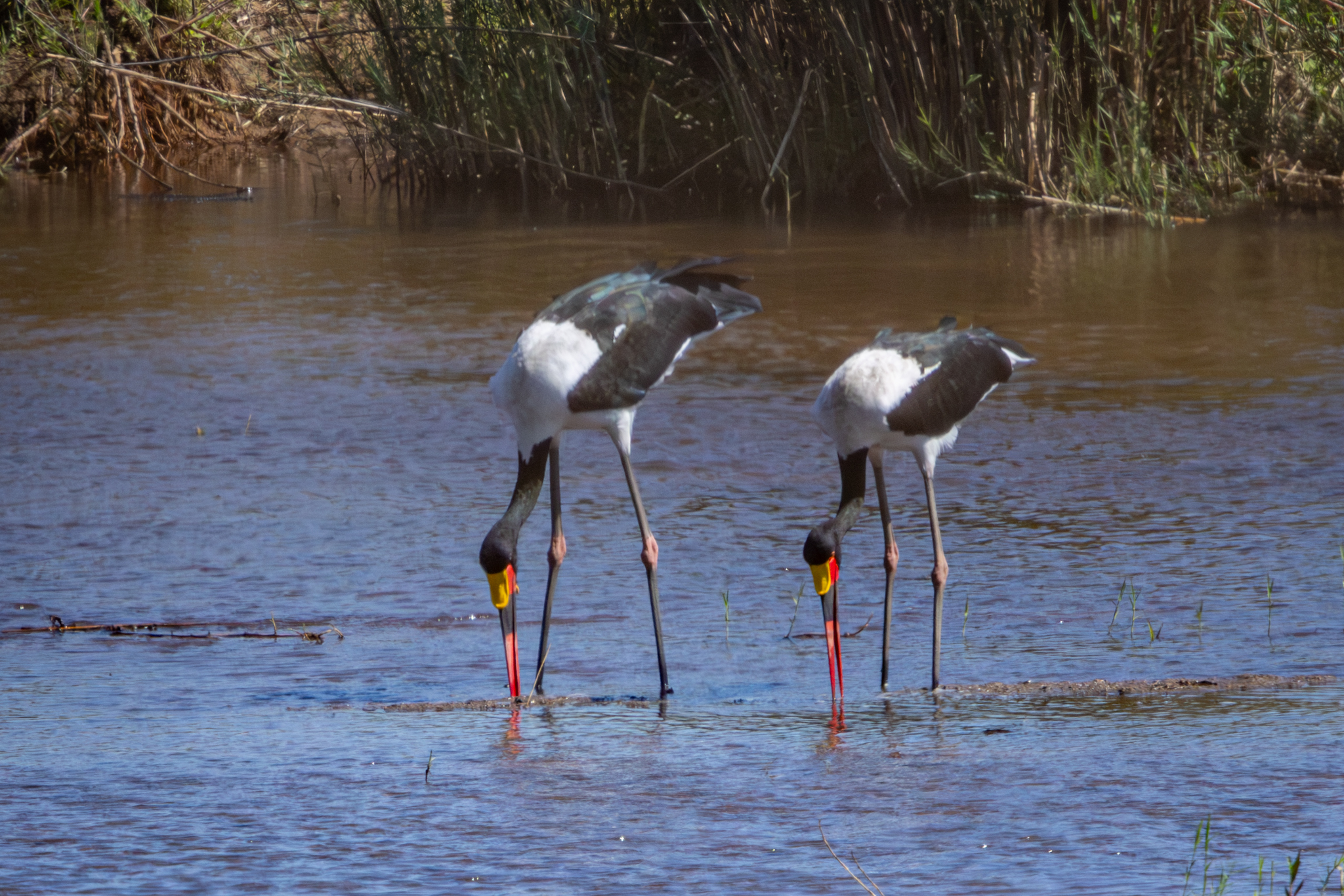
This pair of Saddle-billed Stork were feeding in the waters of the Sabie River, doing synchronized feeding. I gave them a 10!
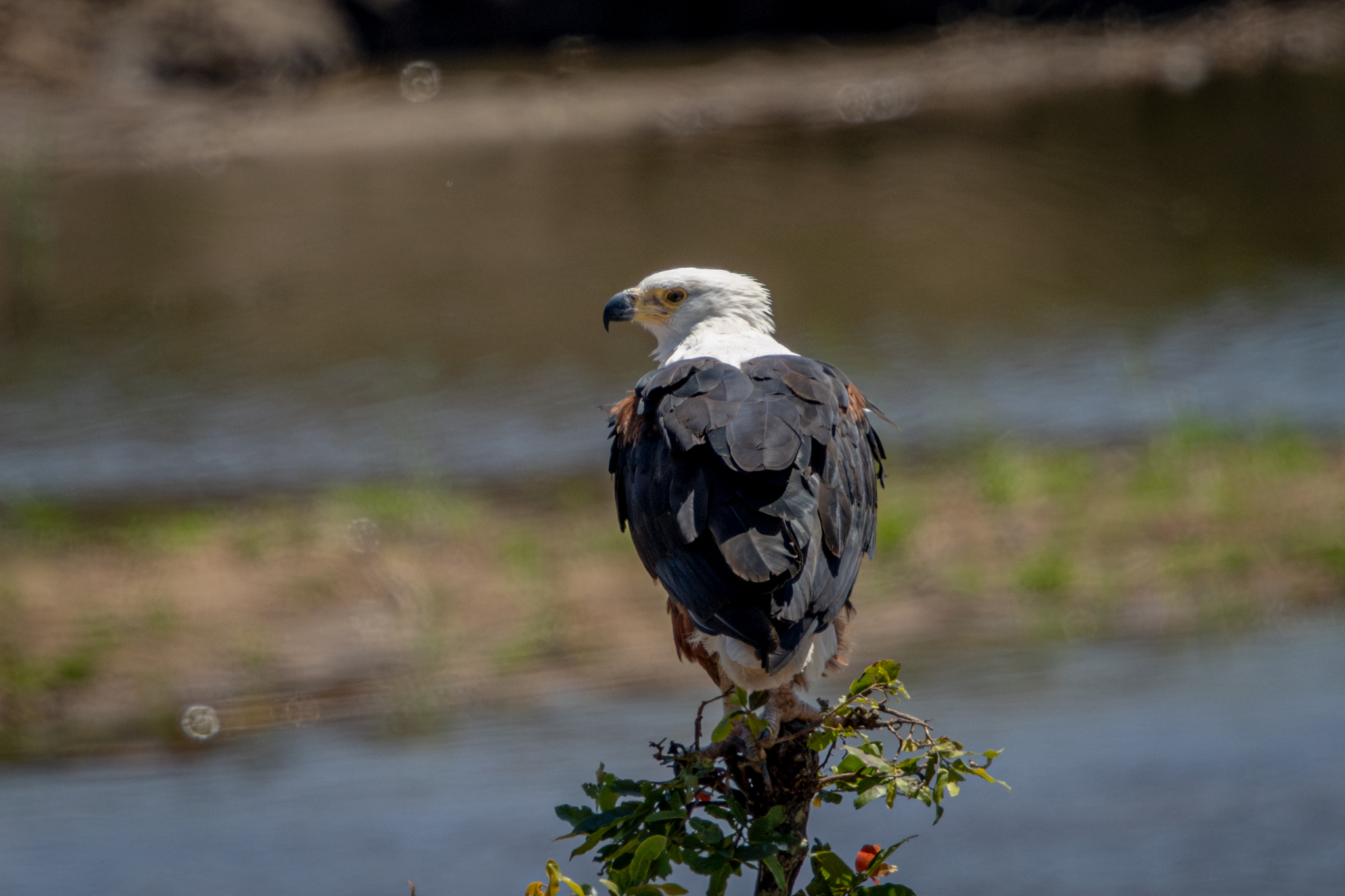
This African Fish Eagle is poised to swoop down off of its perch to snap up a nice fish for supper.
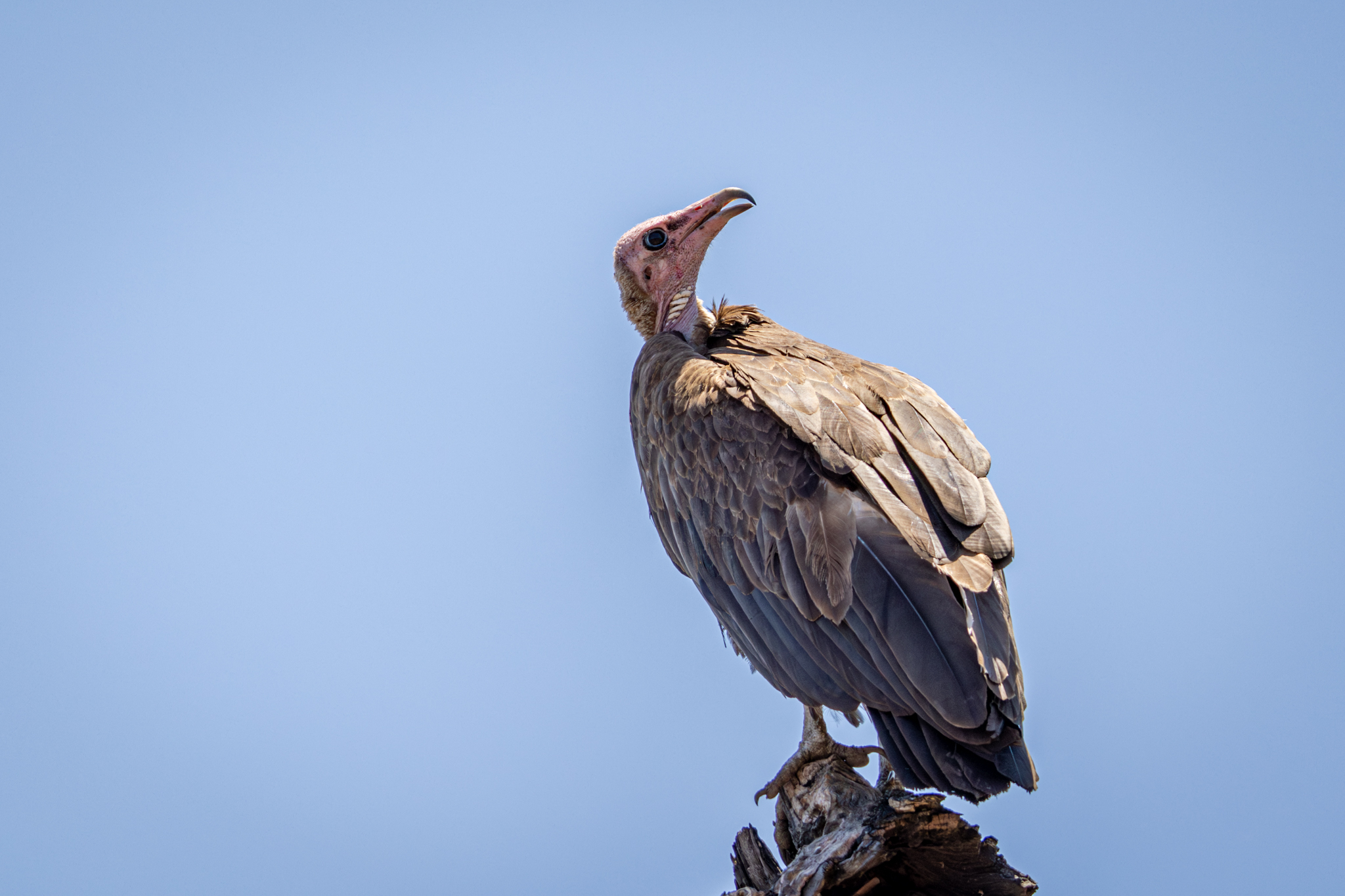
This Hooded Vulture held its head up so we can see that it is devoid of feathers. The better to insert its head into carrion with getting the feathers messed up.
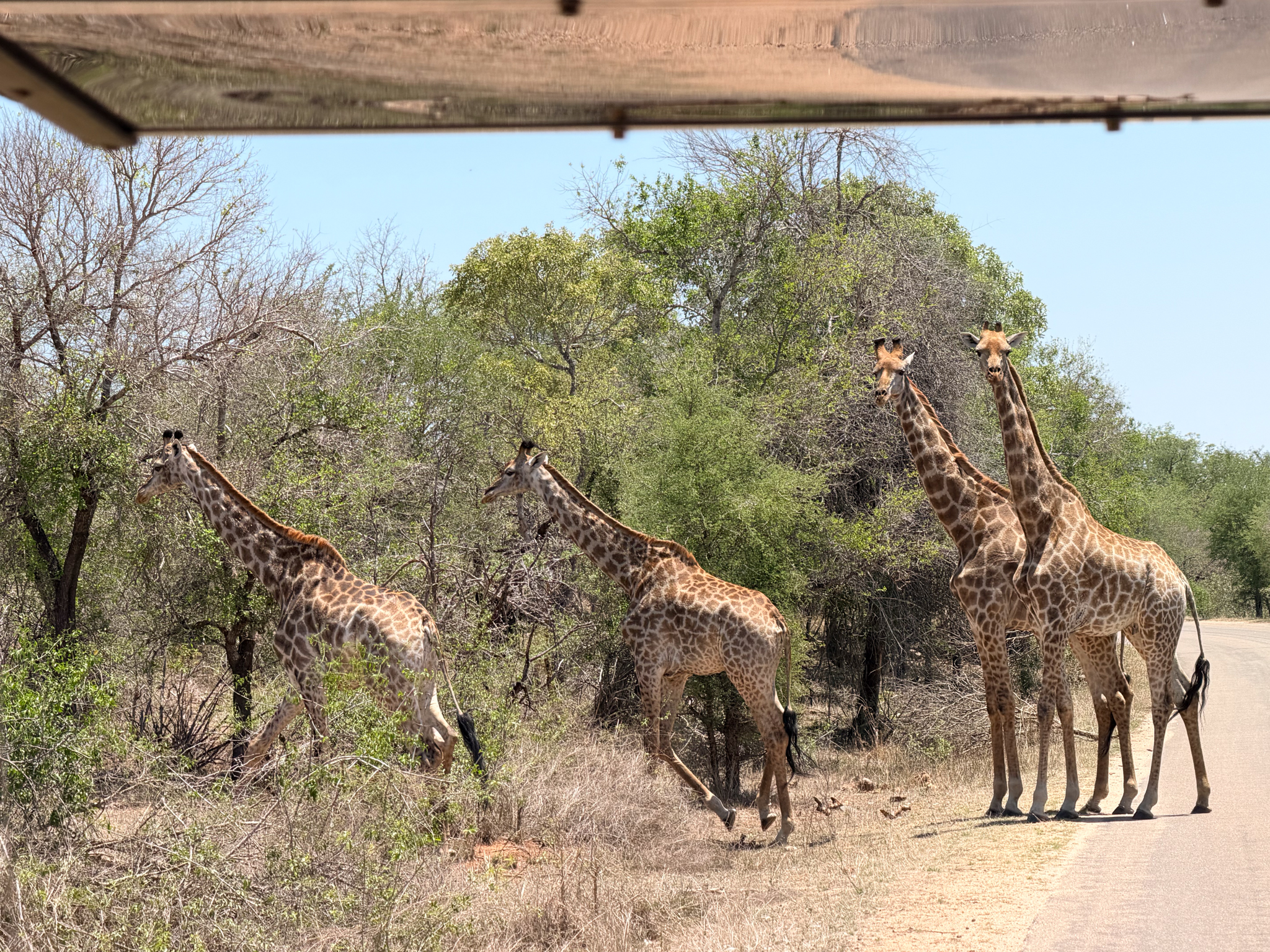
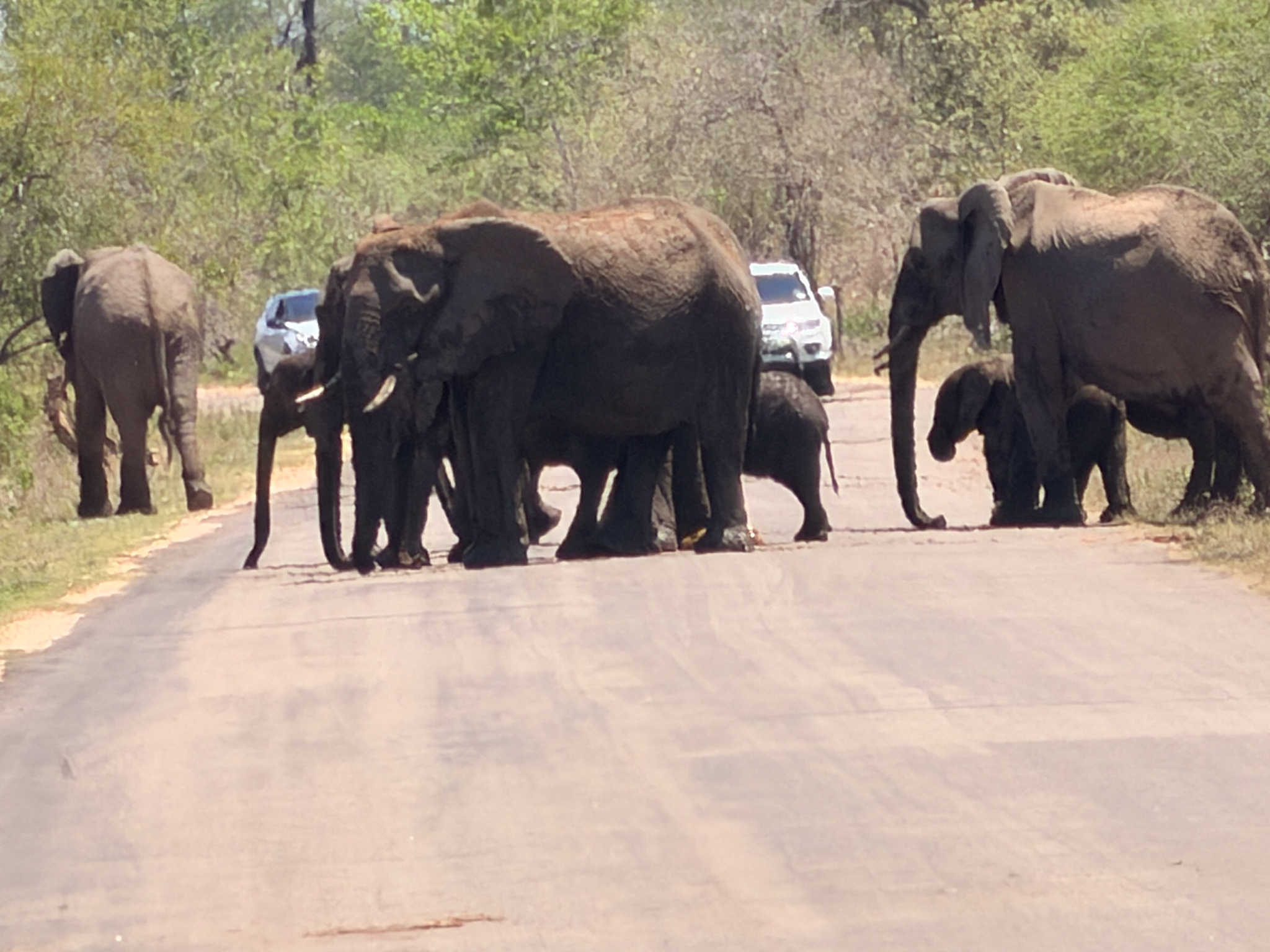
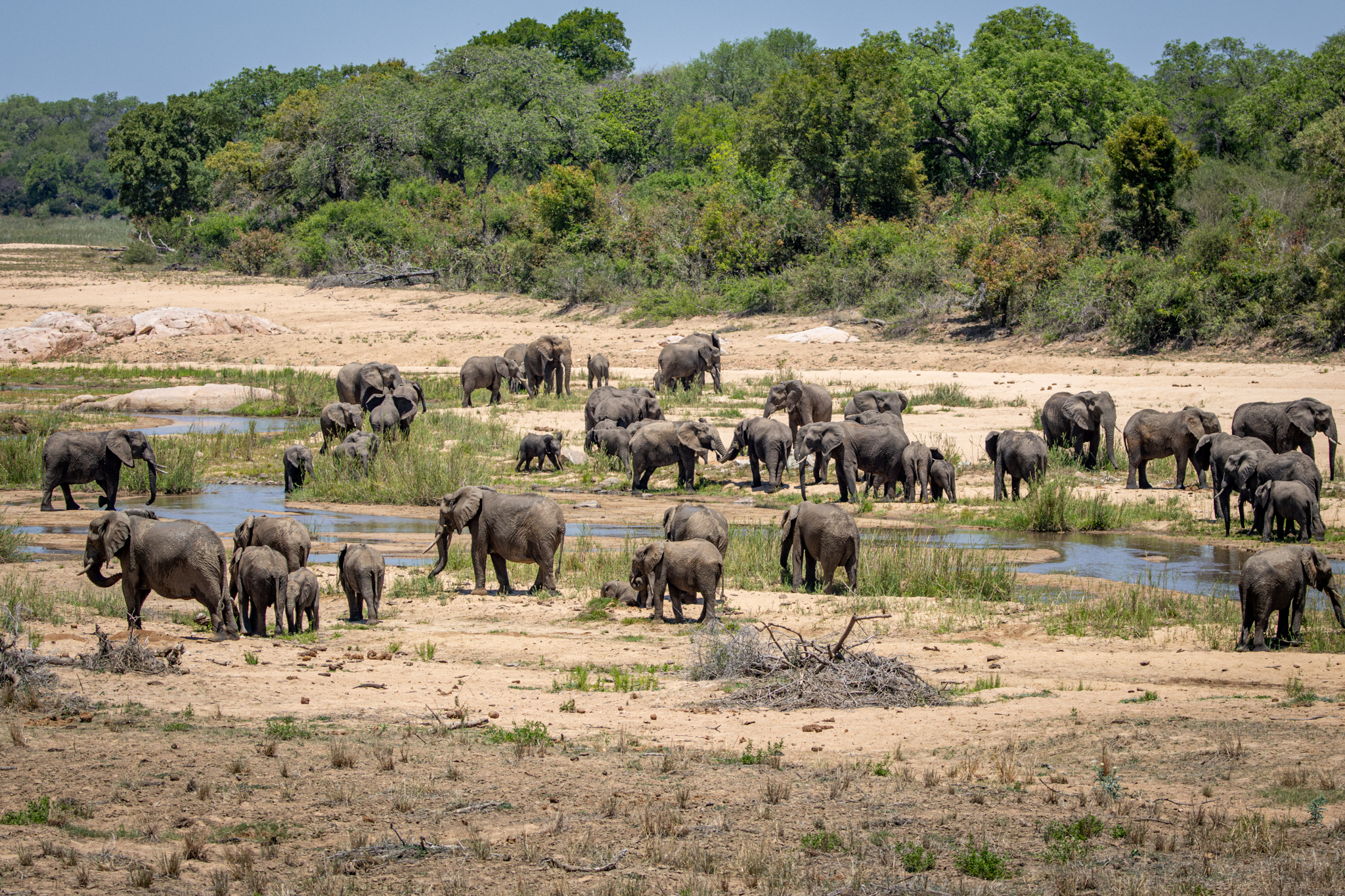
Of course we had to say goodbye to the giraffe and elephants before we left.
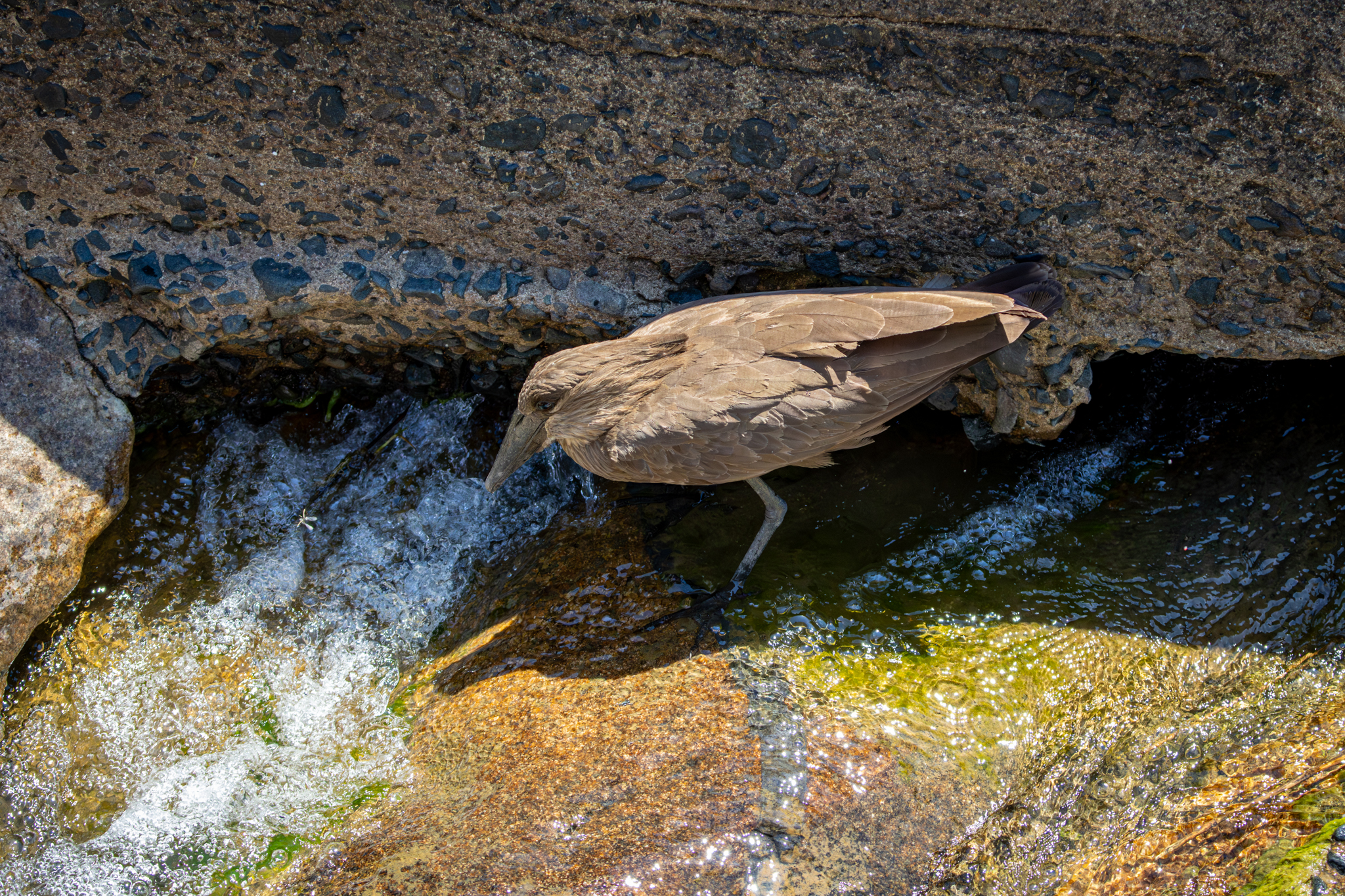
As we passed over the Sabie River for the last time someone spotted a bird below where I could see. I wasn’t going to break my back trying to get a look at it. At least not until someone said it was a Hamerkop. Then I leaned across the laps of two people to angle my camera down to get this shot. I love Hamerkops!
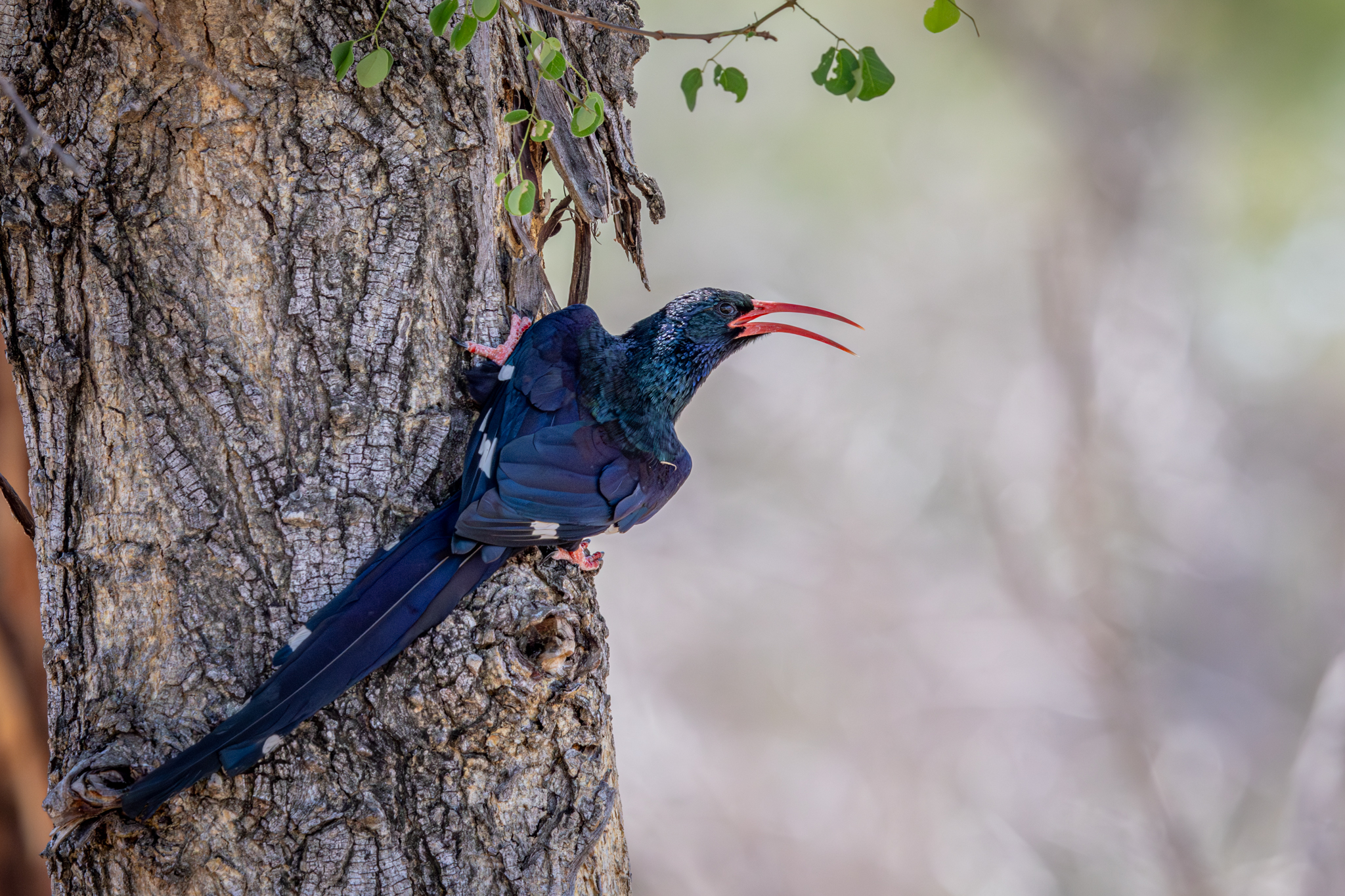
My last bird photo in South African had to be a good one, and so it was. A Green Woodhoopoe posed nicely on the side of a tree as our safari vehicle drove us toward the airport. I just love that bright-orange bill.
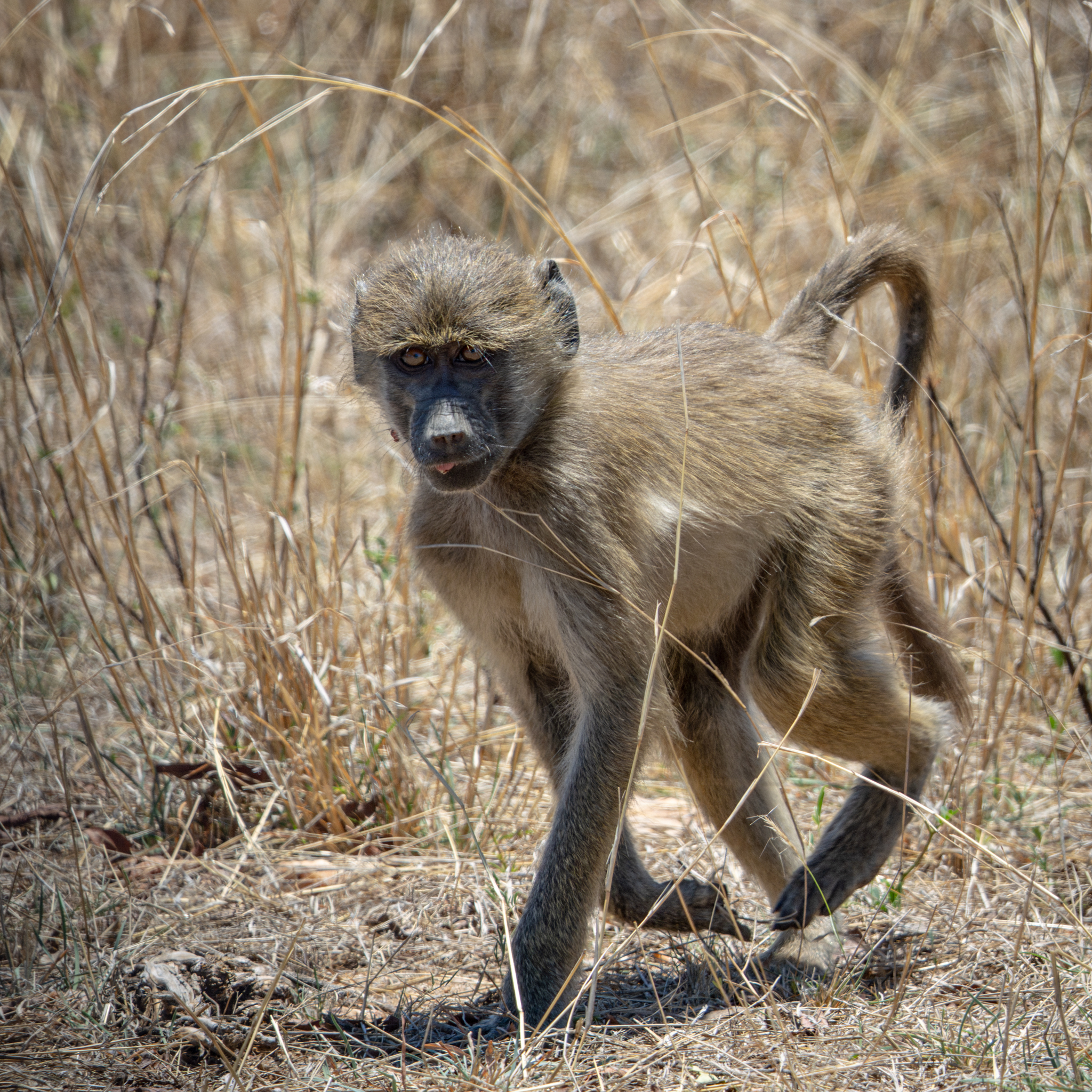
Although I probably should end this post with a picture of a bird, I can’t resist this juvenile baboon as it passed by our safari vehicle. Can I get another Awwwww?
I titled this piece “A Long Way Home” and let me make it a little bit longer by telling you how long it was. After getting up as 5 AM we saw all the above sights until 2 PM, when Edward dropped us off at the Kruger Airport. Josh led us through our last checklist of the trip as we waited to board our plane. We waited 2 hours and then took our flight to Johannesburg, where we hung around until our flight for the U.S. left at 10 PM (recall that we entered South Africa in Cape Town). We touched down in Newark 14 hours later and then waited a couple of hours for our flight to Chicago. By the time we got home I figure we had been traveling for 40 hours!
One more post to wrap things up, I promise!
CLICK HERE to see all the posts about our South Africa Bird Tour. Karen and I have had the opportunity to travel to many interesting places in search of birds. If you would like read about some of our other Bird Tours CLICK HERE.
If you enjoy seeing beautiful pictures of birds from around the world and reading about them CLICK HERE to sign up for our mailing list. Members can post their own GreatBirdPics and learn more about bird photography techniques.